Ethiopian Beef Stew, known traditionally as Siga Wat, is a culinary journey that transforms humble beef chuck into a rich, mahogany-hued masterpiece. If you have been scrolling Pinterest searching for that perfect “low and slow” dinner, you have likely seen the stunning images of deep red sauces, glossy glazes, and those iconic stained hard-boiled eggs nestled in the center. This recipe delivers exactly that—a sensory explosion of heat, aromatics, and succulent meat.
The secret to a truly authentic Ethiopian Beef Stew lies in the patience of the cook. We aren’t just making a stew; we are building layers of flavor through caramelized onions, a potent Berbere spice blend, and the luxurious finish of niter kibbeh (spiced clarified butter). The final result is a thick, glossy sauce that clings to every fiber of tender beef, perfectly paired with the tangy, porous texture of rolled teff injera. Whether you are a fan of savory cream of mushroom beef stew or looking for something more exotic, this dish is the ultimate comfort food upgrade.
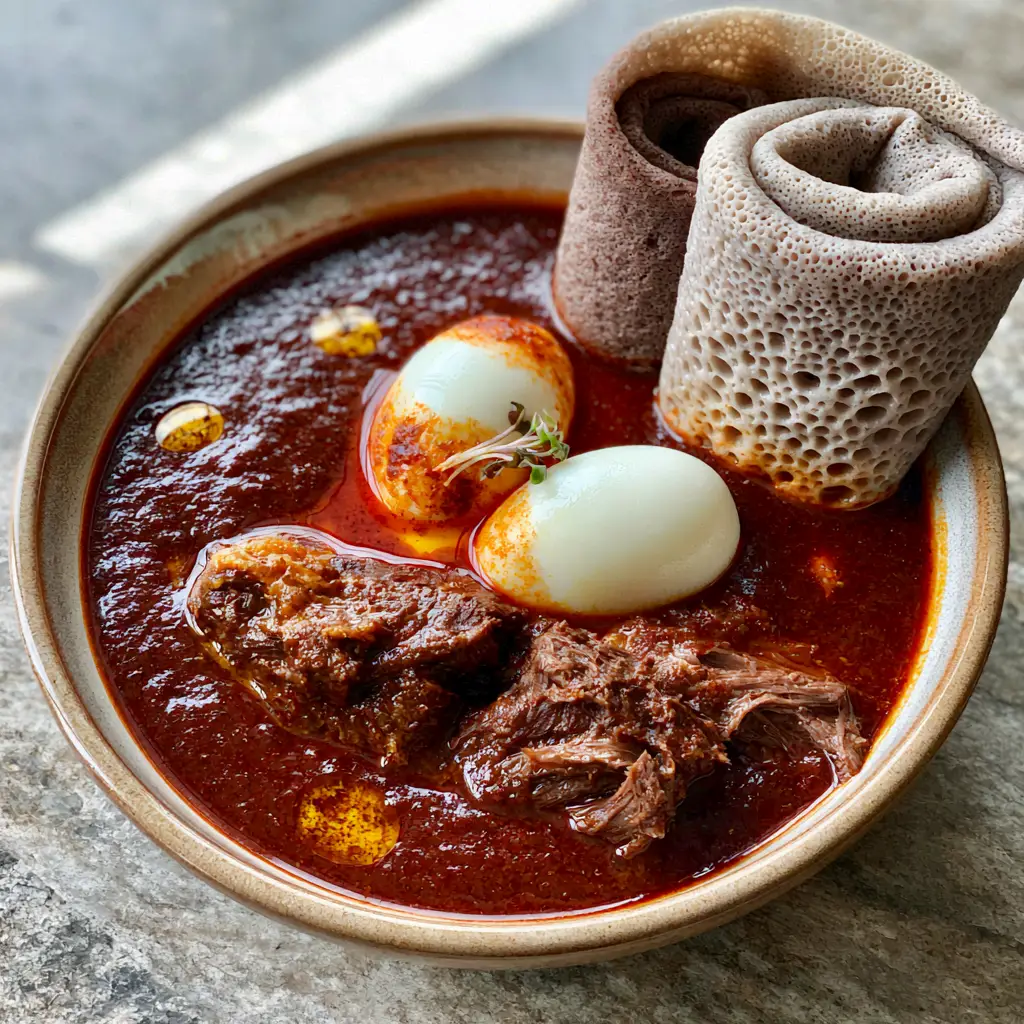
Why This Authentic Siga Wat Is a Pinterest Favorite
- Succulent Meat Fibers: The beef chuck cubes are slow-cooked until they practically melt, showcasing a tender, stringy texture that holds the spice.
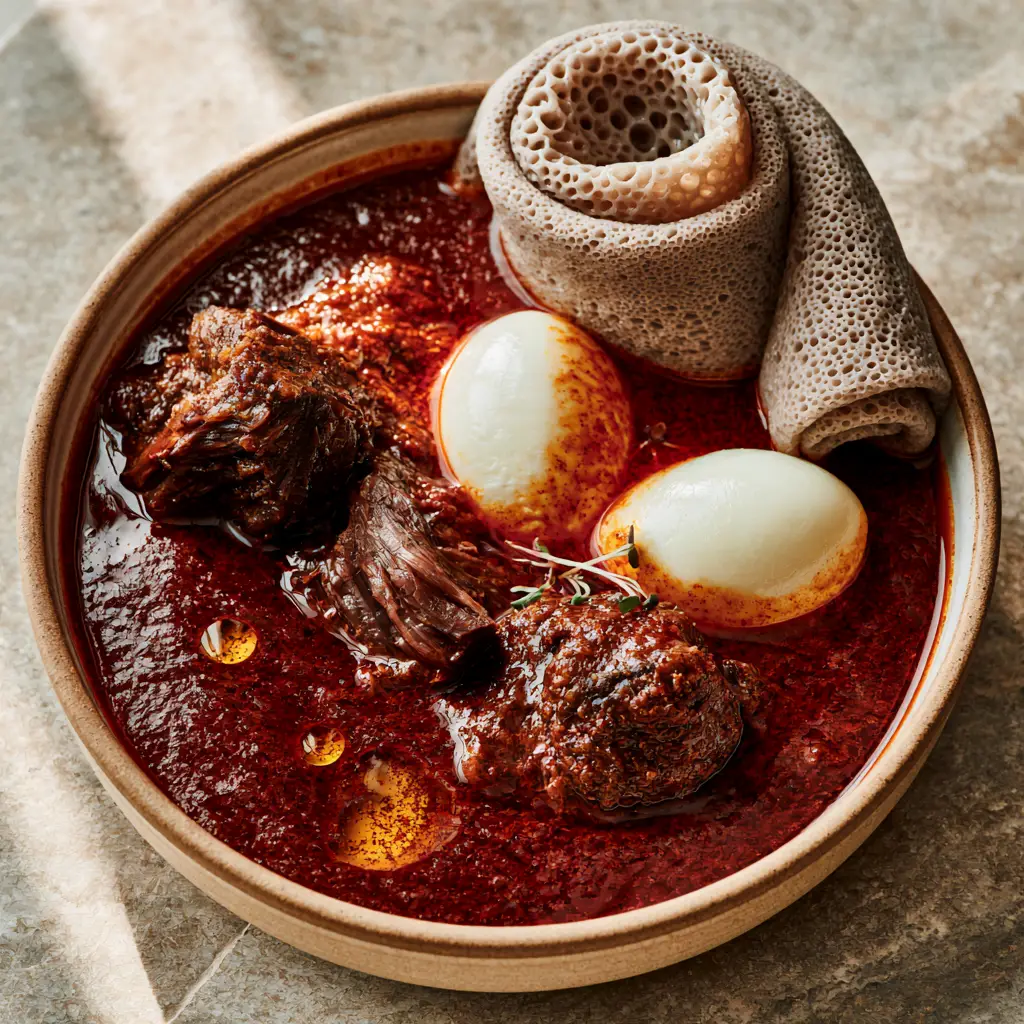
- Visual Brilliance: The dark mahogany red sauce against the soft grey-beige of teff injera makes for a striking, restaurant-quality presentation.
- The “Egg Factor”: Whole peeled hard-boiled eggs absorb the Berbere sauce, creating a beautiful stained effect and a rich, creamy contrast to the heat.
- Glossy Spiced Finish: A final drizzle of niter kibbeh creates golden droplets of spiced oil that pool on the surface for maximum appetite appeal.
The Foundation: Essential Ingredients for Deep Ethiopian Flavor
To achieve the complex profile of a true Ethiopian Beef Stew, each ingredient serves a specific culinary purpose. We don’t use “filler” here; every component is vital for that signature glossy sheen and spiced depth.
Beef Chuck Roast: Choose a well-marbled 3 lb (1.36kg) roast. The connective tissue breaks down during the slow-simmering process, creating the succulent meat fibers seen in our blueprint. Leaner cuts will result in dry meat, so stick with chuck.
Red Onions (The Base): You will need 4 large (approx. 900g) red onions, finely minced. In Ethiopian cooking, onions are the thickener. We cook them down until they form a jam-like consistency, providing the body for the thick dark-red berbere spice base.
Berbere Spice Blend: This is the soul of the dish. It’s a fiery, complex mix of chili peppers, garlic, ginger, basil, korarima, rue, ajwain or radhuni, nigella, and fenugreek. It provides the rich, dark mahogany red color.
Niter Kibbeh (Spiced Butter): This is not just butter; it’s clarified butter infused with ginger, garlic, and spices. It provides the glossy sheen and that distinct, aromatic finish that separates a good stew from a great one.
Hard-Boiled Eggs: 4 to 6 large eggs, peeled. They are added at the very end to soak up the sauce, becoming slightly stained by the red berbere.
Teff Injera: A fermented, bubbly, crepe-like flatbread. Its sourness perfectly balances the heat of the stew. We recommend serving it rolled for that authentic aesthetic.
Step-by-Step Instructions: Mastering the Slow Simmer
1. The Dry Onion Reduction
Start by placing your finely minced red onions into a large, heavy-bottomed pot (a Dutch oven is ideal). Do not add oil or butter yet! Cook the onions over medium-low heat, stirring frequently. The goal is to evaporate the moisture and caramelize the sugars until the onions are soft and reduced by half. This takes about 20–30 minutes but is the secret to a thick, authentic Ethiopian Beef Stew.
2. Infusing the Spiced Butter
Once the onions are deep purple and jammy, add 1/2 cup (115g) of niter kibbeh. Let the onions fry in the spiced butter for 5 minutes until the kitchen smells incredible. If you enjoy the aromatics of a roasted tomato soup, you will be floored by the complexity of this base.
3. The Berbere Bloom
Add 1/3 cup (40g) of Berbere spice to the pot. Toasting the spices in the fat is crucial to unlock the oils and achieve that dark-red spice base. Stir constantly for 2-3 minutes. If the mixture looks too dry, add a tablespoon of water to prevent burning. The color should transition to a rich mahogany.
4. Searing the Beef
Increase the heat slightly and add your 3 lbs (1.36kg) of beef chuck cubes. Season with 1 tsp (6g) of kosher salt. Stir to coat every piece of meat in the dark red paste. Let the beef sear for a few minutes to lock in the juices, ensuring those succulent meat fibers remain intact during the long braise.
5. The Long, Slow Simmer
Pour in 2 cups (480ml) of beef stock or water. Bring to a gentle boil, then reduce the heat to the lowest setting. Cover and simmer for 1.5 to 2 hours. You are looking for the sauce to thicken into a glossy, heavy gravy and the beef to become fork-tender. This is a great time to prep a side like hearty split pea soup if you are meal prepping for the week.
6. Finishing with Eggs and Garnish
Ten minutes before serving, use a knife to make small longitudinal slits in your whole peeled hard-boiled eggs. Gently nestle them into the stew. Cover and let them warm through; they will emerge slightly stained by the red berbere sauce. Finish by folding in another tablespoon of niter kibbeh for that golden spiced oil sheen. Garnish sparingly with micro-cilantro for a pop of fresh green.
Expert Tips for the Perfect Siga Wat
- Don’t Rush the Onions: The texture of your Ethiopian Beef Stew depends entirely on the onion breakdown. If you see chunks of onion, keep cooking.
- Control the Heat: Berbere spice varies in heat. Start with 1/4 cup if you are sensitive to spice, and work your way up.
- Quality of Butter: If you cannot find niter kibbeh, you can make a quick version by simmering ghee with a pinch of cumin, cardamom, and fenugreek.
- The Resting Period: Like a traditional chicken noodle soup, Siga Wat actually tastes better the next day after the spices have fully permeated the beef fibers.
How to Store and Reheat Your Stew
Storage: Place leftover Ethiopian Beef Stew in an airtight container. It will stay fresh in the refrigerator for up to 4 days. The sauce will thicken significantly when cold.
Freezing: This stew freezes beautifully! Store in freezer-safe bags for up to 3 months. Note: Do not freeze the hard-boiled eggs, as the texture becomes rubbery. Add fresh eggs when reheating.
Reheating: Warm on the stovetop over low heat. Add a splash of water or beef broth to loosen the thick dark-red sauce. Stir gently to avoid breaking the tender beef chunks.
What to Serve With Ethiopian Beef Stew
The traditional and best accompaniment is teff injera. The sour, fermented flavor of the bread is designed to cut through the richness of the niter kibbeh spiced butter glaze. Use the injera as your utensil, scooping up pieces of beef and sauce.
If you cannot find injera, a side of fluffy basmati rice or even a piece of toasted sourdough can work in a pinch, though the experience won’t be quite as authentic. A side of Gomen (Ethiopian collard greens) also adds a nice nutritional balance and color contrast to the plate.
Frequently Asked Questions
Yes, you can use a slow cooker or a heavy pot with a tight-fitting lid. If using a slow cooker, still sauté the onions and bloom the spices in a pan first to ensure the flavor depth is achieved before transferring to the crockpot.
It has a significant kick due to the Berbere spice blend, which contains chili peppers. However, the long caramelization of the onions and the addition of hard-boiled eggs help to mellow and balance the heat.
While there is no perfect substitute for Berbere’s complexity, you can mimic it by mixing smoked paprika, cayenne, garlic powder, ginger, and a pinch of cinnamon and cloves. However, for an authentic taste, ordering Berbere online is highly recommended.
Siga Wat is made with beef (siga means beef in Amharic), whereas Doro Wat is the famous Ethiopian chicken stew. Both use the same Berbere and onion base, but Siga Wat typically requires a longer simmer for the beef chuck to become tender.
Hard-boiled eggs are a traditional addition to Wats (stews). They provide a cooling, creamy texture contrast to the spicy sauce and absorb the flavors of the Berbere, becoming visually beautiful and delicious.
The Ultimate Ethiopian Beef Stew (Siga Wat) Recipe
Ethiopian Beef Stew (Siga Wat): A Bold, Slow-Simmered Masterpiece
Ingredients
Equipment
Method
- Place minced red onions in a dry Dutch oven over medium-low heat. Cook for 20-30 minutes, stirring frequently, until moisture evaporates and onions are a soft, jammy paste.
- Add niter kibbeh to the onions and cook for 5 minutes. Stir in the berbere spice and cook for another 3 minutes until a dark mahogany red paste forms.
- Add the beef chuck cubes and salt. Stir to coat thoroughly in the spice paste and sear for 5 minutes.
- Pour in the beef stock. Cover and simmer on low for 1.5 to 2 hours until the beef fibers are succulent and tender.
- Gently nestle peeled hard-boiled eggs into the sauce. Simmer for 10 minutes until eggs are warmed and slightly stained by the sauce.
- Drizzle with a final spoonful of niter kibbeh for a glossy sheen. Garnish with micro-cilantro and serve with rolled injera.
Notes
For a deeper flavor, let the stew rest for 30 minutes before serving.

Save This Recipe to Pinterest!
If you loved this Ethiopian Beef Stew, don’t forget to Pin it to your Dinner or International Recipes board! High-protein, slow-cooked meals like this are perfect for cozy nights in. Follow @pantry_dream for more authentic global flavors.
Did you make this? Share a photo in the comments below and let us know how the Berbere spice turned out! Please leave a 5-star rating in the recipe card if you enjoyed this succulent Siga Wat.