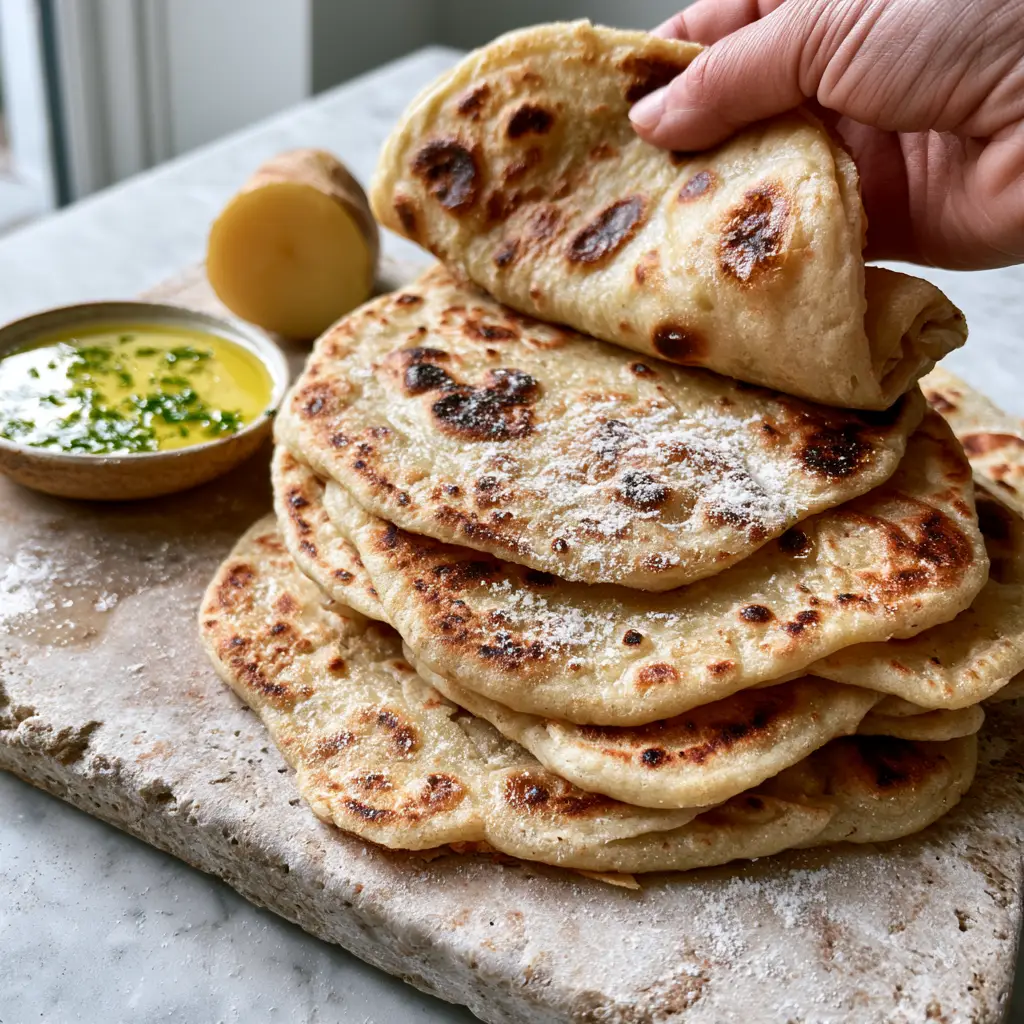
If you have been searching for the perfect Potato Flatbread, your quest ends here. This recipe, brought to you by @pantry_dream, delivers a stack of warm, pillowy dough that is so flexible you can fold it without a single crack. Imagine a rustic light-grey stone surface piled high with bread featuring beautiful golden-brown leopard spotting and charred bubbles straight from the stovetop. Each piece is finished with a light dusting of fine white flour and a luxurious melted butter wash flecked with bright green minced parsley. This isn’t just bread; it’s a culinary experience that combines the earthy comfort of a boiled potato with the airy lightness of a professional bakery product.

Why This Stovetop Potato Flatbread Recipe Works
- Extreme Flexibility: Thanks to the moisture in the mashed potatoes, these flatbreads are incredibly soft and perfect for wrapping or dipping.
- Visual Appeal: The high heat of the skillet creates that sought-after “leopard spotting” and charred bubbles that look stunning on any dinner table.
- Simple Ingredients: You likely already have everything you need in your pantry to create this Potato Flatbread.
- Texture Mastery: We use a specific boiled potato technique to ensure a pillowy dough texture that stays soft for days.
If you love working with potatoes, you might also enjoy our savory potato pancakes or perhaps our famous buttery Irish potato bites. Using potatoes in dough is a game-changer for texture and longevity.
The Essential Ingredients for Pillowy Potato Dough
Creating the perfect Potato Flatbread requires understanding how starch and flour interact. Here is what you will need:
1. The Starch Base: Boiled Potatoes
You will need 2 medium (approx. 300g) starchy potatoes. These should be peeled and boiled until tender. The potato provides moisture and prevents gluten from becoming too tough, resulting in that signature pillowy texture.
2. The Structure: All-Purpose Flour
Use 3 cups (375g) of all-purpose flour. You will also need extra for the “dusting of white flour” visible in the final presentation. This provides the necessary framework for the Potato Flatbread to rise and bubble.
3. The Hydration: Warm Water or Milk
1/2 cup (120ml) of warm liquid helps activate the dough. Using milk will result in a richer, darker char, while water keeps the flavor clean and neutral.
4. The Healthy Fats: Olive Oil and Melted Butter
2 tablespoons (30ml) of olive oil go into the dough for elasticity. For the finish, 3 tablespoons (45ml) of melted butter mixed with minced parsley will be brushed over the hot bread to create that glistening, artisanal look.
5. The Seasoning: Sea Salt
1 teaspoon (6g) of fine sea salt is essential. Never skip seasoning your dough, as the potato base can be quite bland without it.
Step-by-Step Instructions for Perfect Leopard Spotting
Follow these steps carefully to ensure your Potato Flatbread looks exactly like the artisanal stacks seen on Pinterest.
Step 1: Prepare the Boiled Potato Base
Start by boiling your potato halves in salted water until they are fork-tender. Drain them thoroughly—excess water is the enemy of a good dough. Mash them until they are completely smooth; any lumps will tear the Potato Flatbread during the rolling process.
Step 2: Mixing the Pillowy Dough
In a large bowl, combine the warm mashed potatoes with the flour, oil, and salt. Gradually add your liquid. You are looking for a dough that is soft but not sticky. Knead the dough on a lightly floured surface for about 5-7 minutes. You will feel the texture transform into a supple, bouncy ball.
Step 3: The Resting Period
Cover the dough and let it rest for at least 30 minutes. This allows the gluten to relax, which is the secret to making the bread handheld and flexible. If you skip this, the dough will spring back when you try to roll it out.
Step 4: Rolling and Dusting
Divide the dough into 8 equal portions. Roll each piece into a thin circle, roughly 1/8 inch thick. As you roll, ensure a light dusting of fine white flour remains on the surface. This flour will toast in the pan, adding to the rustic aesthetic.
Step 5: Achieving the Perfect Char
Heat a heavy cast-iron skillet over medium-high heat. Do not add oil to the pan; we want a dry sear. Place the flatbread in the hot pan. Within 30 seconds, you should see air bubbles forming. Flip the bread to see those beautiful golden-brown leopard spots. Cook for another 30-45 seconds until charred bubbles appear on the other side.
Step 6: The Butter and Parsley Finish
Immediately after removing the Potato Flatbread from the heat, brush it generously with the melted butter and minced fresh parsley mixture. The heat of the bread will slightly cook the parsley, releasing a vibrant aroma.
For more vegetable-forward sides, check out our baked vegetable casserole or this stunning aloo palak recipe.
Expert Tips for Success
- Use a Potato Ricer: For the smoothest dough possible, pass your boiled potatoes through a ricer rather than using a traditional masher.
- Cast Iron is King: A cast-iron skillet retains heat better than stainless steel, which is crucial for getting those charred spots without drying out the interior.
- Keep it Covered: As you cook each Potato Flatbread, stack them and wrap them in a clean kitchen towel. The steam will keep them incredibly soft.
- Temperature Control: If the bread is browning too fast without bubbling, turn the heat down slightly. If it’s taking longer than 90 seconds total, turn it up.
Storage, Reheating & Freezing
To Store: Keep the flatbreads in an airtight bag at room temperature for up to 2 days or in the fridge for 5 days.
To Reheat: Avoid the microwave if possible, as it can make the bread rubbery. Instead, flash-fry them in a dry pan for 30 seconds per side to restore the pillowy texture.
To Freeze: Place parchment paper between each Potato Flatbread and store in a freezer bag for up to 3 months. Thaw at room temperature before reheating.
What to Serve With Potato Flatbread
This bread is incredibly versatile. It pairs perfectly with hearty dishes like our ground turkey bake or a bowl of creamy potatoes au gratin. It also makes an excellent base for a quick wrap filled with sauteed zucchini and fresh greens.
Frequently Asked Questions
Yes! You can prepare the dough and keep it in the refrigerator for up to 24 hours. Just make sure to bring it back to room temperature before rolling and searing to ensure it bubbles up properly.
Starchy potatoes like Russets or Yukon Golds work best because they mash smoothly and provide a light, airy texture to the dough. Avoid waxy potatoes if possible.
The key is a very hot, dry cast-iron skillet. The high heat reacts with the light dusting of flour on the surface to create those beautiful charred bubbles without overcooking the inside.
The dough itself is vegan if you use water and oil. Simply swap the final butter wash for a high-quality olive oil infused with parsley to keep the entire recipe vegan.
Toughness usually comes from overworking the dough or not letting it rest long enough. Ensure you let the dough sit for 30 minutes so the gluten relaxes, and don’t skip the mashed potato, which provides the essential moisture for softness.
The Ultimate Potato Flatbread Recipe Card
Potato Flatbread: The Ultimate Pillowy Soft Stovetop Recipe
Ingredients
Equipment
Method
- Mash boiled potatoes until completely smooth and lump-free.
- Combine mashed potatoes, flour, salt, oil, and warm water. Knead for 5-7 minutes until bouncy.
- Cover the dough and let it rest for 30 minutes to relax the gluten.
- Divide dough into 8 pieces and roll each into a thin 1/8 inch circle with a dusting of flour.
- Cook in a hot, dry cast-iron skillet for 30-45 seconds per side until charred bubbles appear.
- Brush with melted butter and fresh parsley while hot.
Notes
Always keep cooked bread covered with a towel to maintain softness.
Save This Recipe to Pinterest!
Don’t lose this recipe! Hover over any image to save this Potato Flatbread to your favorite Pinterest board. We would love to see your results—tag @pantry_dream or upload a photo of your stack in the comments below. Please leave a 5-star rating if you enjoyed this pillowy, charred goodness!