When it comes to Authentic Italian recipes, few dishes carry the soul of the Mediterranean quite like a perfectly executed San Marzano tomato sauce over al dente spaghetti. This isn’t just a meal; it is a sensory journey through the sun-drenched volcanic soil of Campania. Imagine a rich, deep vibrant red sauce clinging to every strand of pasta, punctuated by the golden flecks of sautéed garlic and the subtle sweetness of translucent onions. This recipe captures the rustic elegance of a handmade ceramic bowl filled with comfort, finished with a glossy sheen of premium extra virgin olive oil and the sharp, snowy white contrast of finely grated parmesan cheese.
To achieve the visual and culinary perfection seen in traditional Italian kitchens, we focus on the “slow simmer.” This process allows the canned San Marzano tomatoes to break down into a luscious, chunky texture while intensifying their natural sugars. Whether you are looking for a sophisticated lunch or dinner, mastering this foundational red sauce is the first step in unlocking a world of authentic Italian flavors.
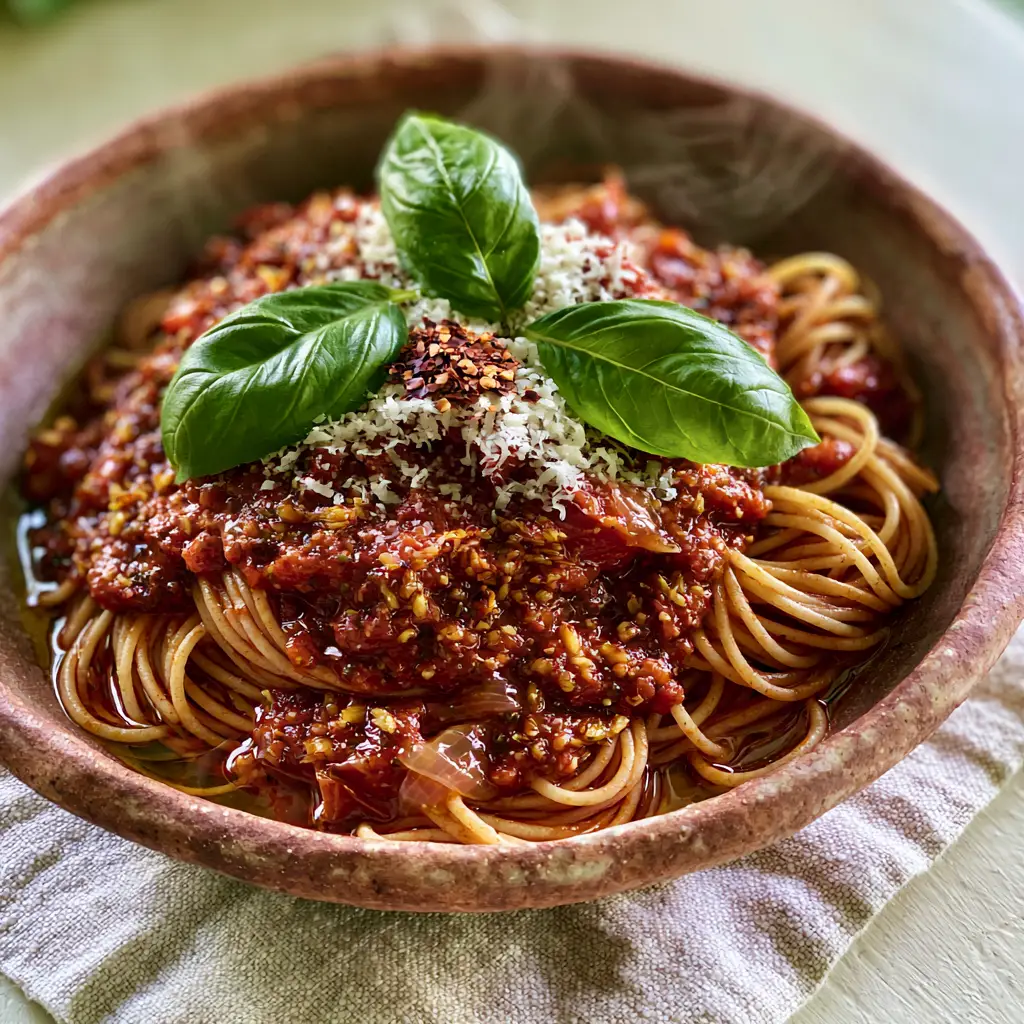
Why This San Marzano Sauce Defines Authentic Italian Cooking
- Visual Depth: The sauce boasts a rich, deep vibrant red hue with visible chunks of slow-simmered San Marzano tomatoes, providing a rustic, homemade aesthetic.
- Textural Contrast: From the firm “bite” of al dente spaghetti to the soft, translucent bits of onion and the crunch of golden sautéed garlic, every mouthful offers a new sensation.
- The “Gloss” Factor: A final emulsification with extra virgin olive oil creates a professional-grade sheen that ensures the sauce coats the noodles perfectly without being greasy.
- Aromatic Heritage: The combination of fresh whole basil leaves and a single pinch of crushed red pepper flakes creates a scent profile that is instantly recognizable as high-end Italian cuisine.
Essential Elements for a Visual and Culinary Masterpiece
Selecting the right ingredients is the difference between a mediocre pasta and Authentic Italian recipes that stay in your memory forever. Here is what you need to gather for your culinary blueprint.
San Marzano Whole Peeled Tomatoes: These are the gold standard of Italian cooking. Their low seed count and thick flesh provide that signature chunky texture and vibrant red color required for a rustic finish.
Extra Virgin Olive Oil (EVOO): Use a high-quality, cold-pressed oil to achieve the glossy sheen described in our visual prompt. It acts as both a cooking fat for the aromatics and a finishing “dressing” for the noodles.
Fresh Garlic and Yellow Onion: The garlic must be minced finely to achieve “golden flecks,” while the onion should be sautéed until translucent. These provide the savory backbone that balances the acidity of the tomatoes.
Spaghetti Noodles: Choose a high-quality bronze-die extruded pasta if possible. The rough surface of the noodle helps the sauce cling, ensuring the “al dente” result is both visually and texturally perfect.
Finely Grated Parmesan Cheese: This should be “snowy white” and light. Grate it using a microplane right before serving to maintain its delicate, airy texture on top of the vibrant red sauce.
Fresh Basil Leaves: Three whole, bright green leaves are used for the final garnish. Basil loses its color and aroma quickly when exposed to high heat, so these are added at the very last second for maximum visual impact.
Crushed Red Pepper Flakes: A single pinch provides a subtle heat and a tiny pop of color. This “culinary sparkle” breaks up the monochromatic red of the sauce.
Sea Salt and Black Pepper: These foundational seasonings are invisible but essential. They bridge the gap between the sweet tomatoes and the savory aromatics.
The Tools of the Italian Trade
To recreate the soft, natural morning side-lighting and the shallow depth of field of our visual inspiration, your cooking tools are just as important as the ingredients. You will need a heavy-bottomed pot, such as a Dutch oven or a deep stainless steel skillet, to ensure even heat distribution during the slow simmer.
A sturdy wooden spoon is essential for breaking down the whole tomatoes into the desired “visible chunks.” For the pasta, a large stockpot filled with heavily salted water is required to reach that perfect al dente state. Finally, a microplane or fine grater is necessary to achieve the “snowy” parmesan dusting that finishes the dish.
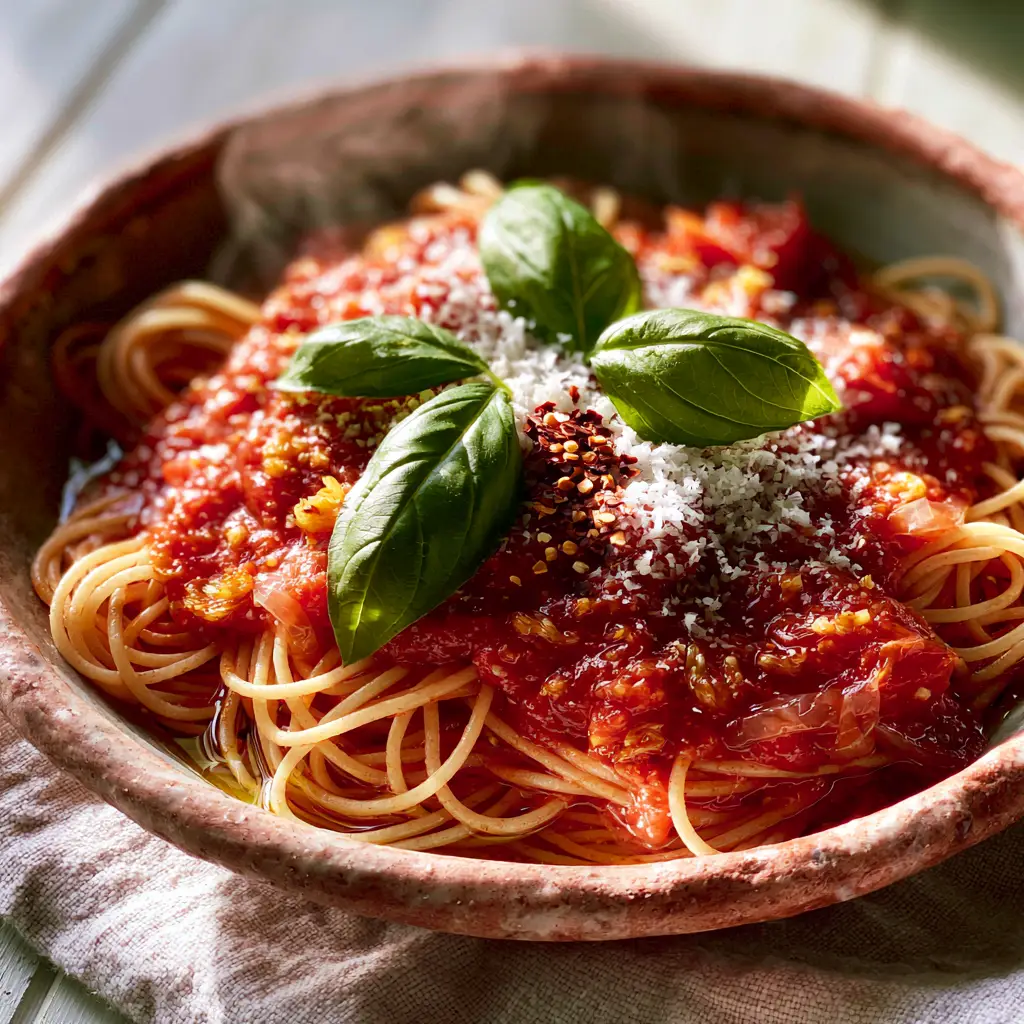
Mastering the Art of the Slow Simmer
Building the Aromatic Foundation
Begin by heating 1/4 cup (60ml) of extra virgin olive oil in your skillet over medium-low heat. Add 1/2 of a small yellow onion, finely diced, and sauté for 5-7 minutes. You are looking for a visual cue: the onions must become “translucent bits,” losing their opaque white color without turning brown.
Once the onions are soft, add 3 cloves of minced garlic. Watch closely for the “golden” transition. As soon as the garlic smells fragrant and turns a light straw color, you have reached the peak of flavor. If the garlic turns dark brown, it will taste bitter, ruining the delicate balance of your Authentic Italian recipes.
The San Marzano Transformation
Pour in one 28 oz (800g) can of whole peeled San Marzano tomatoes, along with their juices. Use your wooden spoon to gently crush the tomatoes against the side of the pot. You don’t want a smooth purée; you want those “visible chunks” that define a rustic, handmade sauce.
Reduce the heat to low and let the sauce simmer uncovered for 30-40 minutes. This slow reduction is what creates the “deep vibrant red” color. As the water evaporates, the flavors concentrate, and the oil begins to separate slightly, creating that beautiful glossy sheen. Stir in a pinch of dried red pepper flakes halfway through.
Achieving the Perfect Al dente Texture
While the sauce finishes, bring a large pot of water to a rolling boil. Add at least 2 tablespoons (30g) of salt—it should taste like the sea. Add 1 lb (450g) of spaghetti. Follow the package instructions but aim for 2 minutes less than the recommended time.
Test the pasta frequently. The visual and sensory cue for “al dente” is a slight resistance in the center of the noodle when bitten, and a pale dot visible in the core of the pasta strand. Before draining, reserve 1/2 cup (120ml) of the starchy pasta water.
The Final Flourish and Plating
Transfer the drained spaghetti directly into the sauce. Add a splash of the reserved pasta water and a final tablespoon (15ml) of extra virgin olive oil. Toss vigorously over medium heat for 60 seconds. This step is critical for achieving the “glossy sheen” where the sauce and noodles become one.
Twirl a generous portion of pasta into a rustic ceramic bowl. Spoon extra chunks of the San Marzano sauce over the top. Garnish with a “light dusting” of finely grated snowy white parmesan, three whole bright green basil leaves, and a final tiny pinch of red pepper flakes.
Professional Secrets for Restaurant-Quality Pasta
- The Pasta Water Miracle: Never skip saving the pasta water. The starch acts as an emulsifier, binding the oil-rich sauce to the gluten in the noodles for a silky finish.
- Don’t Rinse the Noodles: Rinsing removes the starch that helps the sauce stick. For Authentic Italian recipes, we want maximum adhesion.
- Quality of the Cans: Ensure your San Marzano tomatoes have the D.O.P. seal on the label. This guarantees they are grown in the specific region of Italy that gives them their unique flavor.
- Temperature Control: If the sauce is bubbling too aggressively, it will lose its vibrant red color and turn orange. Keep the simmer “lazy” and slow.
Preserving the Flavors of Italy
This sauce actually tastes better the next day as the garlic and onion flavors meld further with the tomatoes. Store any leftover sauce in an airtight glass container in the refrigerator for up to 4 days. When reheating, add a tablespoon of water to loosen the texture.
You can also freeze the sauce (without the pasta) for up to 3 months. This is a great way to have Authentic Italian recipes ready at a moment’s notice. For a different twist on Italian comfort, consider pairing your leftovers with an Italian meat pie or using the sauce as a base for a creamy tomato spinach pasta.
Completing the Italian Table
While this spaghetti is a star on its own, a full Italian spread makes the experience even more authentic. Serve this dish alongside a crisp green salad or roasted vegetables. If you are hosting a larger gathering, you might offer a variety of textures, such as savory meat pies or even a simple avocado toast with an Italian herb twist as a modern appetizer.
For those who love a bit of fusion or varied pasta styles, this sauce can easily be adapted into a beef and pasta dish or served alongside a creamy pancetta pasta for a multi-course tasting menu.
Common Questions About Traditional Red Sauces
For authentic visual results, fresh whole basil is required. Dried basil will darken the sauce and won’t provide the bright green contrast seen in traditional Italian plating.
Onions are translucent when they lose their sharp white color and become clear or see-through. They should be soft but not browned, providing sweetness without a toasted flavor.
The gloss comes from emulsifying high-quality extra virgin olive oil with starchy pasta water during the final minute of cooking the noodles in the sauce.
San Marzano tomatoes are grown in volcanic soil near Mount Vesuvius, which gives them a unique bittersweet flavor, low acidity, and thick flesh perfect for chunky, rich sauces.
Sauce turns orange if it is cooked at too high a temperature or blended too much, which introduces air. Keep the simmer low and slow, and leave the tomatoes in rustic chunks.
Authentic Italian San Marzano Spaghetti Recipe
Authentic Italian Recipes: The Ultimate Slow-Simmered San Marzano Tomato Sauce and Spaghetti
Ingredients
Equipment
Method
- Heat 1/4 cup (60ml) olive oil in a skillet over medium-low. Add onion and cook until they become translucent bits (about 7 minutes). Add minced garlic and sauté until you see golden flecks and smell the aroma.
- Add the San Marzano tomatoes and their juices. Crush with a wooden spoon to leave visible chunks. Simmer on low for 30-40 minutes until a deep vibrant red and a glossy sheen forms.
- Cook spaghetti in heavily salted water until al dente (slight resistance in the center). Reserve 1/2 cup (120ml) of pasta water before draining.
- Toss the noodles into the sauce with a splash of pasta water and a final drizzle of oil. Stir for 60 seconds over medium heat to create a glossy sheen.
- Serve in a ceramic bowl. Garnish with snowy white parmesan, three whole basil leaves, and a pinch of red pepper flakes.
Notes
The secret to the glossy sheen is the final emulsification with starchy pasta water and a drizzle of fresh olive oil.
Join Our Culinary Community
Creating Authentic Italian recipes at home is an act of love and patience. We hope this slow-simmered San Marzano sauce brings a touch of rustic Italy to your kitchen. The combination of vibrant red tomatoes, golden garlic, and fresh basil is a timeless classic that never fails to impress.
Did you try this recipe? We would love to hear about your results! Leave a comment below, sign up for our newsletter for more culinary deep-dives, and don’t forget to share your beautiful creations to Pinterest so others can enjoy the art of Italian cooking.