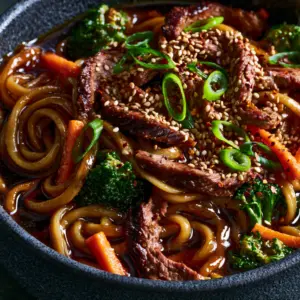
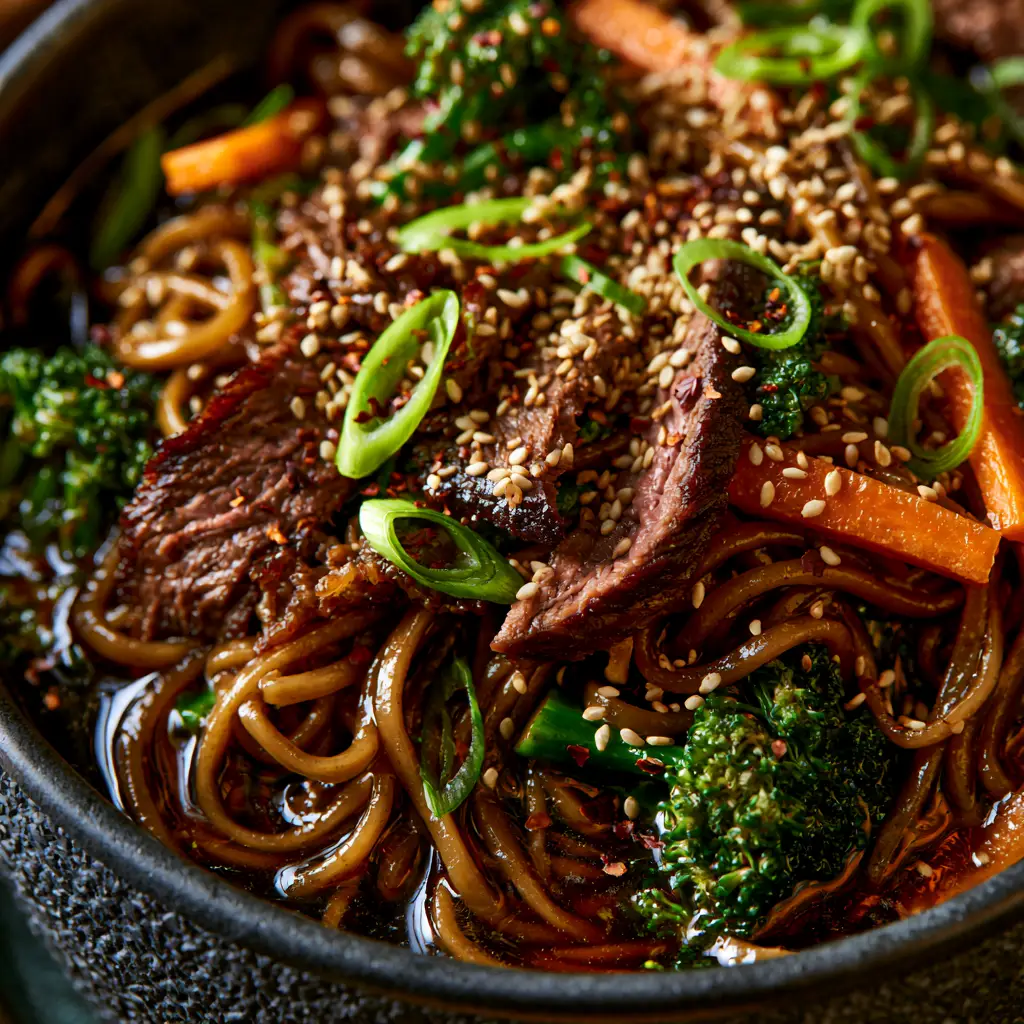
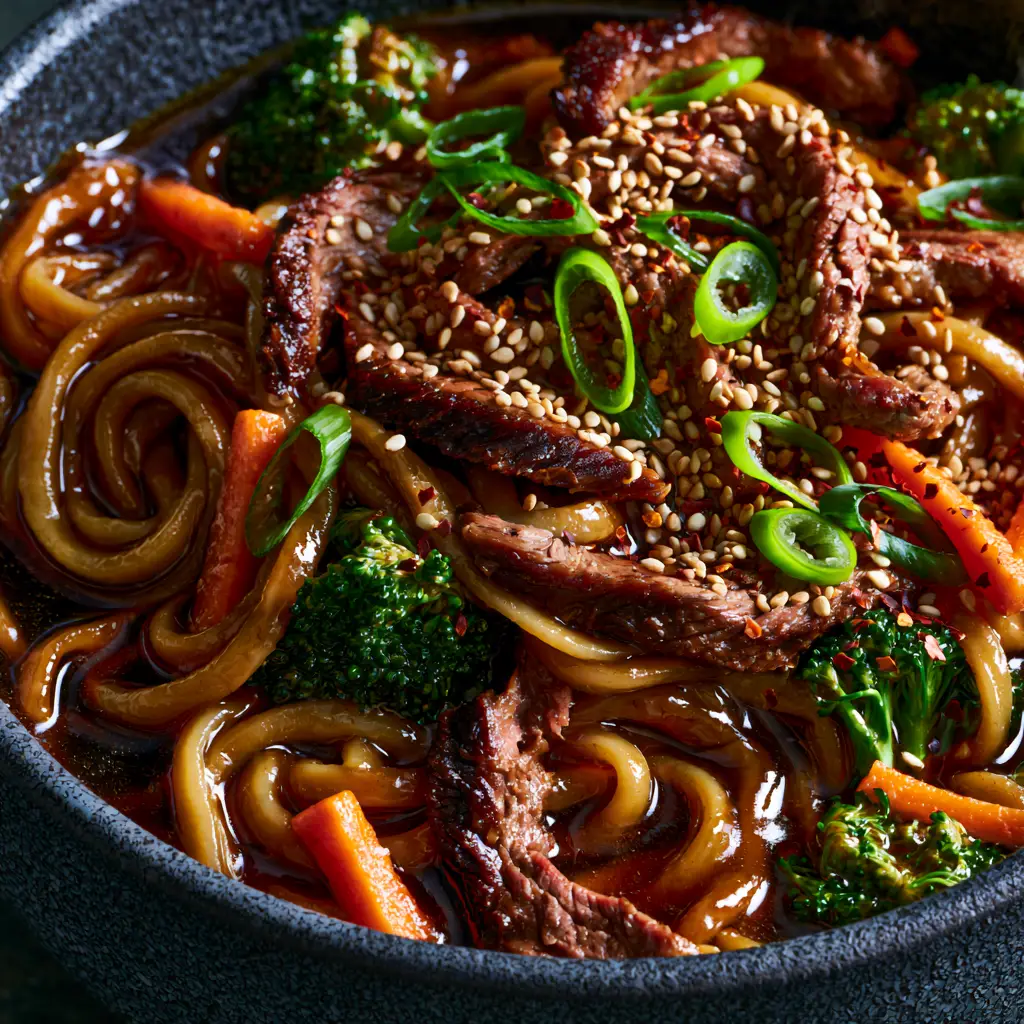
If you have been searching for elite Asian dinner recipes that rival the most high-end bistro in the city, you have arrived. This recipe isn’t just a meal; it is a masterclass in texture, color, and depth of flavor. We are recreating the exact dish seen in world-class food photography: glossy, thick noodles, seared steak with deep amber edges, and vibrant vegetables that pop against a dark ceramic backdrop.
The secret to exceptional home-cooked Asian cuisine lies in the balance of the “Big Three”—sweet, salty, and umami. By the end of this guide, you will know exactly how to achieve that viscous, mirror-like sauce and the perfect “wok hei” sear on your flank steak. Whether you are looking for healthy dinner ideas or a decadent weekend feast, this lo mein delivers on every level.
Every element in this dish, from the rain of toasted sesame seeds to the microscopic red chili flakes, is designed to stimulate the senses. We are going beyond the basics to explore the science of caramelization and the architecture of a perfect stir-fry sauce. Get ready to elevate your kitchen game with a recipe that is as beautiful as it is delicious.
The Signature Textures of This High-End Stir-Fry
- Caramelized Flank Steak: Thinly sliced beef with deep brown, seared edges that provide a smoky, savory bite.
- Glossy Lo Mein Base: Thick, chewy noodles coated in a rich, dark amber soy-ginger reduction that reflects light.
- Vibrant Veggie Contrast: Crisp-tender broccoli florets and bright orange julienned carrots for essential crunch and visual pop.
- Aromatic Garnishes: A triple-threat of toasted white sesame seeds, neon-green scallions, and dried red chili flakes for heat.
- The Viscous Glaze: A sauce that clings to every strand of noodle with a professional, silken finish.
The Ultimate Flavor Foundation: Ingredients and Substitutions
Flank Steak: 1 lb (450g). This lean cut is prized for its intense beefy flavor; slicing it against the grain ensures it remains tender after a high-heat sear.
Lo Mein Noodles: 10 oz (280g) dry. These thick, wheat-based noodles are the perfect vessel for heavy sauces, offering a satisfying chew that thinner noodles lack.
Dark Soy Sauce: 2 tbsp (30ml). This provides the “dark amber” hue and a deep, molasses-like undertone that is essential for the visual and flavor profile.
Light Soy Sauce: 3 tbsp (45ml). This adds the primary salt component without overpowering the dish with too much color, balancing the umami profile.
Fresh Ginger: 1 tbsp (6g) grated. Ginger provides a sharp, peppery bite that cuts through the richness of the beef and the sweetness of the sauce.
Fresh Garlic: 3 cloves, minced. Garlic acts as the aromatic backbone, releasing essential oils when hitting the hot pan that scent the entire dish.
Honey or Brown Sugar: 2 tbsp (30ml/25g). This is the key to that “viscous shine” and the caramelization of the steak edges during the final toss.
Broccoli Florets: 2 cups (150g). We use small florets to ensure they cook quickly while maintaining a “crisp-tender” texture that feels fresh and alive.
Julienned Carrots: 1 large carrot (approx. 100g). Thin strips ensure the carrots soften just enough to bend but keep their bright orange integrity.
Toasted White Sesame Seeds: 1 tsp (3g). These provide a nuttiness and a stark white contrast against the dark sauce, as seen in our visual blueprint.
Green Scallions: 3 stalks, thinly sliced. The white parts add sharp flavor to the base, while the green rings offer a “neon-green” fresh finish.
Dried Red Chili Flakes: 1/2 tsp (1g). These “microscopic” flakes offer a controlled heat that builds slowly as you eat.
Grapeseed or Canola Oil: 3 tbsp (45ml). High-smoke-point oils are mandatory for searing the steak without the oil breaking down or smoking excessively.
Cornstarch: 1 tsp (3g). Mixed with a little water, this creates the slurry that transforms a thin liquid into a professional-grade reduction.
Essential Equipment for Professional Asian Dinner Recipes
To achieve the “extreme macro” results we are aiming for, your choice of tools is paramount. A heavy-bottomed carbon steel wok or a large cast-iron skillet is necessary to maintain the heat required for searing. The high heat capacity of these materials ensures the steak sears rather than steams.
You will also need a sharp chef’s knife to achieve those perfect julienned carrots and thin beef slices. For the noodles, a large pot for boiling and a set of long kitchen tongs are essential for tossing the components together without breaking the delicate noodle strands. Finally, a dark charcoal ceramic bowl will help the colors of the dish pop, just like in high-end food photography.
Precision Steps to Caramelized Beef Perfection
Preparing the Protein and Vegetables
Start by slicing your flank steak. The trick is to slice it very thinly, about 1/8 inch (3mm), across the grain. This shortens the muscle fibers, resulting in a melt-in-your-mouth texture that mimics premium beef preparations. Pat the meat dry with paper towels; moisture is the enemy of a good sear.
Prepare your julienned carrots by cutting them into 2-inch matchsticks. Break the broccoli into bite-sized florets. Having everything ready (mise en place) is critical because the actual cooking process for these Asian dinner recipes moves incredibly fast once the heat is on.
Crafting the Dark Amber Soy-Ginger Reduction
In a small bowl, whisk together the light and dark soy sauces, the grated ginger, minced garlic, and honey. This mixture is the soul of the dish. The honey is particularly important here as it reacts with the soy sauce to create a sticky, glossy coating that will eventually reflect light in the finished bowl.
Add your cornstarch to a tablespoon of water to create a slurry and whisk it into the sauce. This “invisible” ingredient is what provides the viscous shine mentioned in the visual prompt. Without it, the sauce would simply pool at the bottom of the bowl rather than clinging to the noodles.
The High-Heat Sear and Caramelization
Heat 2 tablespoons of oil in your wok until it is shimmering and just starting to smoke. Add the flank steak in a single layer. Do not crowd the pan; cook in batches if necessary. Let the meat sit undisturbed for 60-90 seconds until a deep, dark brown crust forms on the edges. Flip and cook for another 30 seconds.
Remove the beef and set it aside. In the same pan, add the remaining oil and toss in the broccoli and carrots. Stir-fry for 2-3 minutes. You are looking for a “crisp-tender” result where the broccoli turns bright green and the carrots begin to soften but still hold their shape. This is the same technique used in our chicken fried rice recipe to maintain vegetable integrity.
The Final Assemblage and Glazing
While the veggies are frying, boil your lo mein noodles until they are just shy of al dente. Drain them and add them directly into the wok with the vegetables and the seared beef. Pour the dark amber sauce over the top and toss vigorously over high heat for 1-2 minutes.
As the sauce heats, the cornstarch and sugars will activate, thickening into a heavy glaze. Watch for the visual cue: the noodles should transform from dull to “glossy and swirling” in the sauce. The sauce should no longer be liquid but a thick reduction that coats every surface. If the dish looks too dry, add a splash of noodle water to loosen the “viscous shine.”
Expert Tips for Visual and Culinary Success
- The Dry Meat Rule: If your steak is wet, it will steam and turn gray. Always pat it dry before it hits the oil to ensure those caramelized edges.
- Don’t Overcook the Noodles: Lo mein noodles continue to cook in the wok. Pull them from the boiling water 1 minute early to prevent a mushy result.
- Wok Hei at Home: Keep your heat as high as possible. If your stove isn’t very hot, cook in smaller batches to maintain the temperature of the pan.
- Color Balance: If your dish looks too dark, add an extra handful of julienned carrots at the very end to provide a fresh “orange” pop.
- Garnish with Intent: Apply the “rain” of sesame seeds from high above the bowl for even distribution and that professional “macro” look.
Shelf Life, Storage, and Reheating Instructions
This beef lo mein is best enjoyed immediately while the noodles are at their peak elasticity and the steak is tender. However, it makes for an incredible lunch the next day. Store leftovers in an airtight container in the refrigerator for up to 3 days. The flavors of the ginger and garlic will actually deepen overnight.
To reheat, avoid the microwave if possible, as it can make the beef rubbery. Instead, toss the leftovers in a pan over medium-high heat with a tablespoon of water or beef broth. This will “re-activate” the sauce and bring back that glossy shine. We do not recommend freezing this dish, as the texture of the noodles and broccoli will degrade significantly upon thawing.
Complementing Your Asian Dinner Recipes
To turn this dish into a full multi-course experience, consider serving it alongside some lighter options. It pairs beautifully with a fresh cucumber salad or even some crispy Thai-style appetizers. If you are looking for a balanced meal plan, start with this lo mein and follow it up with a refreshing blackberry coconut drink.
For those who enjoy a bit of sweetness after a savory umami bomb, a light dessert like candied fruit provides the perfect textural contrast to the chewy noodles and tender beef. The goal is to balance the heavy, savory notes of the soy-ginger reduction with bright, acidic, or sweet side components.
Common Questions Regarding Lo Mein and Stir-Fry
To make this gluten-free, substitute the lo mein with wide rice noodles and use Tamari or a gluten-free soy sauce alternative. The flavor profile will remain elite while catering to dietary needs.
While flank steak is preferred for its flavor, you can use skirt steak or top sirloin. The key is to slice it very thinly against the grain to ensure it remains tender during the high-heat sear.
Always boil your noodles until just under ‘al dente’ (usually 1-2 minutes less than the package directions). They will finish cooking and soak up the sauce in the hot wok, maintaining their chewy texture.
Yes, if you want that deep ‘dark amber’ color seen in high-end Asian dinner recipes. Dark soy sauce is thicker and less salty than light soy sauce, providing the rich color and caramelized flavor profile.
The glossy, viscous shine comes from a combination of honey (or sugar) and a cornstarch slurry. When heated, the starch gelatinizes and the sugar reduces, creating a professional mirror-like finish that clings to the noodles.
The Ultimate Caramelized Beef Lo Mein Recipe
Asian Dinner Recipes: Master the Art of Caramelized Beef Lo Mein
Ingredients
Equipment
Method
- Slice flank steak against the grain into 1/8 inch (3mm) strips and pat dry.
- Combine dark soy, light soy, ginger, garlic, honey, and cornstarch slurry in a small bowl.
- Sear beef in a smoking hot wok with oil for 90 seconds until deep brown caramelized edges appear.
- Toss broccoli and carrots in the wok for 2-3 minutes until crisp-tender.
- Add noodles and sauce; toss over high heat until a viscous shine develops and coats everything.
Notes
Use dark soy sauce specifically for that rich amber color in the reduction.
Conclusion: Bring the Restaurant Home
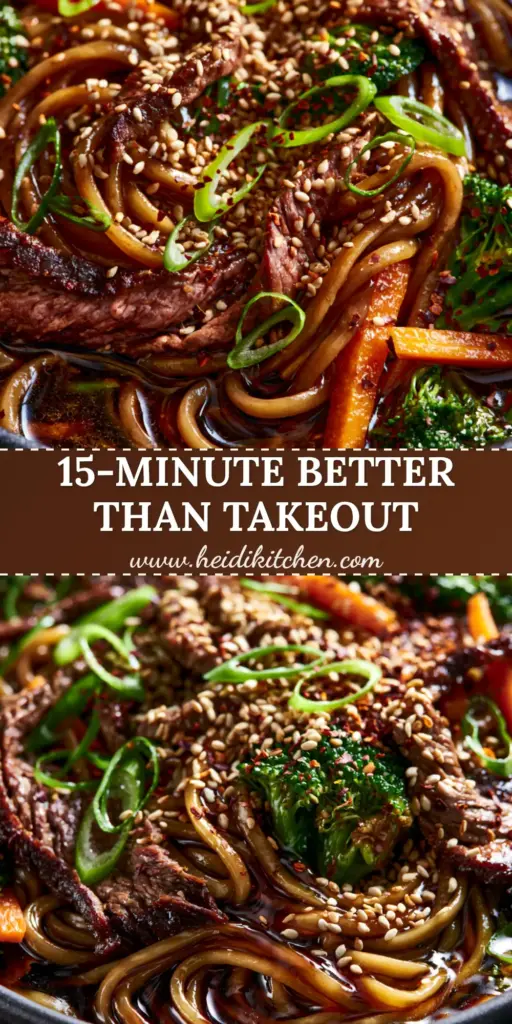
Mastering these Asian dinner recipes is all about confidence and high heat. By focusing on the visual cues—the deep sear on the beef, the vibrant green of the broccoli, and the mirror-like shine of the sauce—you are creating a meal that is a true work of art. This Beef Lo Mein is proof that with the right technique and high-quality ingredients, you can achieve world-class results in your own kitchen.
We invite you to share your creations with us! Did you manage to get that perfect caramelization on your flank steak? Let us know in the comments below. For more culinary inspiration and high-end food photography tips, be sure to follow us on Pinterest and sign up for our newsletter to never miss a recipe.