Chicken Mei Fun is a masterpiece of texture and balance, featuring delicate rice vermicelli that creates a light yet deeply satisfying meal. When prepared correctly, the noodles are translucent, glossy, and springy, providing the perfect canvas for savory-sweet soy flavors.
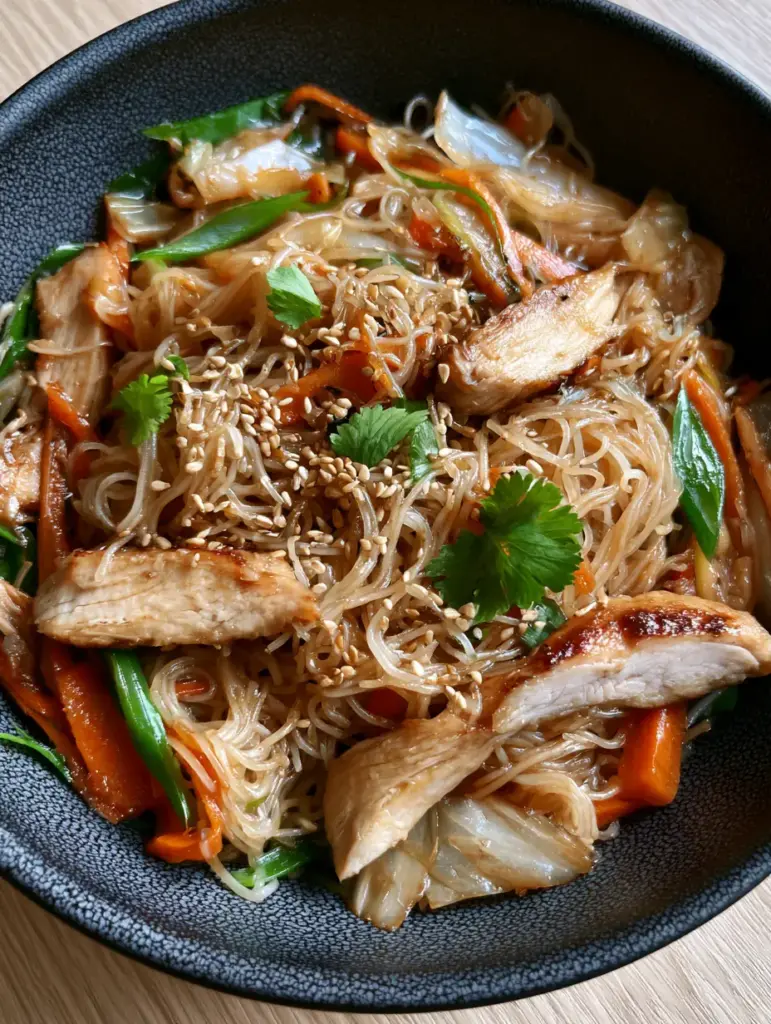
Imagine a steaming bowl where every strand of noodle is distinct, never mushy, and coated in a shimmering glaze that catches the natural daylight. This dish brings together the high-heat sear of tender chicken breast and the crisp snap of julienned carrots and Napa cabbage.
In this guide, we will master the art of the stir-fry, focusing on the sensory cues—the sizzle of the wok, the aroma of toasted sesame, and the vibrant colors of fresh scallions—to recreate a restaurant-quality experience at home.
The Blueprint for Flawless Rice Vermicelli Textures
- Springy, Non-Mushy Noodles: By using a specific soaking technique rather than boiling, we ensure the rice vermicelli retains a “bite” that stands up to the heat of the wok.
- Golden-Brown Searing: We achieve professional-grade Maillard reaction on the chicken strips, providing a smoky depth that contrasts with the fresh vegetables.
- Vibrant Visual Contrast: The orange of the carrots, the bright green of the scallions and cilantro, and the translucent shards of Napa cabbage create a high-contrast feast for the eyes.
- The Perfect Glaze: A meticulously balanced soy-based sauce that provides a shimmering coat without the heaviness of excess oil.
Essential Elements for Your Chicken Mei Fun
Thin Rice Vermicelli Noodles: You will need 8 oz (225g) of dried rice sticks. These are the foundation of the dish, providing that iconic tangled, airy texture that characterizes authentic Mei Fun.
Chicken Breast Strips: 1 lb (450g) of boneless, skinless chicken breast, sliced into thin, uniform strips. This ensure they cook rapidly while developing those essential golden-brown seared edges.
Julienned Orange Carrots: 1 cup (125g) of carrots cut into matchsticks. They provide a structural crunch and a pop of vibrant color that weaves through the translucent noodles.
Napa Cabbage: 2 cups (150g) of shredded Napa cabbage. This variety of cabbage turns slightly translucent when cooked, offering a mild sweetness and a delicate, shard-like texture.
Scallion Slivers: 1/2 cup (25g) of bright green scallions, sliced on a sharp bias. These provide a mild onion bite and essential visual brightness to the final bowl.
Savory Soy Sauce Glaze: A blend of soy sauce, oyster sauce, and a hint of sugar. This creates the shimmering, savory-sweet finish that coats every strand without being greasy.
Toasted White Sesame Seeds: 1 tbsp (9g) for garnishing. These add a tiny, nutty crunch and a professional, meticulous finish to the top-down presentation.
Fresh Cilantro Leaves: 1/4 cup (4g) of whole, bright green leaves. Cilantro adds a refreshing herbal note that cuts through the savory richness of the soy glaze.
Crushed Red Pepper Flakes: A generous pinch (about 1/2 tsp). This provides a subtle, background heat that balances the sweetness of the carrots and glaze.
Invisible Foundational Ingredients: You will also need 3 tbsp (45ml) of high-smoke point oil (like peanut or canola oil) for searing, and 1/2 tsp (3g) of fine sea salt to season the chicken during the initial cook.
Must-Have Tools for Wok Mastery
To achieve the “shimmering” result shown in our visual blueprint, a well-seasoned carbon steel wok is ideal. The flared sides allow for rapid moisture evaporation, which is the secret to preventing mushy noodles.
If you don’t have a wok, a large, heavy-bottomed cast iron or stainless steel skillet is a great alternative. You will also need a sharp chef’s knife for the julienned carrots and a pair of long kitchen tongs to toss the noodles without breaking them.
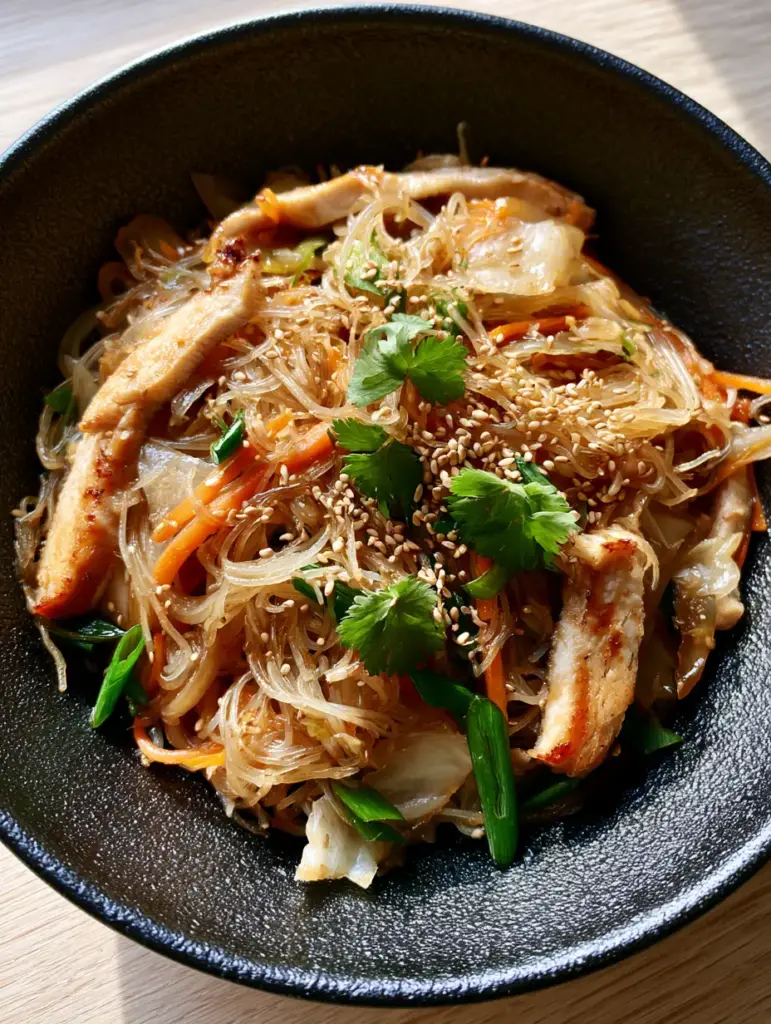
A textured, matte black ceramic bowl is highly recommended for serving. As seen in our macro photography, the dark backdrop makes the light-colored noodles and vibrant vegetables pop, enhancing the overall dining experience.
Step-By-Step Instructions for Culinary Success
Preparing the Rice Vermicelli Foundation
Place the dried rice vermicelli in a large heat-proof bowl. Cover them completely with very warm (but not boiling) water and let them soak for 10-12 minutes.
Test a strand; it should be flexible and “al dente,” meaning it has a firm core. Drain the noodles thoroughly in a colander and shake them dry; excess water is the enemy of a glossy, non-greasy finish.
Searing the Chicken for Maximum Flavor
Heat 1 tbsp (15ml) of oil in your wok over high heat until you see a faint wisp of smoke. Add the chicken breast strips in a single layer, seasoning with a pinch of salt.
Allow the chicken to sit undisturbed for 2 minutes to develop a deep golden-brown crust. Toss and cook for another minute until just opaque, then remove the chicken from the wok and set aside to keep it tender.
Flash-Frying the Vibrant Vegetables
Add another 1 tbsp (15ml) of oil to the hot wok. Toss in the julienned carrots and crushed red pepper flakes, stir-frying for 1 minute until the oil turns slightly orange.
Add the Napa cabbage shards. Look for a visual change: the cabbage should start to turn translucent and slightly wilted at the edges while maintaining a crisp center. This usually takes about 90 seconds of constant tossing.
The Final Tangle and Glaze
Return the seared chicken to the wok and add the drained noodles. Pour the soy sauce glaze mixture over the top immediately.
Using tongs or a wok spatula, lift and toss the ingredients vigorously over high heat. The noodles should begin to catch the light, turning glossy as they absorb the savory liquid. Continue for 2-3 minutes until the noodles are steaming and intricately tangled with the vegetables.
Garnishing for Professional Presentation
Turn off the heat and fold in the scallion slivers. Transfer the steaming Chicken Mei Fun into a matte black bowl.
Meticulously scatter the toasted white sesame seeds over the top and nestle fresh cilantro leaves into the highlights of the dish. The contrast of the bright greens against the golden chicken and translucent noodles is your cue that the dish is ready to serve.
Expert Tips for stir-fry Success
- Dry the Noodles: After soaking, ensure the noodles are as dry as possible. Any clinging water will steam the vegetables and ruin the springy texture.
- High Heat is Key: Don’t be afraid of a smoking wok. High heat creates “Wok Hei,” or the breath of the wok, which gives the dish its characteristic restaurant flavor.
- Don’t Overcrowd: If your pan is small, cook the chicken and vegetables in batches to ensure everything sears rather than boils in its own juices.
- The Soy Balance: If the noodles look dry, add a teaspoon of water or chicken broth at a time, but stop once they have a shimmering, light coating.
Storage and Reheating Advice
Chicken Mei Fun is best enjoyed immediately while the noodles are at their springiest. However, you can store leftovers in an airtight container in the refrigerator for up to 3 days.
To reheat, avoid the microwave if possible, as it can make rice noodles rubbery. Instead, toss the leftovers in a hot pan with a splash of water or a teaspoon of oil for 2 minutes until heated through.
This dish does not freeze well, as the delicate rice starch in the vermicelli will break down and become mushy upon thawing.
Creative Pairings and Menu Ideas
While Chicken Mei Fun is a complete meal on its own, it pairs beautifully with other Asian-inspired starters. You might consider serving it alongside some cheesy pull-apart garlic bread for a unique fusion twist that satisfies all carb cravings.
If you are looking for more poultry inspiration, our chicken shawarma skewers offer a different profile of seared meat that works well for meal prep alongside these noodles.
For those who prefer a more comforting, liquid-based meal, this stir-fry acts as a great textural contrast to a bowl of chicken orzo soup served as a first course.
Frequently Asked Questions
Absolutely! While carrots and Napa cabbage are traditional for the blueprint, you can add bell peppers or snap peas, provided you slice them thinly to maintain the quick cooking time.
The secret is to soak the rice vermicelli in warm water rather than boiling them. Drain them thoroughly and ensure they are dry before adding them to the high-heat wok.
Rice vermicelli is naturally gluten-free. To make the entire dish gluten-free, ensure you use Tamari or a certified gluten-free soy sauce and oyster sauce.
Mei Fun uses thin rice vermicelli noodles (rice-based), whereas Chow Mein typically uses wheat-based egg noodles that are thicker and more opaque.
The Ultimate Chicken Mei Fun Recipe
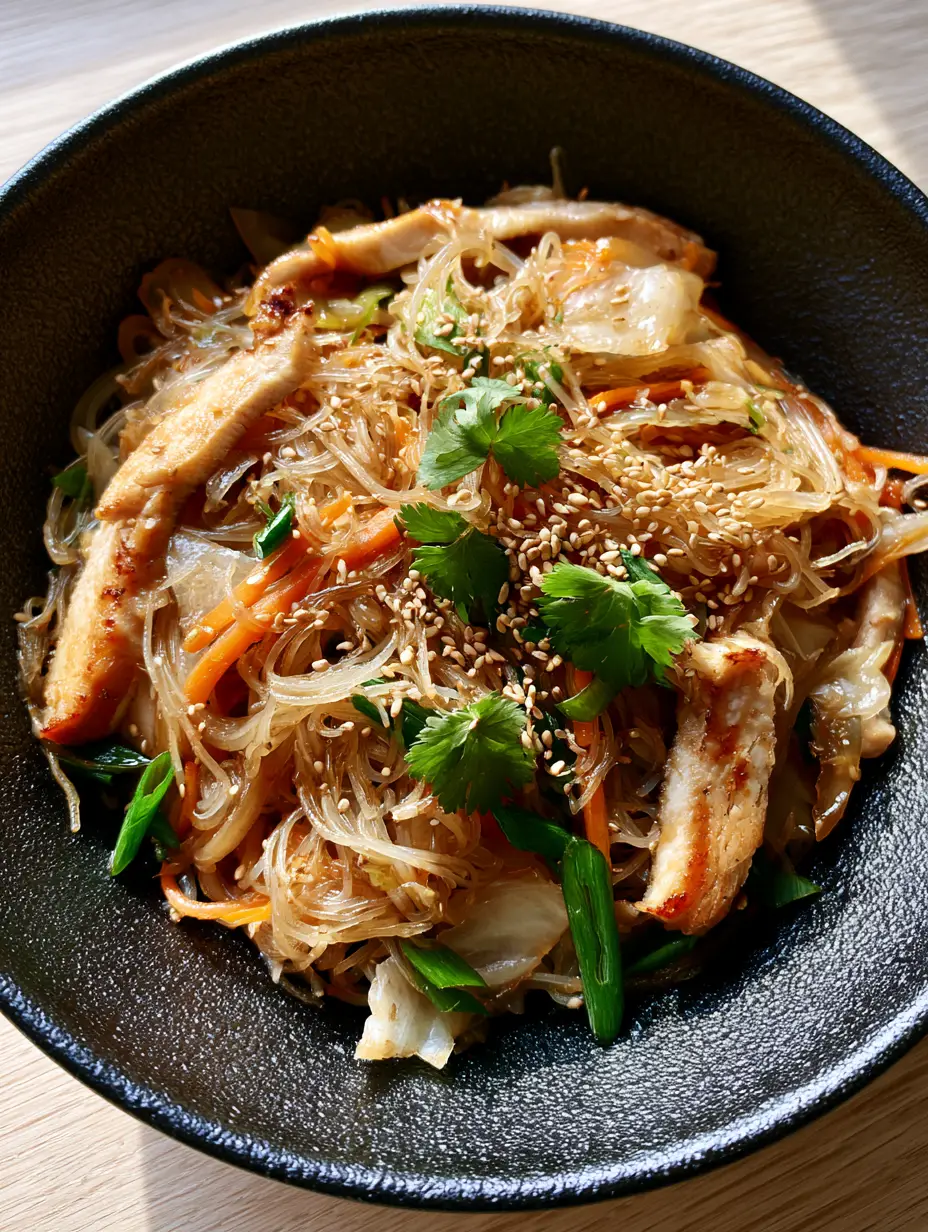
Chicken Mei Fun: The Ultimate Guide to Perfect Silk-Thin Stir-Fried Noodles
Ingredients
Equipment
Method
- Place rice vermicelli in warm water for 10-12 minutes until al dente. Drain and shake dry.
- Heat 1 tbsp oil in a wok over high heat. Sear chicken strips until golden-brown and cooked through. Remove and set aside.
- Add remaining oil and stir-fry carrots and Napa cabbage for 2 minutes until slightly translucent.
- Return chicken to wok with noodles and soy glaze. Toss vigorously over high heat until glossy and steaming.
Notes
Ensure the chicken is sliced thinly for the best seared edges.
Mastering the Art of Home-Cooked Mei Fun
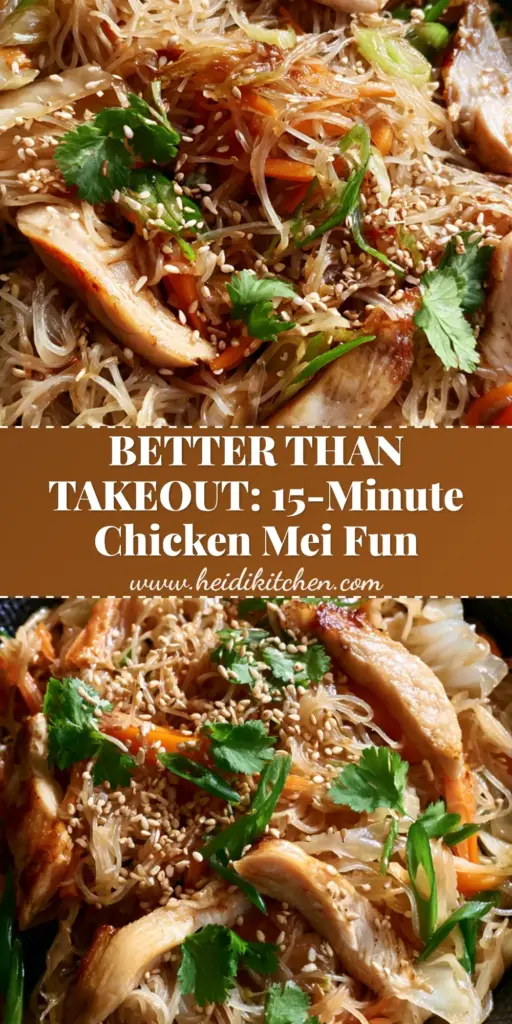
Creating a steaming bowl of Chicken Mei Fun at home is a rewarding culinary skill that brings professional textures to your dinner table. The combination of springy rice vermicelli and perfectly seared chicken breast is a crowd-pleaser that looks as good as it tastes.
We would love to see your creations! Please leave a comment below and share your results. Don’t forget to follow us on Pinterest for more visually stunning recipe inspiration.