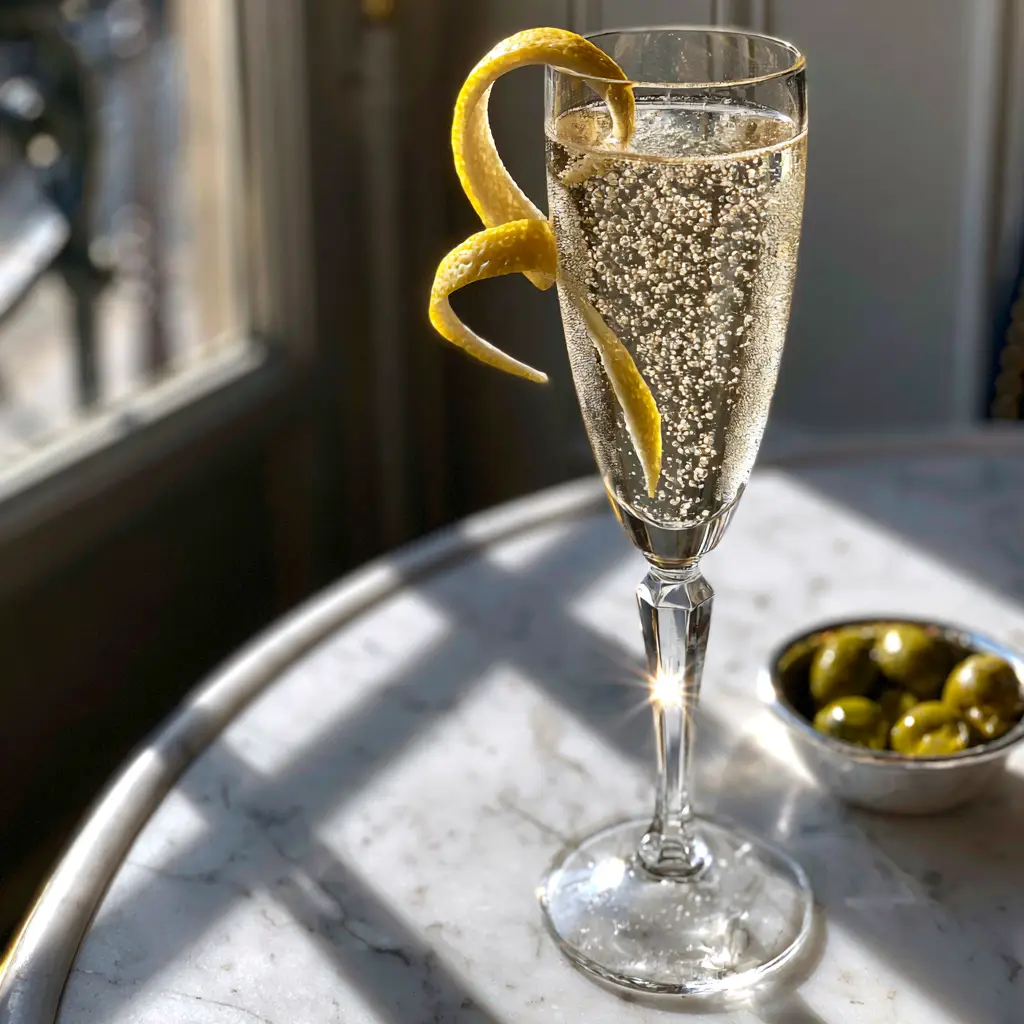
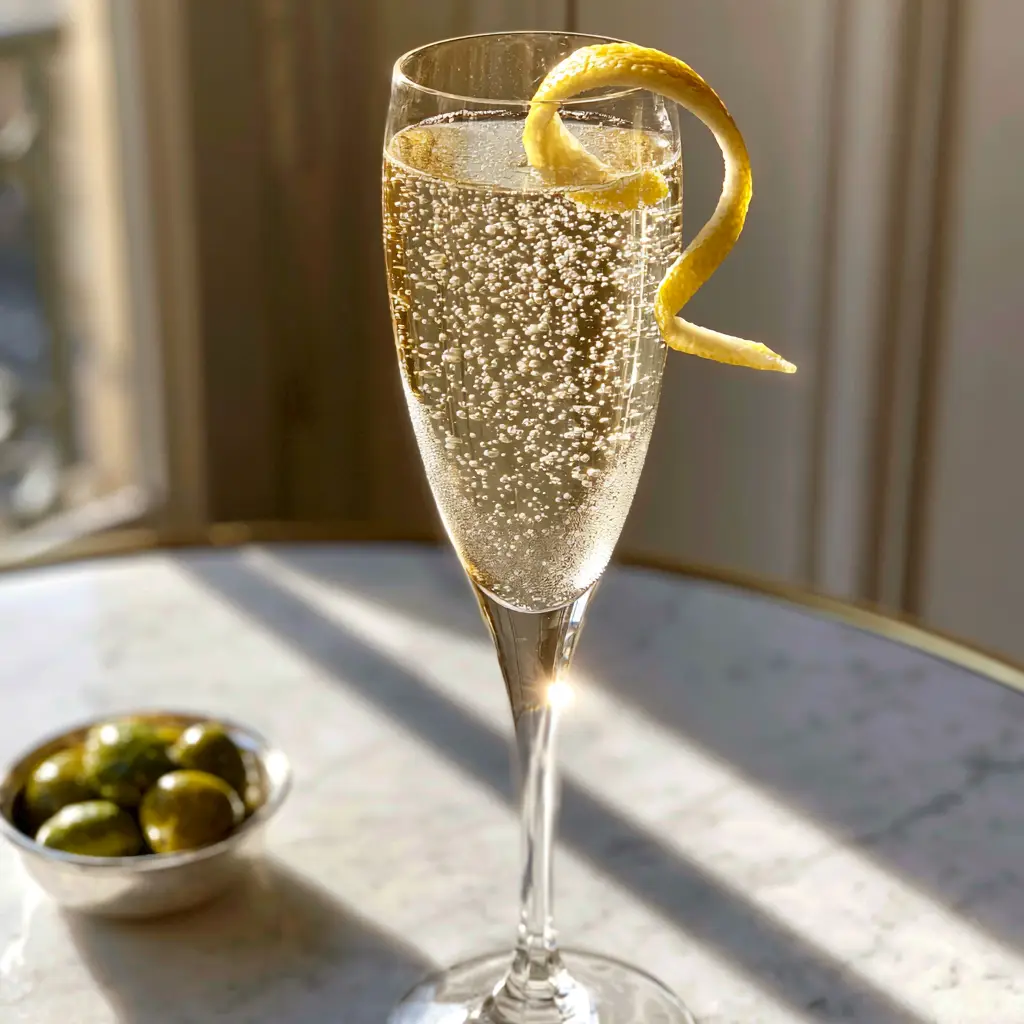
The French 75 cocktail poster aesthetic is defined by a specific kind of elegance: a tall, crystal champagne flute, a delicate layer of condensation frost, and those mesmerising micro-carbonation bubbles rising through a pale gold liquid. It is a drink that feels like a Parisian morning, crisp and bright. Whether you are looking to recreate the visual perfection of a professional cocktail print or simply want the most balanced, refreshing gin drink in your repertoire, you have arrived at the definitive guide.
Named after the powerful French 75mm field gun used in World War I, this cocktail is known for having a “kick” that feels like being shelled—yet it goes down with the grace of a silk ribbon. Achieving the exact look of a French 75 cocktail poster requires more than just mixing ingredients; it requires a forensic attention to temperature and technique. From the long, thin lemon peel spiral to the specific clarity of the London dry gin, every element serves a dual purpose of flavor and form.
Why This French 75 Recipe Captures the Iconic Bistro Aesthetic
- Effervescent Texture: We focus on preserving thousands of tiny, rising bubbles by managing the temperature of the crystal flute and the Brut champagne.
- Translucent Gold Clarity: By using a specific double-straining technique, we ensure the liquid remains a pale, translucent gold without pulp or ice shards.
- Aromatic Lemon Spiral: The garnish isn’t just for show; the oils from a long, thin lemon peel draped over the rim provide the essential sensory bridge to the gin’s botanicals.
- Professional Frost: We utilize a flash-chill method to ensure your glass carries that fine condensation frost seen in high-end photography.
Essential Elements for a Translucent Gold Sip
London Dry Gin: 1.5 oz (45ml). The backbone of the drink provides juniper-forward notes and botanical complexity. Choose a high-quality, clear gin to maintain the pale gold hue described in our visual blueprint.
Fresh-Squeezed Lemon Juice: 0.5 oz (15ml). This must be freshly squeezed and strained. It provides the bright acidity that cuts through the bubbles and balances the sweetness of the syrup.
Simple Syrup: 0.5 oz (15ml). A standard 1:1 ratio of sugar to water. This adds body and ensures the cocktail isn’t overly tart, allowing the champagne’s notes to shine.
Chilled Brut Champagne: 3 oz (90ml). Use a dry (Brut) champagne to avoid cloying sweetness. The “micro-carbonation” depends entirely on the quality and temperature of this sparkling wine.
Ice Cubes: 2 cups (approx. 300g). Large, clear ice cubes are needed for the shaker to chill the gin base rapidly without excessive dilution, preserving the cocktail’s strength.
Lemon Twist Garnish: 1 long spiral. A fresh, thick-skinned lemon is required to create a thin peel spiral that curls elegantly down into the glass without breaking.
The Toolkit for a Flawless Presentation
To achieve the look of a professional French 75 cocktail poster, your tools are just as important as your ingredients. You will need a crystal champagne flute—the thinner the glass, the better the condensation frost will appear. A cocktail shaker (preferably a Boston shaker) is necessary for the initial chill, while a fine-mesh Hawthorne strainer ensures no lemon pulp mars the liquid’s clarity. Finally, a channel knife or a very sharp paring knife is essential for creating that long, экспертный (expert) lemon spiral.
Mastering the Parisian Pour: Step-by-Step Instructions
Step 1: The Foundation of Frost
Place your crystal champagne flute in the freezer for at least 15 minutes before beginning. This is the only way to achieve the fine condensation frost seen in the French 75 cocktail poster. A room-temperature glass will cause the bubbles to dissipate too quickly and will never develop the tactile, cold look required for this aesthetic.
Step 2: Preparing the Citrus Architecture
Before juicing your lemon, use a channel knife to cut a single, long, thin spiral of zest. Aim for a length of at least 4-5 inches (10-12cm). Set this aside; the oils are most potent when the peel is fresh. Now, juice the lemon and pass it through a fine-mesh strainer to remove every trace of pulp.
Step 3: The Cold Shake
In your shaker, combine the 1.5 oz (45ml) of London dry gin, 0.5 oz (15ml) of fresh lemon juice, and 0.5 oz (15ml) of simple syrup. Fill the shaker to the brim with large ice cubes. Shake vigorously for exactly 12 seconds. You are looking for the shaker to become painfully cold to the touch and develop its own layer of frost on the outside.
Step 4: The Double Strain
Remove your flute from the freezer. Double-strain the gin mixture into the bottom of the chilled flute. The liquid should be a pale, translucent gold. By double-straining, you ensure that no tiny ice shards interfere with the rising micro-carbonation bubbles of the champagne.
Step 5: The Effervescent Finish
Slowly top the gin base with 3 oz (90ml) of chilled Brut champagne. Pour at a slight angle to preserve the carbonation. You will see thousands of tiny bubbles beginning to rise through the translucent gold liquid. Do not stir; the bubbles will naturally integrate the ingredients.
Step 6: The Final Garnish
Take your long lemon spiral and twist it over the glass to release the oils. Drape it over the rim so it curls down into the liquid, just like the minimalist composition of a Parisian bistro photo. The drink is now ready to be served alongside a small silver bowl of green olives for the ultimate contrast.
Expert Techniques for Micro-Carbonation Success
- Temperature is Everything: If your champagne is even slightly warm, it will foam up and lose its “tiny bubble” structure. Keep it in the coldest part of your refrigerator until the exact moment of pouring.
- Quality over Quantity: Because this recipe is so minimalist, every ingredient is exposed. Use a London dry gin with a clean profile rather than a heavily floral one.
- The Glass Matters: A narrow flute encourages the bubbles to travel a longer vertical distance, which is key for that French 75 cocktail poster look.
- The “Express” Technique: When you twist the lemon peel over the glass, you should see a tiny mist of oil. This provides the first “scent” of the drink, which is crucial for the overall experience.
Pairing Plates for a Bistro Experience
A cocktail this elegant deserves snacks that provide a salty or savory counterpoint. While the olives are a classic choice, you might also consider serving this during a sophisticated brunch alongside refreshing morning juices for your non-drinking guests. For a more substantial evening pairing, the acidity of the French 75 cuts beautifully through the richness of savory garlic bread or a decadent tray of classic stuffed shells. If you are hosting a gallery night featuring your favorite artistic cocktail prints, these pairings will keep your guests satisfied while they admire the decor.
Frequently Asked Questions
While you can, Prosecco is often sweeter and has larger bubbles. To maintain the ‘micro-carbonation’ and dry finish of a true French 75, a Brut Champagne or high-quality Cava is preferred.
The secret is a bone-dry, crystal flute placed in the coldest part of the freezer for at least 15-20 minutes. Avoid touching the bowl of the glass when pouring to keep the frost intact.
It is bright, effervescent, and deceptively strong. It tastes like a sparkling lemonade with sophisticated botanical undertones from the gin and a crisp, dry finish from the champagne.
A classic London Dry Gin is best. It provides a clean, juniper-forward profile that complements the citrus and champagne without adding competing floral or fruity notes.
Cloudiness usually comes from pulp in the lemon juice or shaking the champagne. Always fine-strain your lemon juice and only pour the champagne in at the very end without stirring.
The Definitive French 75 Recipe Card
French 75 Cocktail Poster: Mastering the Effervescent Parisian Classic
Ingredients
Equipment
Method
- Place the crystal champagne flute in the freezer for 15 minutes to develop a fine condensation frost.
- Cut a long, thin lemon spiral using a channel knife and set aside.
- Combine gin, lemon juice, and syrup in a shaker with ice. Shake for 12 seconds until the exterior is frosted.
- Double-strain the mixture into the chilled flute using a fine-mesh strainer.
- Slowly pour the chilled Brut champagne into the flute, allowing the micro-carbonation to rise.
- Express the lemon oils over the glass and drape the spiral peel over the rim and into the liquid.
Notes
Always double-strain to keep the liquid translucent and free of ice shards.
Closing & Call to Action
Capturing the essence of a French 75 cocktail poster is about celebrating the intersection of culinary science and visual art. When the pale gold liquid meets the sharp, clean shadows of a sunlit table, the result is pure magic. We would love to see your results! If you manage to capture that perfect condensation frost, tag us in your photos. For more aesthetic recipe inspiration and kitchen tips, follow us on Pinterest and join our community of home enthusiasts.