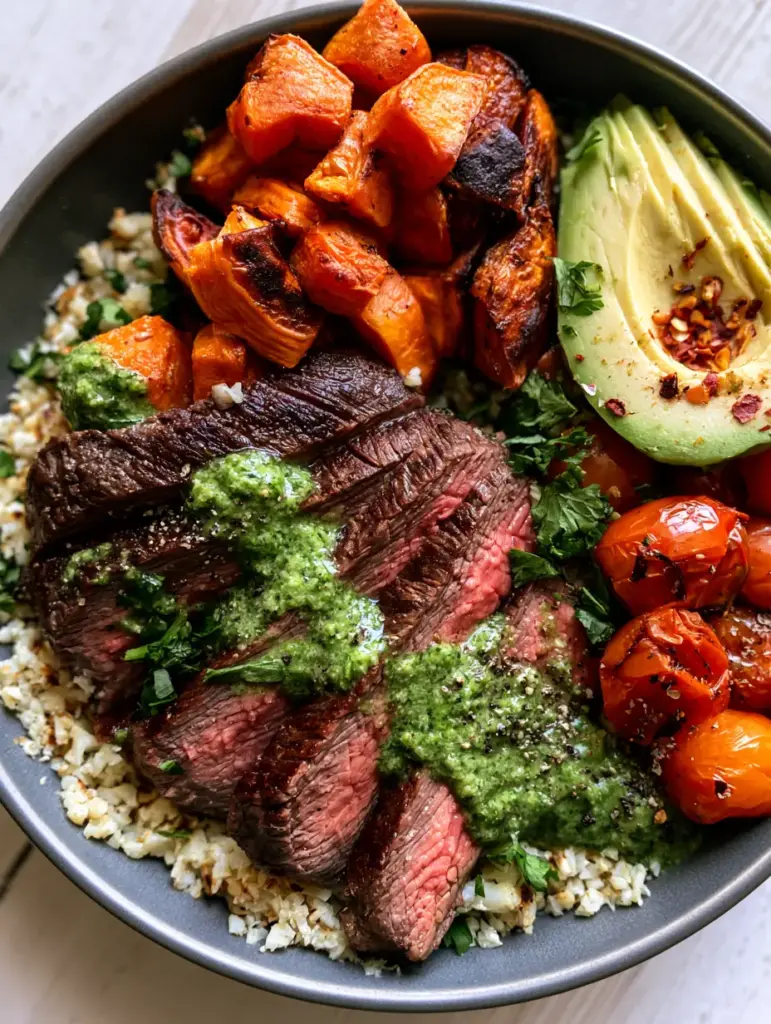
Finding satisfying Whole30 meals that don’t feel like a sacrifice can be a culinary challenge. Often, “clean eating” is associated with bland steamed vegetables and dry proteins, but this vibrant power bowl flips the script entirely. Imagine a bowl where every component is a masterclass in texture—from the charred, caramelized edges of roasted sweet potatoes to the tender, pink center of a perfectly seared grass-fed flank steak.
This recipe is designed for the home cook who wants restaurant-quality results without breaking compliance. We are focusing on the “power bowl” format, layering nutrient-dense ingredients like fluffy toasted cauliflower rice and creamy avocado to create a meal that is as visually stunning as it is nourishing. The bright green chimichurri sauce acts as the bridge, tying the earthy notes of the steak to the sweetness of the blistered cherry tomatoes.
Whether you are in the middle of a strict thirty-day reset or simply looking for high-protein dinner inspiration, these Whole30 meals provide a blueprint for success. By utilizing high-heat cooking techniques and fresh, aromatic herbs, we create deep flavors that prove healthy food should never be boring. Let’s dive into the science of the perfect sear and the art of the toasted cauliflower grain.
Why You Will Crave These Vibrant Whole30 Meals
- Structural Integrity: The combination of fiber-rich sweet potatoes and healthy fats from the avocado ensures you stay full for hours, preventing the late-night snack urge.
- The Perfect Crust: We use specific searing techniques to ensure the flank steak develops a deep brown, Maillard-reaction crust while maintaining a juicy, medium-rare interior.
- Textural Contrast: You’ll experience the crunch of toasted cauliflower rice, the burst of warm cherry tomatoes, and the buttery smoothness of fresh avocado in every single bite.
- Zesty Flavor Profiles: The homemade chimichurri provides a necessary hit of acidity and herb-forward brightness that cuts through the richness of the red meat.
Essential Elements for These Nutrient-Dense Whole30 Meals
To achieve the visual and culinary results seen in professional food photography, we must select ingredients that offer both color and chemical stability under heat. Each component in this list serves a specific role in building the final flavor profile.
The Protein Foundation
1.5 lbs (680g) Flank Steak: This lean but flavorful cut is ideal for high-heat searing. Its long muscle fibers soak up the chimichurri marinade beautifully, and when sliced against the grain, it becomes incredibly tender.
2 tbsp (30ml) Avocado Oil: With a high smoke point of 520°F (270°C), avocado oil is essential for achieving that charred exterior without the oil breaking down or tasting burnt.
The Root and Grain Base
2 large (approx. 500g) Sweet Potatoes: We cube these into 1/2-inch pieces to maximize surface area for caramelization. The natural sugars provide a sweet counterpoint to the salty steak.
4 cups (approx. 600g) Cauliflower Rice: Using fresh or frozen riced cauliflower is fine, but the key is “toasting” it in a dry pan to remove moisture and create a fluffy, non-mushy texture.
The Vibrant Accents
1 cup (150g) Cherry Tomatoes: Blistering these in the pan until the skins split creates a natural “sauce” that adds acidity to the bowl.
1 large Avocado: The creamy texture of a perfectly ripe avocado provides the healthy fats required for nutrient absorption and satiety.
The Chimichurri & Garnish
Fresh Herbs: You will need 1 cup (packed) of fresh Italian parsley and 1/2 cup (packed) of fresh cilantro. These provide the “bright green” visual marker of a fresh Whole30 meal.
Spices and Seasoning: Red pepper flakes for a subtle heat, cracked black pepper for texture, and high-quality sea salt to draw out the steak’s natural juices.
The Chef’s Toolkit: Equipment for Success
Achieving the specific textures of these Whole30 meals requires the right heat conduction. A heavy-duty 12-inch (30cm) cast-iron skillet is non-negotiable for the steak; it retains heat better than stainless steel, ensuring a deep sear rather than a grey steam.
You will also need a large rimmed baking sheet for the sweet potatoes. Crowding the pan is the enemy of caramelization, so ensure you have enough surface area. A high-speed blender or food processor is required to emulsify the chimichurri into that signature vibrant green drizzle.
Mastering the Perfect Sear: A Step-by-Step Guide
Phase 1: Roasting the Sweet Potato Cubes
Preheat your oven to 400°F (205°C). Toss the cubed sweet potatoes with 1 tbsp (15ml) of avocado oil and a generous pinch of sea salt. Spread them in a single layer on your baking sheet, ensuring they aren’t touching.
Roast for 20-25 minutes, tossing halfway through. Look for “caramelized edges”—the corners should be dark brown and slightly crispy, while the insides remain pillowy soft. This contrast is a hallmark of high-quality Whole30 meals.
Phase 2: Achieving the Toasted Cauliflower Rice
While the potatoes roast, heat a large non-stick skillet over medium-high heat. Do not add oil yet. Add the cauliflower rice to the dry pan. This technique, known as “dry toasting,” evaporates excess water.
Stir frequently for 5-7 minutes until the cauliflower smells slightly nutty and looks fluffy. Once the moisture is gone, stir in 1 tsp (5g) of ghee or avocado oil and a pinch of salt to finish the “toasted” look. Set aside and keep warm.
Phase 3: The Cast-Iron Flank Steak
Pat the flank steak extremely dry with paper towels; moisture is the enemy of the crust. Season aggressively with salt and cracked black pepper. Heat your cast-iron skillet until the avocado oil is shimmering and just starting to smoke.
Place the steak in the pan. Do not move it for 4-5 minutes. You are looking for a “deep brown crust” to form. Flip and cook for another 3-4 minutes for medium-rare. The internal temperature should hit 130°F (54°C). Transfer to a board and let it rest for at least 10 minutes to lock in the juices.
Phase 4: Blistering the Tomatoes and Assembly
In the same steak pan (utilizing the leftover rendered fat), toss in the cherry tomatoes. Cook on high heat for 2-3 minutes until the skins pop and they look “ready to burst.”
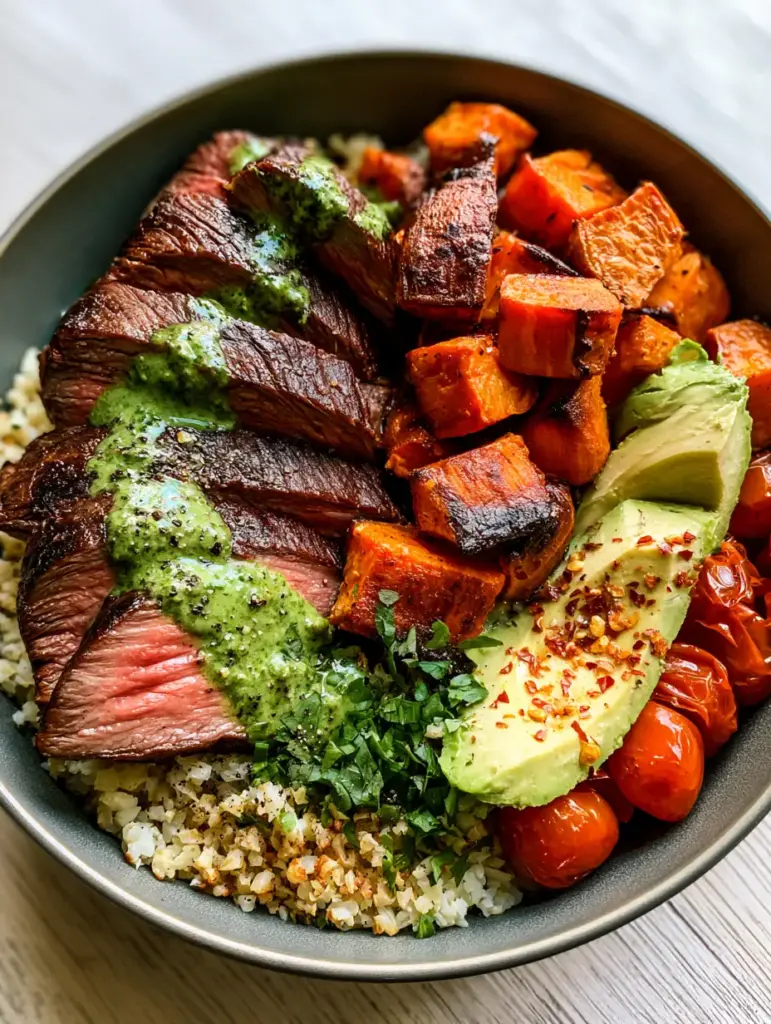
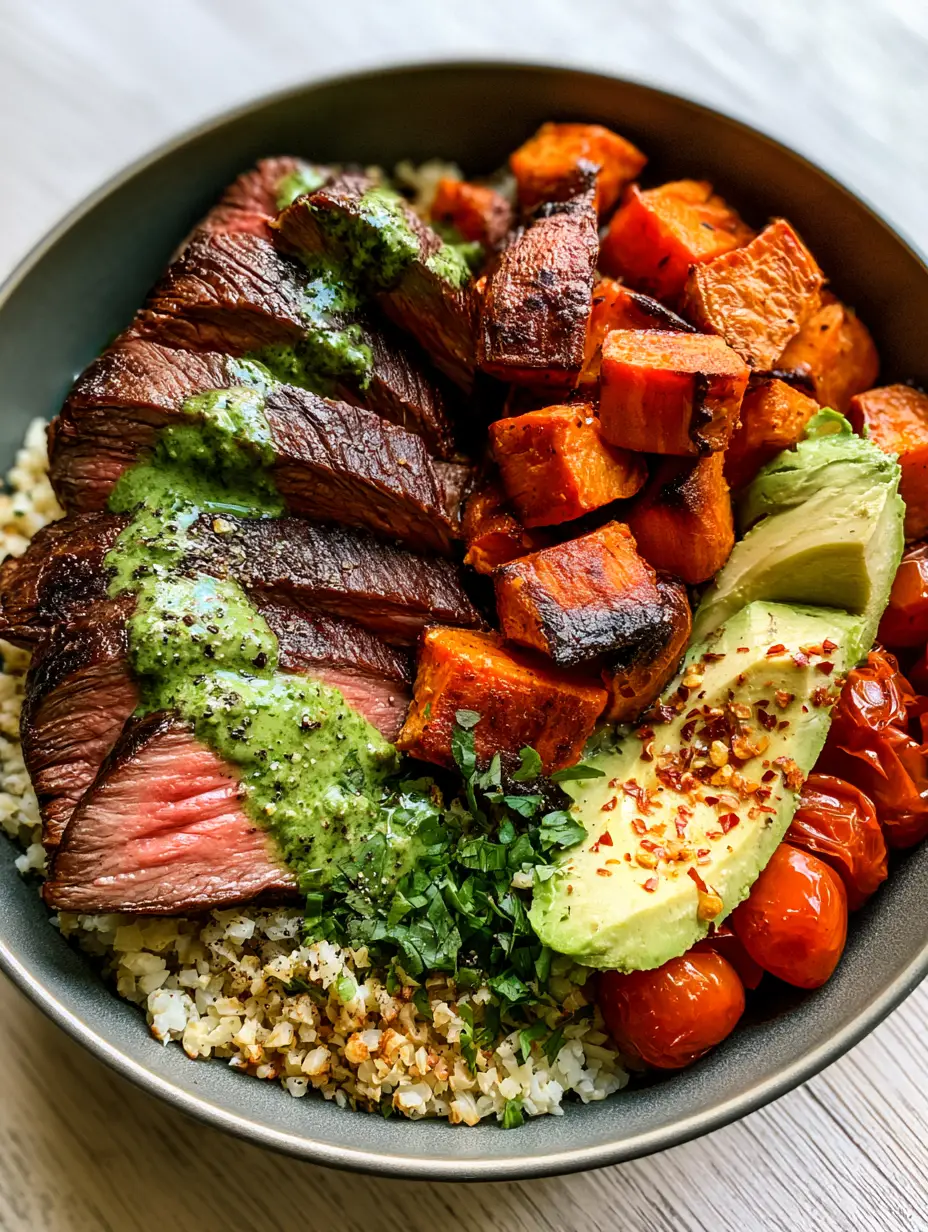
Slice the steak against the grain into thick, juicy strips. Build your bowl by placing a bed of cauliflower rice at the bottom. Arrange the steak, sweet potatoes, blistered tomatoes, and sliced avocado in distinct sections. Drizzle the bright green chimichurri over the meat and garnish with chopped cilantro and red pepper flakes.
Pro-Tips for Restaurant-Quality Whole30 Meals
- Temperature Control: Always take your steak out of the fridge 30 minutes before cooking. A cold steak will drop the pan’s temperature, preventing a proper sear.
- The Resting Rule: Never slice the steak immediately. Resting allows the muscle fibers to relax and reabsorb the juices, ensuring your cauliflower rice doesn’t get soggy from runoff.
- Avocado Ripeness: To get those perfect “fresh avocado slices,” choose a fruit that gives slightly to gentle pressure but isn’t mushy. Slice it last to prevent browning.
- Herb Freshness: For the chimichurri, ensure your parsley and cilantro are completely dry before blending. Excess water will turn the sauce muddy instead of “bright green.”
Preserving Freshness: Storage and Reheating
These Whole30 meals are excellent for meal prep, but storage order matters. Store the chimichurri in a separate small glass jar to maintain its acidity. The steak and roasted vegetables can be kept in an airtight container for up to 4 days.
When reheating, avoid the microwave if possible, as it can turn the steak rubbery. Instead, flash-sear the steak slices and vegetables in a hot pan for 2 minutes. Add the fresh avocado and cold chimichurri only after the base components are warm.
Complete Your Table: What to Serve Alongside
While this power bowl is a complete meal, you can enhance your Whole30 experience with complementary flavors. Start your morning with overnight oats (for your non-Whole30 family members) or a refreshing glow-boosting juice to stay hydrated.
If you’re hosting a dinner party, consider serving this alongside roasted vegetable medleys for extra volume. For those cold winter nights, a side of warming Egyptian red lentil soup makes for a fantastic appetizer that aligns with clean eating principles.
Your Burning Questions Answered
Yes, but you must sauté it longer to remove the extra ice crystals and moisture. Do not steam it in the bag, or it will become too wet for the bowl.
You will hear a distinct popping sound as the skins split, and the tomatoes will look slightly deflated and charred in spots. This usually takes 2-3 minutes on high heat.
The secret is to ‘dry toast’ the riced cauliflower in a hot pan without oil first. This allows the moisture to evaporate. Only add a small amount of fat at the very end to finish the texture.
Yes, most vinegars (except malt vinegar) are compliant. Red wine vinegar adds the perfect acidic punch to the chimichurri sauce without using sugar.
Always slice flank steak against the grain (perpendicular to the long muscle fibers). This shortens the fibers, making each bite much easier to chew.
The Recipe: Seared Steak & Cauliflower Rice Power Bowl
Whole30 Meals: The Ultimate Seared Steak & Chimichurri Power Bowl
Ingredients
Equipment
Method
- Toss sweet potato cubes with oil and salt; roast at 400°F (205°C) for 25 minutes until caramelized.
- Sauté cauliflower rice in a dry pan over medium-high heat until moisture evaporates and it becomes fluffy.
- Sear flank steak in a hot cast-iron skillet for 4-5 minutes per side until a charred crust forms. Rest for 10 minutes.
- Toss tomatoes into the hot steak pan for 2 minutes until skins split and blister.
- Layer cauliflower rice, steak, potatoes, avocado, and tomatoes. Drizzle with chimichurri and cilantro garnish.
Notes
Ensure the steak is room temperature before searing to achieve the perfect medium-rare center.
Join the Community
Creating delicious Whole30 meals is a journey of discovery. We hope this power bowl becomes a staple in your kitchen, proving that clean eating can be a gourmet experience. If you enjoyed this recipe, please leave a comment below and share your results!
For more daily inspiration and visual recipe guides, follow us on Pinterest. Don’t forget to pin this recipe to your “Healthy Dinner Ideas” board so you can find it later!