When the temperature drops and the windows begin to frost, there is a singular, primal craving for a bowl of Winter Minestrone Soup. This isn’t just a vegetable soup; it is a rustic masterpiece of textures and colors, designed to warm you from the inside out. Imagine a deep, golden-orange herb broth, shimmering with tiny droplets of extra virgin olive oil, cradling a bounty of garden-fresh ingredients.
Visualizing the perfect bowl is easy when you see the contrast of creamy white cannellini beans against the deep red of kidney beans, all punctuated by vibrant orange carrots and dark, earthy kale. Every spoonful offers a bite of al dente ditalini pasta, ensuring this meal is as satisfying as it is beautiful. Whether you are looking for a nutrient-dense lunch or a comforting dinner, this soup delivers on every level of culinary excellence.
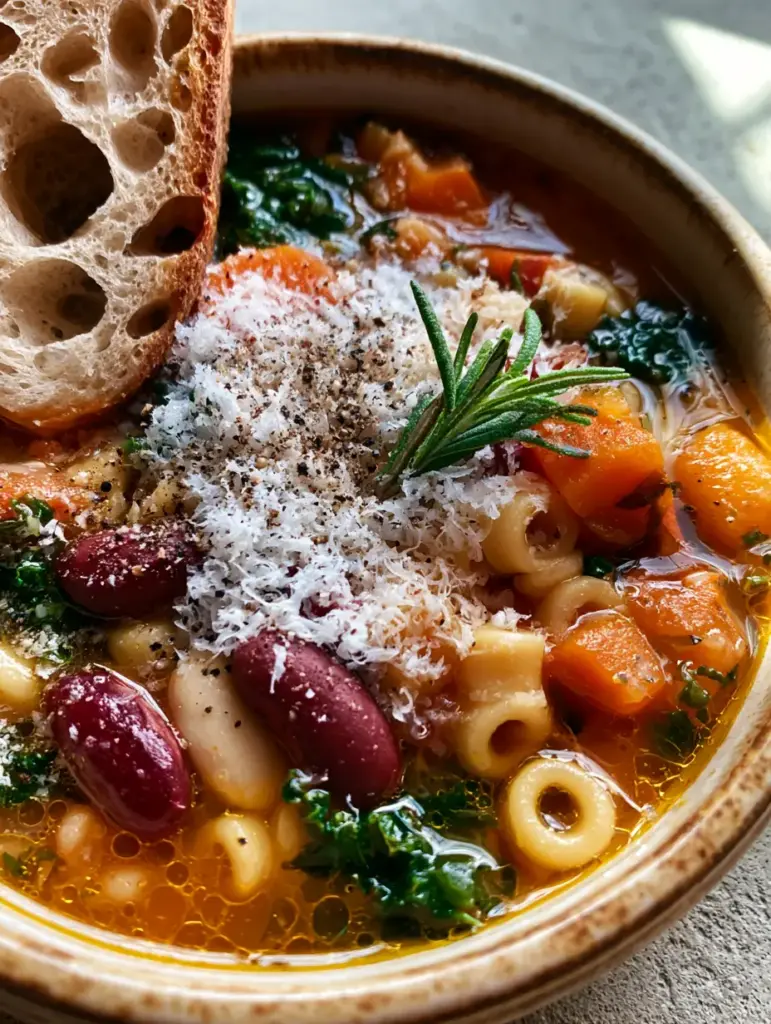
The Visual Allure of the Perfect Winter Minestrone Soup
The beauty of this Winter Minestrone Soup lies in its forensic attention to detail. We aren’t aiming for a muddy, overcooked stew; we are building a vibrant, layered dish that looks just as good as it tastes. Here is what makes this recipe stand out:
- Dual-Bean Texture: A combination of buttery cannellini and meaty red kidney beans provides a complex mouthfeel.
- Golden-Orange Broth: A base of fire-roasted tomatoes and aromatics creates a rich, sun-kissed hue that glows in the bowl.
- Al Dente Precision: Small ditalini pasta tubes are cooked just until tender, maintaining their shape without absorbing all the liquid.
- Visual Garnishes: A snow-white dusting of freshly grated parmesan and a woody rosemary sprig add the final “chef’s kiss” to the presentation.
Essential Components for a Nutrient-Dense Broth
Every ingredient in this Winter Minestrone Soup serves a specific purpose, both for flavor and for that stunning visual blueprint we are following. Using high-quality produce is the key to achieving that professional “macro shot” look.
Ditalini Pasta: 1.5 cups (150g). These small “little thimbles” are the traditional choice, offering a uniform shape that captures the broth inside every tube.
Red Kidney Beans: 1 can (15 oz / 425g). These provide a sturdy, earthy protein source and a deep crimson color that pops against the green kale.
Cannellini Beans: 1 can (15 oz / 425g). Often called white kidney beans, these add a creamy, silky texture that melts slightly into the broth for added body.
Fire-Roasted Tomatoes: 1 can (14.5 oz / 411g). These are critical for the “chunky” visual; the charred bits add a smoky depth and contribute to the golden-orange broth color.
Diced Carrots: 1 cup (130g). We dice these into uniform cubes so they soften at the edges but retain their bright orange structural integrity.
Sliced Celery: 3 ribs (120g). Fresh green celery slices provide a foundational aromatic base and a subtle crunch that balances the softer beans.
Chopped Lacinato Kale: 2 cups (60g). Also known as dinosaur kale, this dark green leafy vegetable stands up well to heat, providing a vibrant color contrast.
Extra Virgin Olive Oil: 3 tbsp (45ml). This is a foundational “invisible” ingredient; it carries the flavors and creates those shimmering droplets on the surface of the soup.
Vegetable Stock: 6 cups (1.4L). A high-quality stock is the canvas for our golden-orange herb broth, providing the liquid gold that ties everything together.
Aromatics: 1 medium yellow onion (150g) and 4 cloves (20g) of garlic. These provide the savory backbone that makes the kitchen smell incredible as you cook.
Fresh Rosemary: 1 large sprig. We use this for both the infusion of woodsy flavor and as a fresh green garnish for the final bowl presentation.
Parmesan Cheese: 1/2 cup (50g) freshly grated. Do not use the canned stuff; you want “snow-white” shards that melt elegantly into the hot broth.
Sourdough Bread: 4 thick slices. A crusty sourdough with large air bubbles is the perfect vessel for soaking up the tomato-herb broth.
The Culinary Toolkit for Rustic Soups
To achieve the professional results seen in our visual guide, you will need a few standard kitchen tools. A heavy-bottomed Dutch oven is highly recommended for even heat distribution, which prevents the beans from scorching at the bottom.
You will also need a sharp chef’s knife to ensure the carrots and celery are diced uniformly. A microplane is the best tool for achieving that light, fluffy parmesan dusting. If you love hearty bowls like this, you might also enjoy our Garlic Chickpea Soup for another protein-packed vegetarian option.
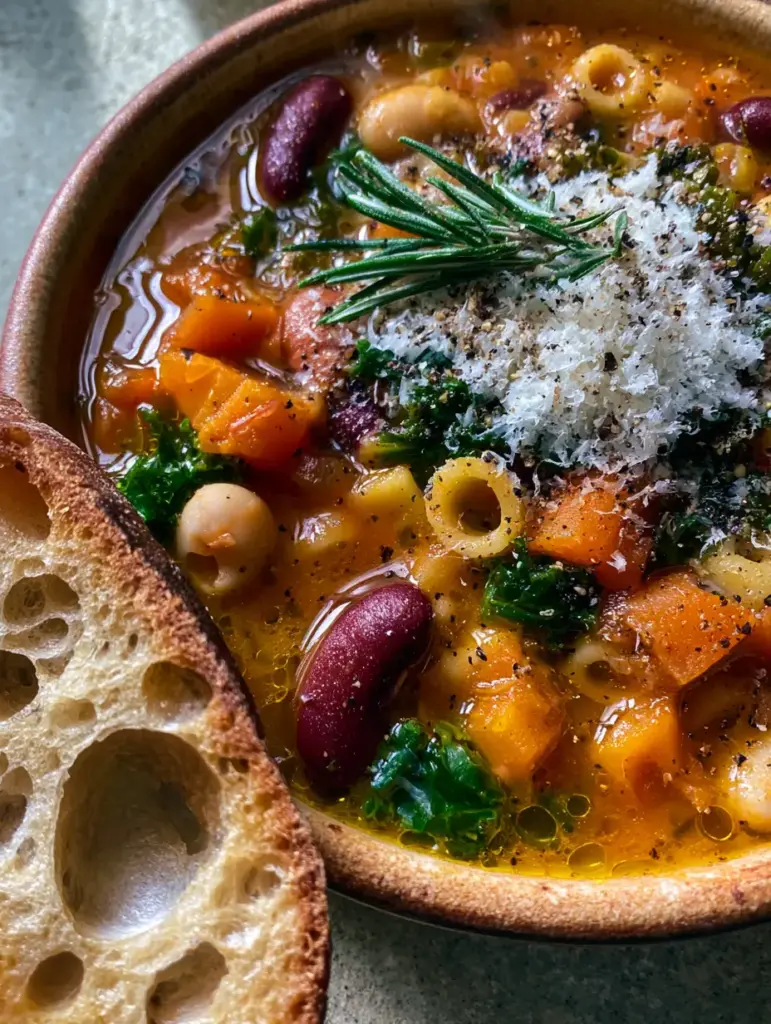
Developing the Deep Golden-Orange Broth
The secret to an elite Winter Minestrone Soup is the layering of flavors. We don’t just boil vegetables; we develop them through careful sautéing and simmering.
Step 1: Sautéing the Aromatic Base
Heat 2 tbsp (30ml) of olive oil in your pot over medium heat. Add the diced onions, carrots, and celery. Sauté for 6-8 minutes until the onions are translucent and the carrots have slightly softened edges. This “mirepoix” stage is where the foundational sweetness of the soup is born.
Step 2: Blooming the Herbs and Garlic
Clear a small space in the center of the pot and add the minced garlic and a pinch of salt. Cook for only 60 seconds until fragrant. If you like a bit of heat, you can add a pinch of red pepper flakes here. This step “blooms” the aromatics in the fat, intensifying their impact.
Step 3: Constructing the Tomato-Herb Broth
Stir in the chunky fire-roasted tomatoes and the vegetable stock. Add the rosemary sprig whole so it can infuse the liquid. Bring the mixture to a gentle boil, then reduce the heat to a simmer. You will notice the broth turning that signature golden-orange color as the tomato juices meld with the fats and stock.
Step 4: The Bean and Pasta Harmony
Add the rinsed red kidney beans and cannellini beans to the pot. Stir in the ditalini pasta. Let this simmer for about 8-10 minutes. Watch the pasta closely; you want it “al dente,” meaning it should have a slight resistance when bitten. Overcooking the pasta is the most common mistake in minestrone, as it will continue to soften in the residual heat.
Step 5: Wilting the Kale and Final Seasoning
In the last 3 minutes of cooking, stir in the chopped kale. The heat of the broth will wilt the dark green leaves into a vibrant, tender texture. Taste the broth and add cracked black pepper and salt as needed. Remove the woody rosemary sprig before serving, but keep a fresh one for the garnish.
Chef’s Secrets for Visual Perfection
To get that smartphone-perfect photo, pay attention to the surface of the soup. Just before serving, drizzle a tiny bit of high-quality extra virgin olive oil over the pot. You want to see those “visible droplets of olive oil shimmering on the surface,” just like in the Midjourney prompt.
When plating, use a wide, rustic ceramic bowl. Ladle the soup so that the beans and pasta are visible near the surface. Don’t let them all sink to the bottom! If you find your soups are often too thin, consider our Broccoli Potato Soup for a creamier alternative.
- Don’t Overcrowd: If the soup looks too thick, add an extra splash of broth to maintain that “golden-orange” liquid-to-solid ratio.
- Toast the Bread: Brush your sourdough with olive oil and toast it until golden-brown. Those “large air bubbles” are perfect for catching drops of soup.
- The Parmesan Dusting: Grate the cheese directly over the bowl right before serving so it stays white and distinct against the orange broth.
- Fresh Herb Finish: Always use a fresh rosemary sprig for the garnish; the one used for simmering will look dull and grey.
Storage and Reheating Advice
This Winter Minestrone Soup makes for incredible leftovers, though the pasta will continue to absorb liquid as it sits. If you plan on freezing this soup, it is best to cook the pasta separately and add it to individual bowls when serving.
Store in an airtight container in the refrigerator for up to 4 days. When reheating on the stovetop, add a splash of water or stock to loosen the broth, as the starch from the beans and pasta will thicken the mixture overnight.
Perfect Pairings for Your Winter Feast
While this soup is a meal in itself, it pairs beautifully with other rustic Italian-inspired dishes. The toasted sourdough is a must, but if you want something more indulgent, try our Cheesy Pull-Apart Garlic Bread.
If you are hosting a dinner party, start with this soup and follow it up with a hearty pasta dish like our Ricotta Beef Stuffed Shells. The acidity of the minestrone broth cleanses the palate between bites of rich, cheesy pasta.
Frequently Asked Questions
Yes, but add the ditalini pasta and kale in the last 20-30 minutes of cooking to prevent them from becoming too mushy.
The color comes from sautéing the carrots and using fire-roasted tomatoes. The oil droplets shimmering on top reflect this vibrant hue.
Yes! Simply omit the parmesan cheese garnish or replace it with a nutritional yeast dusting to keep it fully plant-based.
Small shells or elbow macaroni work well, but ditalini is traditional for its uniform size that matches the beans.
Pasta and beans continue to absorb liquid as they sit. Simply add a splash of vegetable stock when reheating to restore the consistency.
The Ultimate Winter Minestrone Soup Recipe
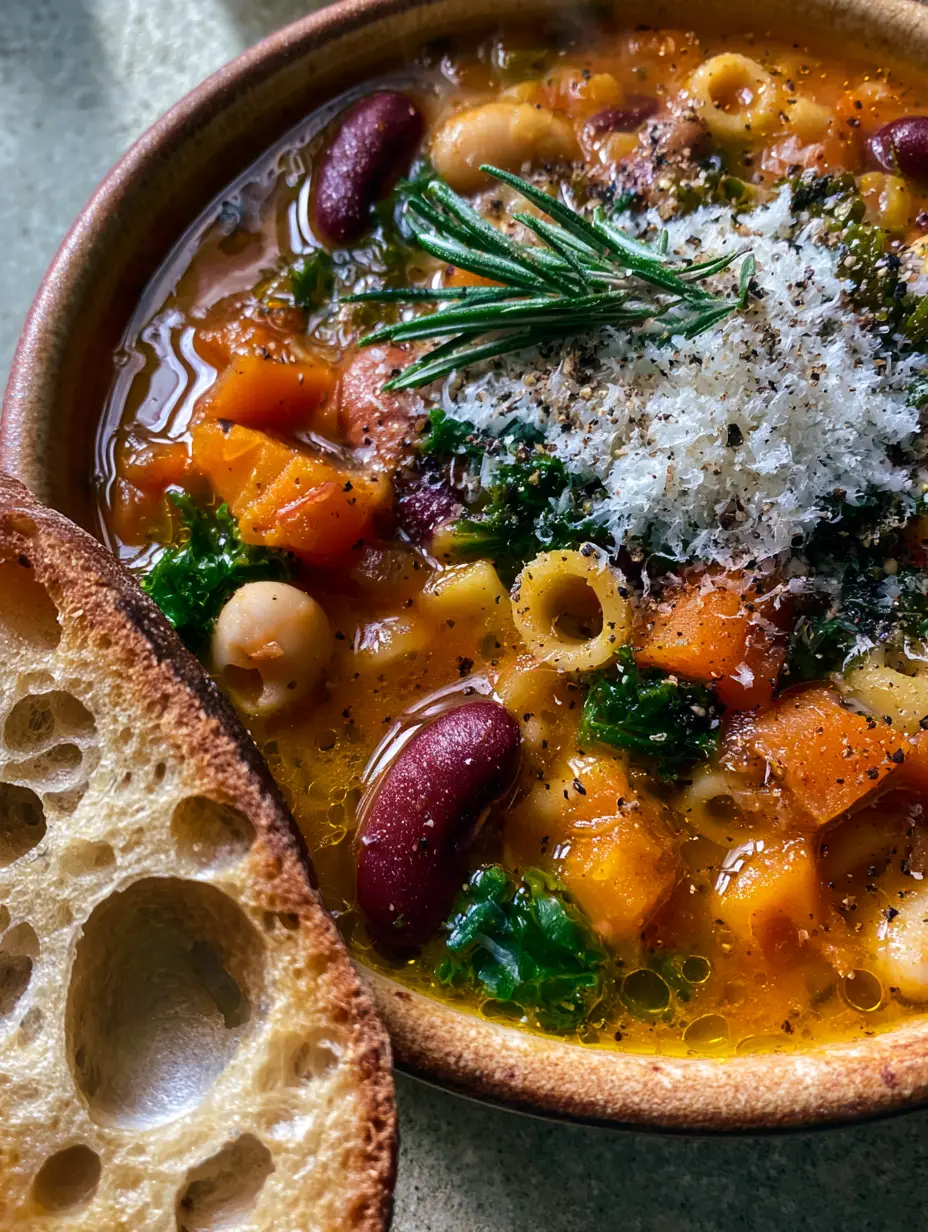
Winter Minestrone Soup: A Hearty Tuscan-Style Vegetable Medley
Ingredients
Equipment
Method
- Heat olive oil in a Dutch oven and sauté onions, carrots, and celery until softened at the edges.
- Stir in minced garlic and cook for 60 seconds until fragrant.
- Add fire-roasted tomatoes, stock, and the rosemary sprig. Bring to a boil, then reduce to a simmer.
- Add kidney beans, cannellini beans, and ditalini pasta. Simmer for 8-10 minutes until pasta is al dente.
- Stir in chopped kale and simmer for 2-3 minutes until vibrant green and tender.
- Ladle into bowls, remove the simmered rosemary, and top with fresh rosemary, parmesan, and cracked black pepper. Serve with toasted sourdough.
Notes
Tip 2: Drizzle a little extra virgin olive oil at the end for a professional shimmering look.

Closing Thoughts on This Winter Classic
Mastering the Winter Minestrone Soup is a rite of passage for any home cook. It teaches the importance of timing, seasoning, and the beauty of simple, whole-food ingredients. We hope this recipe brings warmth and color to your kitchen this season.
If you enjoyed this rustic meal, please leave a comment below and let us know how your broth turned out! Don’t forget to save this recipe to your boards on Pinterest so you can find it every time the temperature drops.