Tanghulu is more than just a snack; it is a sensory masterpiece that has captured the hearts of foodies from the bustling street markets of Northern China to the trending feeds of social media. The allure of this traditional treat lies in the contrast between the cold, juicy fruit and the shattering, glass-like sugar shell that encases it. When done correctly, the result is a vibrant, ruby-red and neon-green display that catches the light like fine jewelry.
In this comprehensive guide, we are going to master the art of the ultra-thin transparent sugar glaze. Whether you are aiming for that perfect smartphone-ready aesthetic or simply want to experience the “sharp crack” of professional-grade confectionery, this recipe will walk you through the precise culinary science required. We will focus on the visual harmony of deep red strawberries and vibrant green grapes, ensuring every bite is a balanced explosion of flavor and texture.
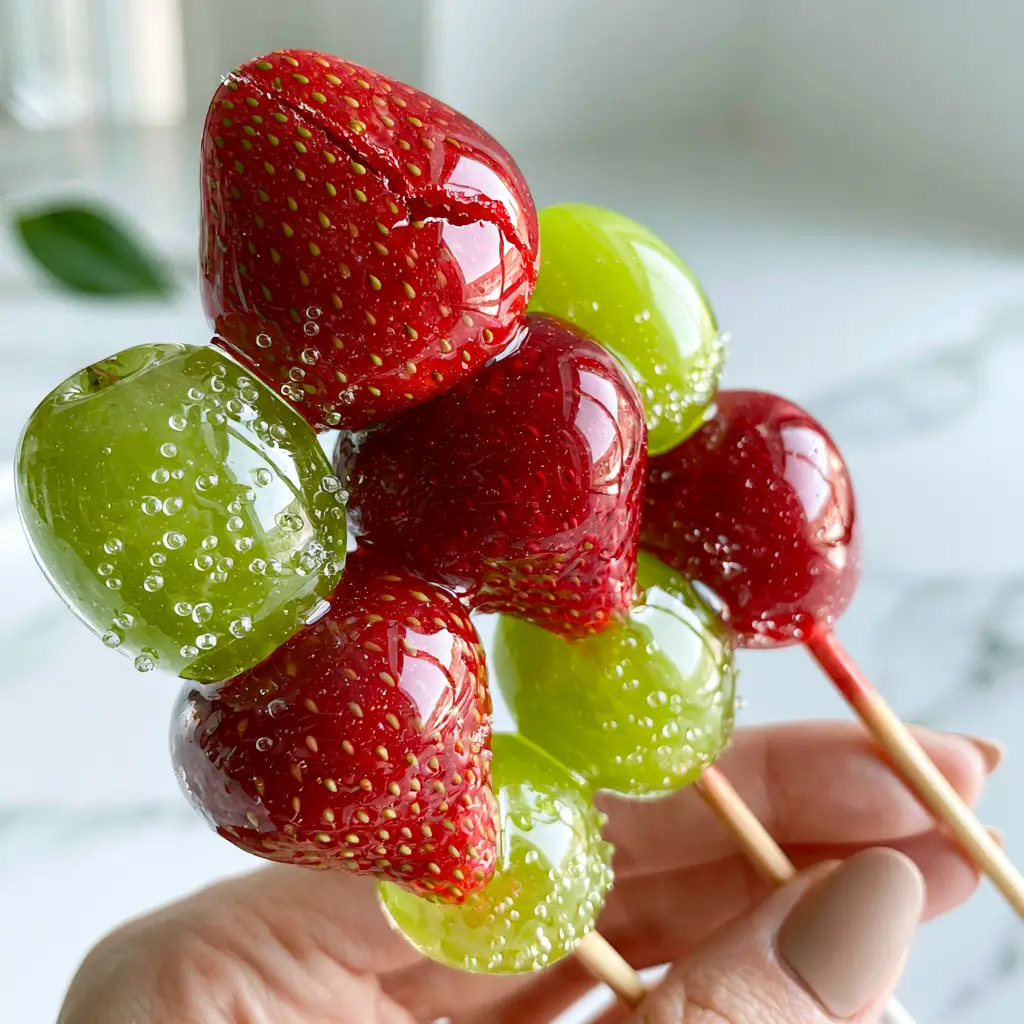
The Aesthetic Allure of Traditional Candied Fruit Skewers
- Crystal-Clear Transparency: Our technique ensures a glaze that is completely see-through, allowing the natural colors of the fruit to shine without any cloudy crystallization.
- The Signature Snap: By reaching the exact hard-crack stage, we achieve a coating that shatters instantly, preventing the dreaded “sticky tooth” experience.
- Vibrant Color Contrast: The combination of ripe strawberries and seedless green grapes provides a professional, high-end look that is perfect for any dessert spread.
- Delicate Sugar Bubbles: Learn how to embrace and control the tiny, trapped air bubbles that give authentic Tanghulu its artisanal, handcrafted appearance.
The Essential Components for a Glass-Like Finish
Whole Ripe Strawberries: Choose medium-sized, firm strawberries with the stems removed. Their natural acidity perfectly balances the sweetness of the glucose shell.
Green Seedless Grapes: Look for vibrant, “neon” green varieties that are firm to the touch. The snap of the grape skin under the sugar coating creates a secondary layer of textural interest.
Granulated White Sugar (2 cups / 400g): Pure sucrose is the foundation of our glaze. It provides the structural integrity needed for a hard, non-sticky finish.
Filtered Water (1 cup / 240ml): Water acts as the solvent, ensuring the sugar dissolves evenly before the evaporation process begins to concentrate the syrup.
Light Corn Syrup (2 tbsp / 30ml) – The Secret Scientist: While optional in some traditional recipes, corn syrup is a “doctoring agent” that prevents premature crystallization, ensuring your glaze stays transparent and smooth.
Wooden Bamboo Skewers: These provide the classic handheld structure. Ensure they are sturdy enough to support the weight of the fruit during the dipping process.
Precision Tools for Confectionery Success
Achieving a professional Tanghulu requires more than just a pot; it requires precision. A heavy-bottomed stainless steel saucepan is vital for even heat distribution, preventing “hot spots” that could burn the sugar. You will also need a digital candy thermometer to monitor the syrup’s transition through various stages of concentration.
Additionally, prepare a large bowl filled with ice and cold water. This “thermal shock” bath is the secret to instantly setting the sugar, creating that hyper-reflective, glossy surface seen in high-end photography. If you are a fan of handheld treats, you might also enjoy experimenting with savory steak kabobs for your next gathering.
The Science of Prepping Your Fruit for Maximum Adhesion
The biggest enemy of a perfect Tanghulu glaze is moisture. If the fruit is damp, the sugar will slide right off, or worse, the steam from the fruit will cause the glaze to soften and become sticky within minutes. Start by washing your strawberries and grapes thoroughly in cool water.
Once washed, pat them bone-dry with paper towels. I recommend letting them air-dry on a wire rack for an additional 20 minutes. Ensure the fruit is at room temperature; cold fruit can cause the hot sugar to seize or crack prematurely. This attention to detail is similar to the preparation needed for specialized gluten-free snacks where texture is paramount.
Architecting the Perfect Fruit Skewer
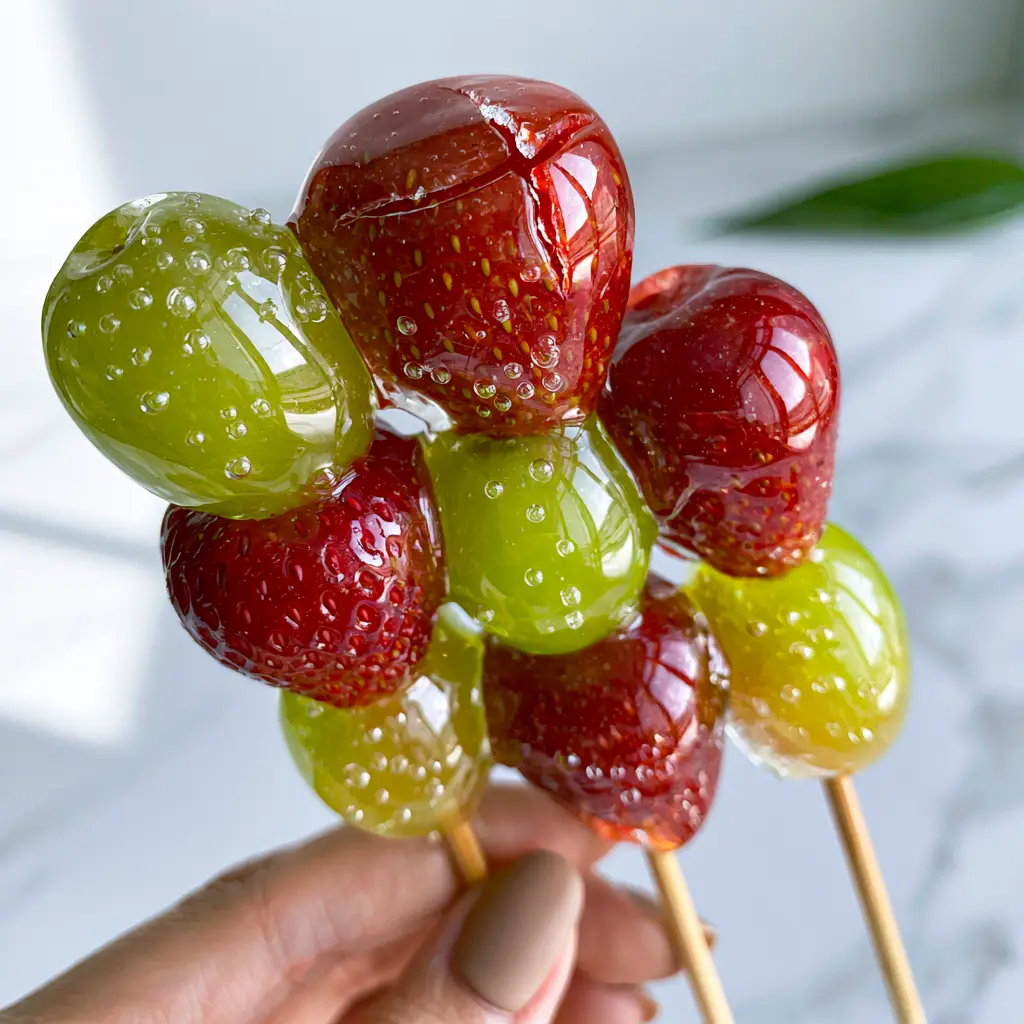
To achieve the high-end look described in our visual blueprint, alternate the fruit on your bamboo skewers. Start with a deep red strawberry, followed by a vibrant green grape, and repeat. Leave about two inches at the bottom of the skewer to act as a handle.
When skewering the strawberries, pierce them through the center of the hull where the stem was removed. This hides the entry point and keeps the fruit secure. For the grapes, go through the longitudinal axis. This creates a streamlined silhouette that looks beautiful when held against a minimalist kitchen background.
Mastering the Hard-Crack Sugar Stage
Dissolving the Crystals
In your saucepan, combine the sugar, water, and corn syrup. Stir gently over medium heat until the sugar is completely dissolved. Once it begins to simmer, stop stirring. Stirring at this point can splash sugar crystals onto the sides of the pot, which can trigger a chain reaction of crystallization, turning your clear syrup into a cloudy mess.
The Climb to 300°F (150°C)
Increase the heat slightly and monitor the temperature. The syrup will first go through the “soft ball” and “hard ball” stages. You are looking for the “hard-crack” stage, which occurs between 300°F and 310°F (150°C – 154°C). At this temperature, the water content has almost entirely evaporated, leaving behind a syrup that will turn into a brittle, glass-like solid upon cooling.
Visual and Sensory Cues
Watch for the bubbles. They will transition from large and watery to small, viscous, and slow-moving. The syrup should remain a pale, straw-like gold. If it turns dark amber, you have moved into caramel territory, which will mask the vibrant colors of your fruit. You want that ultra-thin transparent finish that reflects light like a windowpane.
The Art of the Dip and The Thermal Shock
Once the syrup hits 300°F (150°C), remove it from the heat immediately. Tilt the pan so the syrup pools on one side. Work quickly but calmly. Take a skewer and rotate it through the syrup, ensuring a thin, even coat over every piece of fruit.
Immediately after dipping, plunge the skewer into the prepared ice water bath for 2-3 seconds. This rapid cooling creates the “sharp crack” texture and traps those tiny, delicate sugar bubbles in the glaze. The result is a highly reflective and glossy finish that looks like a viral social media post. For more fun fruit-based treats, check out our creamy blackberry coconut drink which pairs beautifully with these skewers.
Expert Tips for a Flawless Tanghulu
- The Parchment Paper Trick: If you aren’t using an ice bath, place the dipped skewers on a sheet of silicone-coated parchment paper. This prevents the sugar from sticking to the surface as it sets.
- Control the Humidity: Sugar is hygroscopic, meaning it absorbs moisture from the air. Make Tanghulu on a dry day; high humidity will make the glaze turn sticky and “weep” within an hour.
- Clean Your Pot with Ease: To clean the hardened sugar from your saucepan, simply fill it with water and bring it to a boil. The sugar will dissolve back into the water, making cleanup effortless.
- Small Batch Success: If you are new to candy making, work in small batches. It is easier to control the temperature and dipping speed with smaller quantities of syrup.
Shelf Life and Serving Suggestions
Tanghulu is best enjoyed within 30 minutes of creation. Because the fruit inside is fresh and juicy, the moisture will eventually begin to dissolve the sugar shell from the inside out. This isn’t a dessert you can make a day in advance!
If you need to store them for a short period, keep them in a cool, dry place but avoid the refrigerator. The humidity inside a fridge will ruin the crystal-clear finish almost instantly. Serve these as a brilliant finale to a meal featuring savory chicken fried rice or as a standout item at a summer garden party.
Frequently Asked Questions
Yes! While strawberries and grapes are classic, you can use tangerine slices, kiwi, or pineapple. Just ensure the fruit is extremely dry before dipping.
Tanghulu is best eaten within 30-60 minutes. The juice from the fruit will eventually dissolve the sugar shell, making it soft and syrupy.
No. The moisture and humidity in the fridge will cause the sugar coating to become sticky and cloudy. Keep them in a cool, dry place at room temperature until serving.
This is caused by crystallization. Avoid stirring the syrup once it starts boiling, and use a little corn syrup to help keep the sucrose molecules from clumping together.
Stickiness usually means the sugar didn’t reach the ‘hard-crack’ stage of 300°F (150°C), or high humidity in your kitchen is melting the sugar. Always use a candy thermometer for precision.
The Ultimate Tanghulu Recipe Card
Tanghulu: The Ultimate Guide to Perfect Crystal-Clear Candied Fruit
Ingredients
Equipment
Method
- Wash strawberries and grapes thoroughly. Pat completely dry with paper towels. Any moisture will cause the glaze to fail.
- Thread fruit onto bamboo skewers, alternating strawberries and grapes. Leave space at the bottom for a handle.
- Combine sugar, water, and corn syrup in a saucepan. Stir over medium heat until dissolved. Once boiling, stop stirring.
- Boil until the thermometer reads 300°F (150°C). The syrup should be clear with tiny bubbles.
- Quickly tilt the pan and rotate each skewer in the syrup. Immediately dip into an ice bath for 3 seconds to set the 'glass' shell.
Notes
Work quickly once the sugar reaches 300°F as it continues to cook off-heat.
Closing the Snap: Join the Tanghulu Craze
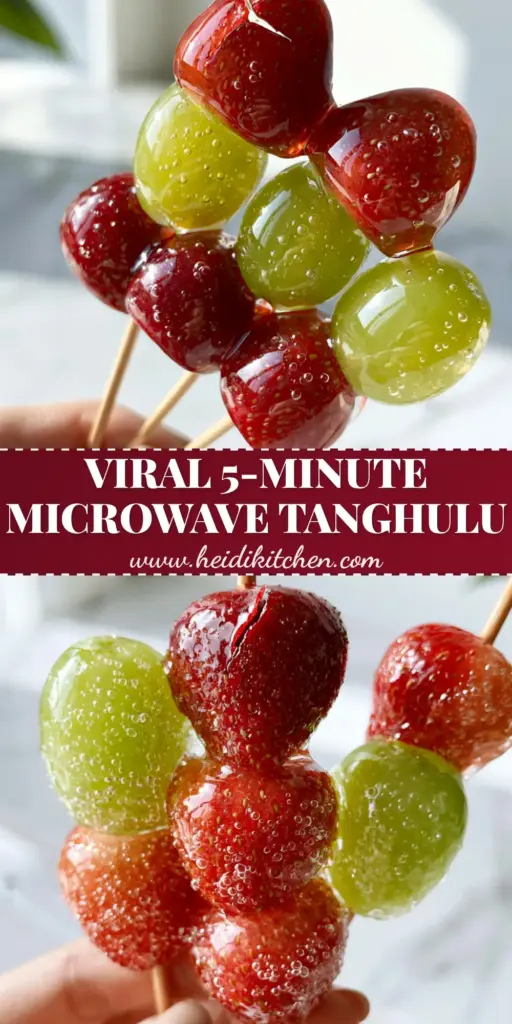
Mastering the Tanghulu technique is a rite of passage for any home cook looking to elevate their dessert game. The combination of thermal science and fresh produce results in a snack that is as fun to make as it is to eat. The “sharp crack” of the glaze against the soft focus of a marble countertop makes for the perfect culinary photograph.
Did you achieve the perfect glass-like coating? We want to see your results! Share your photos on social media and tag us, or pin this recipe to your favorite dessert board on Pinterest. For more handheld inspiration, don’t miss our guide on campfire-ready snacks. Happy crunching!