There is a specific magic found in Thai street food that is nearly impossible to replicate without understanding the science of the sear. This Thai Fried Pork, known locally as Moo Tod, represents the pinnacle of Southeast Asian comfort food. Imagine strips of succulent pork shoulder, marinated until tender, and then fried until they develop a glass-like, crispy exterior that shatters upon impact.
In this guide, we are recreating the exact experience of a bustling Bangkok night market. We are focusing on that signature glistening moist center and the copious amounts of golden fried garlic that characterize the perfect plate. Served on a vibrant green banana leaf, this dish is as much a visual masterpiece as it is a culinary one.
Whether you are looking for a new centerpiece for your dinner table or a high-protein snack that beats any takeout, this recipe delivers. We will pair these savory pork strips with a traditional Nam Jim Jaew dipping sauce, providing a smoky, spicy, and sour contrast that cuts through the rich, fried goodness of the meat.
The Secrets to the Ultimate Crispy Garlic Pork Experience
- Textural Contrast: Achieve a “glass-like” crispy exterior while maintaining a moist, tender interior by using well-marbled pork shoulder.
- Aromatic Encrustment: A heavy hand with cracked black peppercorns and minced garlic creates a flavorful crust that clings to every strip.
- Traditional Presentation: Serving over a fresh green banana leaf isn’t just for aesthetics; it provides a subtle floral aroma to the hot pork.
- Complex Dipping Sauce: The inclusion of toasted rice powder in the Nam Jim Jaew adds a unique nutty crunch and smoky depth.
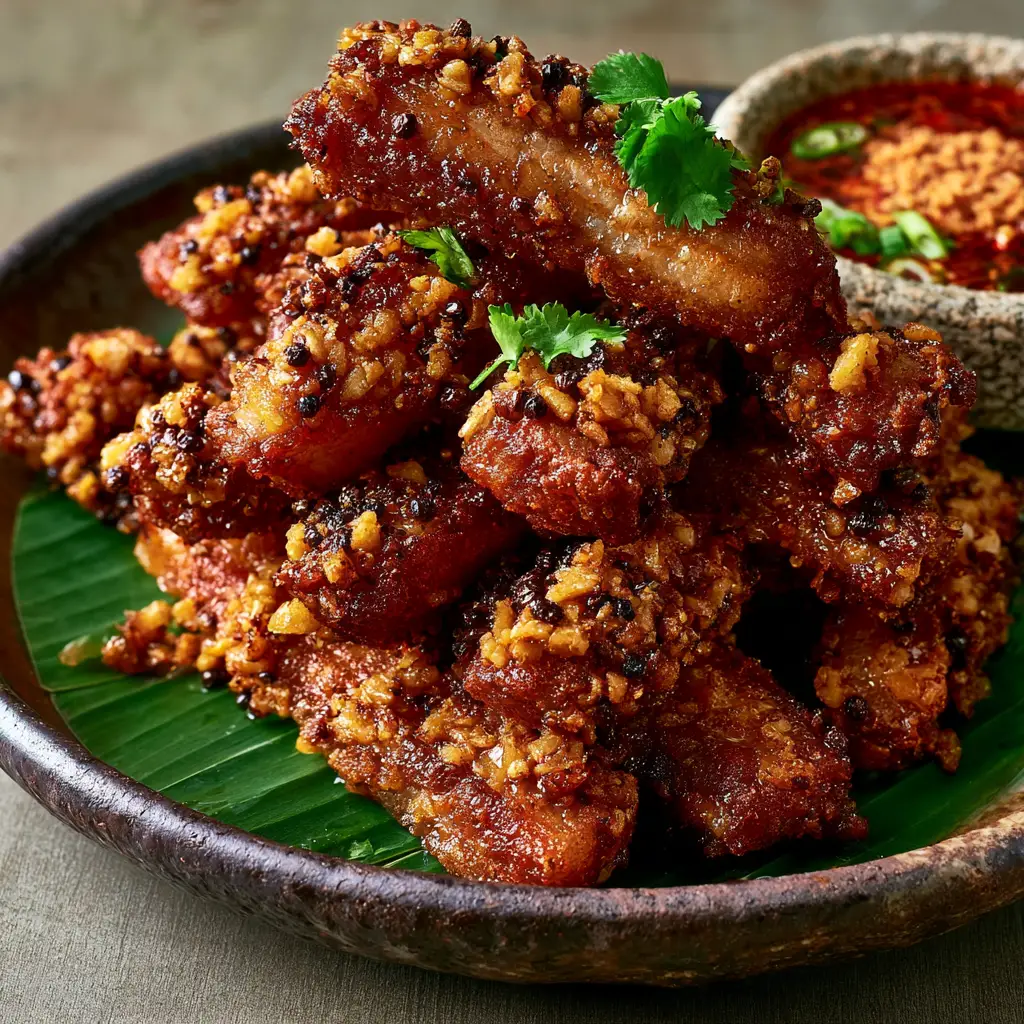
Aromatic Essentials for Authentic Thai Fried Pork
Pork Shoulder (Butt): 1.5 lbs (680g). This cut is essential because the intramuscular fat melts during frying, ensuring the meat stays “glistening and moist” rather than drying out like a loin would. For those who prefer different cuts, you might compare this texture to a tender pork recipe focused on slow-cooking, though here we use high heat.
Fresh Garlic: 1/2 cup (60g), finely minced. We use a massive amount of garlic to ensure every piece of pork is encrusted with golden-brown bits. Half goes into the marinade, and half is fried separately to ensure a perfect golden hue.
Cracked Black Peppercorns: 1 tbsp (6g). Do not use pre-ground pepper; the large, cracked pieces provide the visual “encrusted” look and bursts of floral heat required for the authentic Moo Tod profile.
Soy-Based Glaze: A combination of 2 tbsp (30ml) thin soy sauce and 1 tbsp (15ml) oyster sauce. This provides the deep umami base and the sugars necessary for the pork to achieve that deep golden-brown color.
Cornstarch: 3 tbsp (24g). This is our secret weapon for the “glass-like” exterior. It creates a thin, starch-based barrier that crisps up instantly in the hot oil.
Nam Jim Jaew Ingredients: You will need 2 tbsp (30ml) fish sauce, 2 tbsp (30ml) lime juice, 1 tsp (4g) palm sugar, 1 tbsp (6g) dried chili flakes, and 1 tbsp (6g) toasted rice powder. This sauce is the soul of Thai BBQ and fried meats, much like a zesty dipping sauce elevates a summer cookout.
Foundational Ingredients: You will also need 2 cups (480ml) of high-smoke point oil (like vegetable or canola) for frying, a pinch of sea salt, and fresh cilantro sprigs for garnish.
Essential Tools for High-Heat Frying
To achieve the smartphone-style handheld photo quality of this dish, you need the right gear. A heavy-bottomed wok or a cast-iron skillet is preferred for its heat retention, which prevents the oil temperature from dropping when the pork is added. You will also need a fine-mesh spider strainer to rescue those delicate golden garlic bits before they turn bitter and dark.
Step-by-Step Mastery of Moo Tod
Preparing the Pork and Infusing Aromatics
Start by slicing your pork shoulder into strips approximately 1/2 inch thick and 3 inches long. Slicing against the grain is vital to ensure the meat remains tender. In a large mixing bowl, combine the pork with the soy sauce, oyster sauce, half of the minced garlic, and the cracked black peppercorns.
Massage the marinade into the meat for at least 2 minutes. This physical action helps the proteins break down and absorb the liquids. Let this sit for at least 30 minutes at room temperature, or up to 4 hours in the refrigerator for maximum flavor penetration.
The Secret to the Perfect Garlic Topping
Before frying the pork, we must prepare the garlic. Heat your oil in the wok over medium-low heat. Add the remaining minced garlic and fry, stirring constantly. Watch for the sensory cue: the moment the garlic turns a pale straw color and smells nutty, remove it immediately with your strainer.
The garlic will continue to cook from residual heat, darkening into the “golden-brown” shade seen in the visual blueprint. Set the fried garlic aside on a paper towel to crisp up. This ensures your garlic is never burnt or bitter when it tops the final dish.
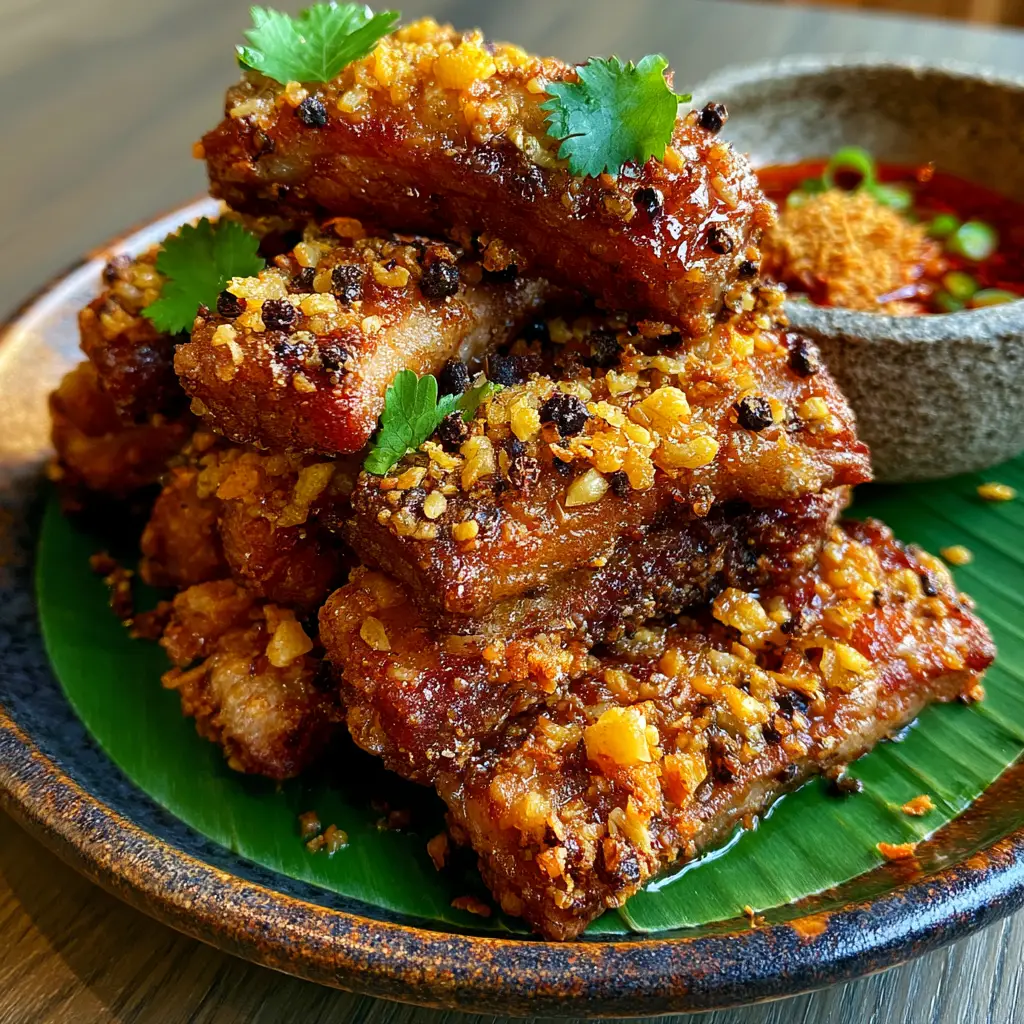
Achieving the Glass-Like Crispy Exterior
Increase the heat of your oil to 350°F (175°C). Just before frying, toss the marinated pork with the cornstarch until a thin, tacky coating forms. This starch reacts with the moisture in the marinade to create the translucent, crispy shell.
Fry the pork in batches to avoid overcrowding the pan. You are looking for a deep golden-brown color on the outside. Because of the sugars in the soy-based glaze, the pork will caramelize beautifully. It should take about 4-5 minutes per batch to reach a glistening, moist center with a hard exterior crunch.
Whisking the Nam Jim Jaew Dipping Sauce
While the pork rests, whisk together the fish sauce, lime juice, and palm sugar until the sugar is dissolved. Stir in the chili flakes and toasted rice powder. The rice powder will thicken the sauce slightly and provide that iconic gritty, smoky texture. Finish by folding in sliced green onions.
Expert Tips for Recipe Success
- Temperature Control: If your oil isn’t hot enough, the pork will absorb the fat and become greasy rather than crispy. Use a kitchen thermometer to stay at 350°F (175°C).
- Rice Powder Hack: If you can’t find toasted rice powder, simply toast raw glutinous rice in a dry pan until golden and grind it in a mortar and pestle.
- Banana Leaf Prep: To make the banana leaf vibrant and pliable, quickly run it over an open flame or rinse it with warm water to release its natural oils.
- Avoid the Crowding: Frying too many strips at once will steam the meat instead of searing it, ruining the “shatter-crisp” potential.
What to Serve with Thai Fried Pork
This savory pork is traditionally served with sticky rice, which helps soak up the salty glaze and the spicy Nam Jim Jaew. If you want to create a full Thai-inspired feast, consider serving this alongside a classic fried rice or even some pork potstickers for a dim-sum style spread.
For a unique fusion twist, leftovers of this garlic-heavy pork are incredible when chopped up and tossed into a Japanese-style fried rice, where the fried garlic bits add an extra layer of crunch.
Storage, Reheating, and Make-Ahead Advice
Thai Fried Pork is best enjoyed immediately to preserve the “glass-like” crunch. However, you can store leftovers in an airtight container in the refrigerator for up to 3 days. To reheat, avoid the microwave as it will make the pork rubbery. Instead, use an air fryer at 375°F (190°C) for 3-4 minutes to restore the exterior crispness.
Frequently Asked Questions
Yes, though the texture will be slightly less ‘glass-like.’ Air fry at 400°F (200°C) for 10-12 minutes, shaking the basket halfway through and spraying lightly with oil.
The secret is a light coating of cornstarch added just before frying and maintaining an oil temperature of 350°F (175°C) to create that ‘glass-like’ shell.
Toasted rice powder (Khao Khua) provides a nutty aroma, a unique smoky flavor, and a slight crunch that defines the Nam Jim Jaew dipping sauce.
Pork shoulder (pork butt) is the best choice because its high fat content ensures the meat remains moist and glistening after deep-frying, unlike leaner cuts like tenderloin.
Garlic has a very low burn point. It must be removed from the oil when it is pale golden, as it will continue to cook and darken after being removed from the heat.
The Ultimate Thai Fried Pork (Moo Tod) Recipe
Thai Fried Pork (Moo Tod) with Crispy Garlic and Nam Jim Jaew
Ingredients
Equipment
Method
- Combine pork strips with soy sauce, oyster sauce, half the garlic, and cracked pepper. Marinate for 30 minutes.
- Fry the remaining garlic in medium-low oil until golden-brown. Remove and drain on paper towels.
- Toss marinated pork with cornstarch until a thin, tacky coating forms.
- Fry pork in 350°F (175°C) oil for 4-5 minutes until the exterior is glass-like and deep golden-brown.
Notes
Double-fry for 1 minute at the end for extra crunch.

Closing Thoughts on This Thai Classic
Mastering Thai Fried Pork is a rite of passage for any home cook looking to explore the depths of umami and texture. The combination of the “encrusted” garlic, the sharp black pepper, and the smoky dip creates a sensory experience that is truly world-class. If you enjoyed this recipe, please leave a comment below and share your results! Don’t forget to follow us on Pinterest for more culinary inspiration.