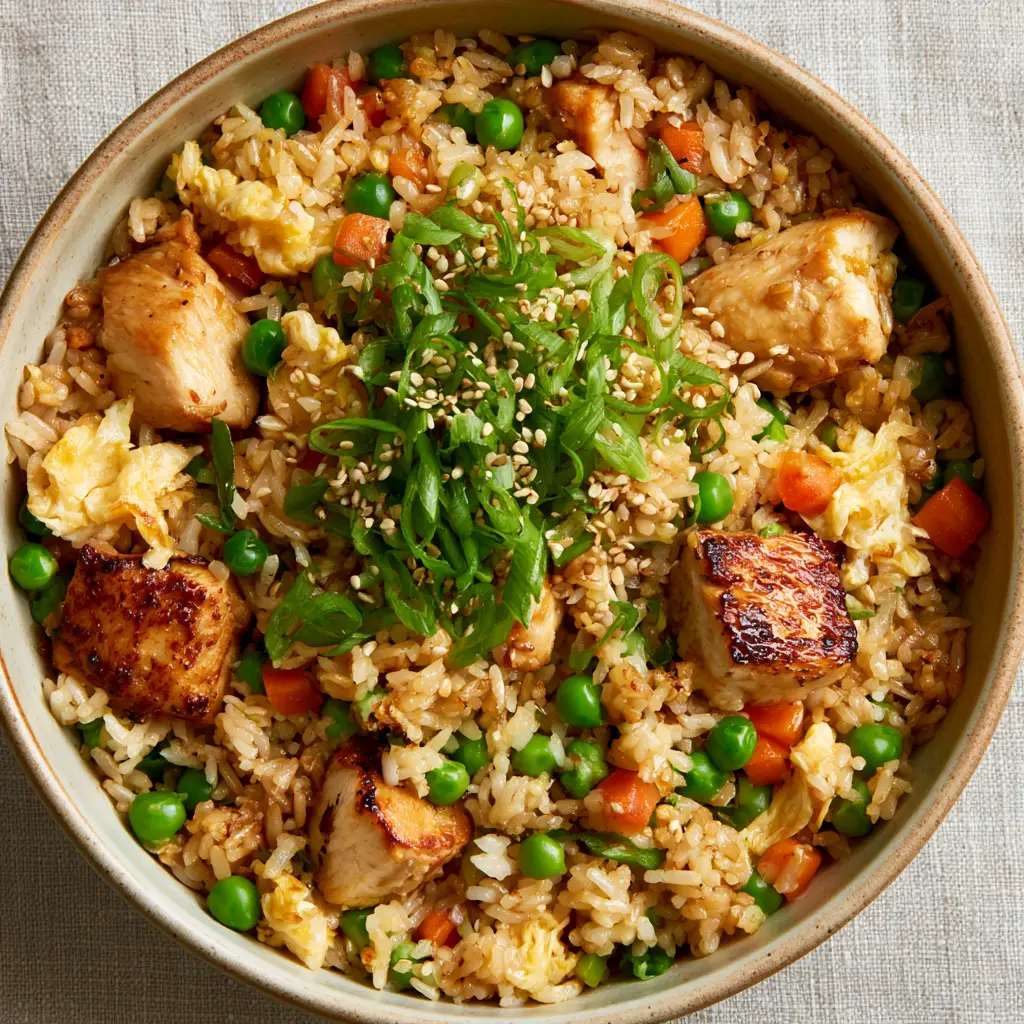
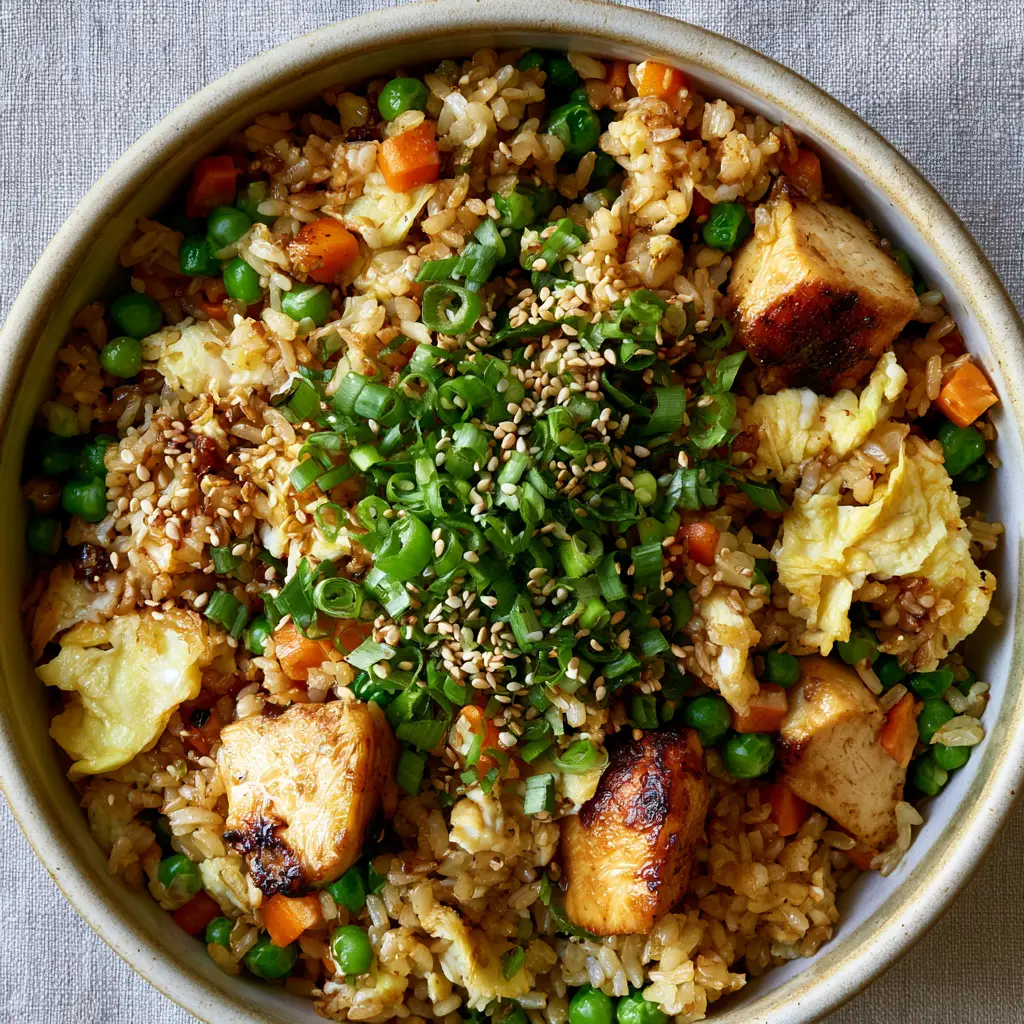
There is a profound difference between a standard takeout box and the masterpiece that is a perfectly executed Chicken Fried Rice. When you look at a bowl of premium fried rice, you aren’t just seeing food; you are seeing a landscape of texture and color. Imagine individual grains of jasmine rice, each toasted to a golden-tan hue, acting as the foundation for juicy chunks of chicken breast that boast deep, charred edges from a high-heat sear. This isn’t just a meal; it’s a culinary achievement that brings restaurant-quality techniques right into your home kitchen.
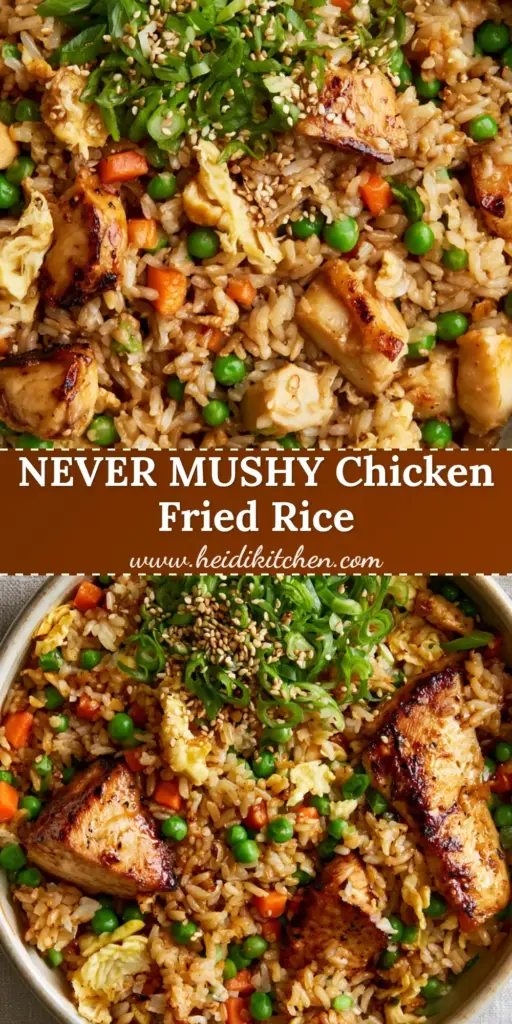
The visual appeal of this dish is undeniable, characterized by the vibrant pop of garden-green peas and tiny, uniform cubes of bright orange carrots. Soft, ragged ribbons of pale yellow scrambled egg weave through the grains, providing a delicate contrast to the robust, savory glaze. Every element is brought together by a thin, glossy umami coating of soy and sesame oil that creates a satin sheen under the kitchen lights. Finished with a heavy garnish of scallions and toasted sesame seeds, this recipe is designed to satisfy both the eyes and the palate.
Whether you are looking for a quick weeknight dinner or a centerpiece for a weekend feast, mastering the art of the wok is a skill every home cook should possess. This recipe focuses on the “forensic” details—the small steps that transform simple ingredients into something extraordinary. By the end of this guide, you will understand the science of the Maillard reaction on chicken and the physics of moisture evaporation that prevents clumping in your rice grains.
Why This Specific Chicken Fried Rice Recipe Wins Every Time
- Individual Grain Definition: We utilize aged jasmine rice and a specific toasting technique to ensure every grain remains distinct, never mushy or clumped.
- The Perfect Sear: Unlike boiled or poached textures often found in subpar versions, our chicken chunks are seared at high heat to achieve visible golden-brown charred edges.
- Vibrant Color Palette: By timing the addition of carrots and peas, we preserve their structural integrity and “garden-fresh” neon brightness.
- Glossy Satin Finish: A balanced soy-sesame glaze provides a professional-grade sheen without making the dish greasy or heavy.
- Textural Contrast: The combination of soft egg ribbons, crisp scallions, and crunchy toasted sesame seeds creates a multi-sensory experience.
Premium Pantry Essentials for Authentic Chicken Fried Rice
To achieve the result seen in high-end culinary photography, your ingredient selection is paramount. We aren’t just looking for “rice” and “meat”; we are looking for specific chemical properties that react to high heat. Using the right foundation ensures that your final dish mirrors the “satin sheen” and “toasted hue” described in our visual blueprint.
Long-Grain Jasmine Rice: 3 cups (approx. 450g) of cooked, chilled rice is the backbone of this dish. Jasmine rice offers a floral aroma and a sturdy structure that, when dried out overnight, toasts beautifully without breaking apart into a paste.
Chicken Breast Chunks: 1 lb (454g) of boneless, skinless chicken breast, cut into large, juicy 1-inch (2.5cm) cubes. Chicken breast is preferred here for its ability to take on a clean sear while remaining tender on the inside, providing those “visible golden-brown charred edges.”
Aromatic Fat Foundation: 3 tbsp (45ml) of a high-smoke point oil, such as avocado or peanut oil. These oils allow you to reach the high temperatures necessary for the “toasted” grain effect without the oil breaking down and smoking your kitchen out.
The Umami Glaze: A mixture of 2 tbsp (30ml) low-sodium soy sauce, 1 tbsp (15ml) oyster sauce, and 1 tsp (5ml) toasted sesame oil. This combination creates the “glossy umami glaze” that coats the rice with a professional satin finish.
Vibrant Garden Vegetables: 1/2 cup (75g) tiny uniform cubes of carrots and 1/2 cup (75g) vibrant green peas. These provide the essential color pops that make the dish visually dynamic and “packed” with garden freshness.
The Egg Ribbons: 3 large eggs, lightly beaten with a pinch of salt. When poured into a hot wok and swirled, they form “ragged ribbons” that add a soft, pale yellow textural contrast to the toasted grains.
The Finishing Garnish: 3 stalks of scallions, thinly sliced on a bias, and 1 tbsp (9g) toasted white sesame seeds. These are not optional; they provide the final “heavy garnish” that defines the top-down macro aesthetic of the dish.
Invisible Essentials: 1/2 tsp (3g) kosher salt, 1/4 tsp (1g) white pepper, and 2 cloves of minced garlic. These foundational seasonings sharpen the flavors of the seared chicken and toasted rice without altering the visual “golden-tan” color profile.
Essential Culinary Tools for Wok Mastery
Achieving the “macro shot” quality of this Chicken Fried Rice requires the right heat distribution. A heavy-bottomed carbon steel wok is the gold standard, as it responds instantly to temperature changes and allows for the “breath of the wok” (wok hei). If you do not have a wok, a large 12-inch (30cm) cast-iron skillet is a perfect substitute because of its incredible heat retention.
You will also need a wide, flat spatula (often called a wok turner) to toss the ingredients without smashing the rice grains. A sharp chef’s knife is required to achieve those “tiny uniform cubes” of carrots, which ensure even cooking and a professional appearance. Finally, a small whisk is used to aerate the eggs, ensuring they cook into “soft, ragged ribbons” rather than dense clumps.
Mastering the Heat: A Step-by-Step Evolution of Fried Rice
Phase 1: Achieving the Perfect Chicken Sear
Start by patting your chicken breast chunks completely dry with paper towels; moisture is the enemy of a good sear. Heat 1 tbsp (15ml) of oil in your wok over medium-high heat until it begins to shimmer and a wisp of smoke appears. This is your cue that the Maillard reaction is ready to begin.
Add the chicken in a single layer, ensuring the pieces do not touch. Let them sit undisturbed for 2-3 minutes until they develop those “visible golden-brown charred edges” mentioned in our blueprint. Toss them briefly to cook through, then remove the chicken from the wok and set it aside. The goal is “juicy chunks,” so do not overcook them at this stage.
Phase 2: Scrambling the Ragged Egg Ribbons
Wipe the wok clean if necessary and add another teaspoon of oil. Pour in the beaten eggs and immediately tilt the pan to create a thin sheet of egg. As it sets, use your spatula to gently push the edges toward the center, creating “soft, ragged ribbons.”
Remove the egg ribbons while they are still slightly “pale yellow” and underdone. They will finish cooking later when tossed with the rice. This technique ensures they remain tender and do not turn rubbery or brown, maintaining the vibrant color contrast needed for the final presentation.
Phase 3: Toasting the Grains and Blending Flavors
Turn the heat to high and add the remaining oil. Toss in the diced carrots, stir-frying for 2 minutes until they are slightly softened but still “bright orange.” Add the garlic and white pepper, stirring for 30 seconds until fragrant. Now, add the chilled jasmine rice.
Break up any large clumps with the back of your spatula. Spread the rice across the surface of the wok and let it sit for 30 seconds at a time before tossing. You are looking for a “golden-tan hue” and a slight popping sound, which indicates the grains are being “lightly toasted.” This is how you achieve the “individual long-grain” definition described in the macro shot.
Phase 4: The Final Glossy Glaze and Garnish
Return the seared chicken, egg ribbons, and green peas to the wok. Pour the soy-sesame glaze around the edges of the pan so it sizzles before hitting the rice. Toss everything rapidly for 1-2 minutes until every grain has a “satin sheen” and the peas are heated through to a “vibrant green.”
Turn off the heat. This is the moment to add your “heavy garnish.” Sprinkle the thinly sliced scallions and the dusting of toasted white sesame seeds over the top. The residual heat will wake up the aroma of the scallions without wilting them, keeping that “bright green” look intact for serving.
Expert Tips for High-Definition Results
- The “Cold Rice” Rule: Never use freshly cooked rice. Fresh rice is too moist and will steam rather than toast, leading to clumping. Use rice that has been refrigerated for at least 12-24 hours.
- The Power of High Heat: If your wok isn’t screaming hot, the soy sauce will be absorbed into the rice like a sponge, making it soggy. High heat ensures the sauce evaporates into a “glossy umami glaze” instead.
- Uniformity Matters: Cut your carrots into “tiny uniform cubes” (approx. 1/4 inch or 0.5cm). This isn’t just for looks; it ensures the carrots cook at the same rate as the peas.
- Don’t Overcrowd: If you are doubling the recipe, cook it in two batches. Overcrowding the pan lowers the temperature, preventing the “charred edges” on the chicken and the “toasted” texture of the rice.
Preserving the Sheen: Storage and Reheating
Leftover Chicken Fried Rice can be stored in an airtight container in the refrigerator for up to 3 days. To maintain the “glossy” texture when reheating, avoid the microwave if possible. Instead, add a teaspoon of water or a splash of soy sauce to a skillet and toss the rice over medium heat until steaming.
If you choose to freeze this dish, let it cool completely first. It can be frozen for up to 2 months. However, note that the “soft, ragged ribbons” of egg may change slightly in texture after freezing. For the best “macro-quality” experience, we recommend enjoying this dish fresh from the wok.
Perfect Pairings for a Complete Feast
This Chicken Fried Rice is a robust meal on its own, but it also serves as a fantastic foundation for a larger spread. If you enjoy the savory notes of this dish, you might also love our authentic Japanese-style BBQ rice which uses a slightly sweeter glaze profile.
For those who prefer a bit of heat, consider serving this alongside our classic Thai-style fried pork. If you are in the mood for a lighter, more vegetable-forward side, this rice pairs beautifully with a vibrant pasta primavera or even some simple grilled steak kabobs. If you are looking for a simpler weeknight alternative, check out our one-pan balsamic chicken recipes.
Frequently Asked Questions
Absolutely. Chicken thighs have a higher fat content and are more forgiving under high heat, though chicken breast provides the clean, juicy chunks typically seen in premium versions.
The golden-tan hue comes from a combination of the ‘toasting’ process in a hot, oiled wok and the caramelization of the soy sauce and oyster sauce glaze.
Pour the beaten eggs into a hot wok and swirl them into a thin sheet. Use a spatula to gently push the edges inward just as they set, removing them while they are still pale yellow and slightly underdone.
Use an oil with a high smoke point like peanut, canola, or avocado oil. Avoid extra virgin olive oil or butter for the main frying, as they will burn at the temperatures required for a proper sear.
Mushy rice is usually caused by using freshly cooked rice which has too much moisture. For distinct, individual grains, always use day-old jasmine rice that has been chilled in the refrigerator to dry out.
The Ultimate Chicken Fried Rice Recipe Card
Chicken Fried Rice with Seared Gold-Edged Chicken and Glossy Sesame Glaze
Ingredients
Equipment
Method
- Heat 1 tbsp oil in a wok until shimmering. Add chicken chunks in a single layer and sear for 2-3 minutes until visible golden-brown charred edges form. Remove and set aside.
- Add a teaspoon of oil to the wok. Pour in beaten eggs, swirl to form a thin sheet, and gently push into ragged ribbons. Remove when pale yellow and set aside.
- Add remaining oil and sauté carrots and garlic. Add chilled rice and stir-fry over high heat for 3-5 minutes until grains are toasted to a golden-tan hue and individual grains are distinct.
- Return chicken, eggs, and peas to the wok. Pour in the soy-sesame mixture. Toss rapidly until a glossy satin sheen coats all ingredients. Garnish heavily with scallions and sesame seeds.
Notes
Don't overcrowd the pan; high heat is necessary for the 'charred' effect.
Closing & Call to Action
Mastering the Chicken Fried Rice is a journey of heat, timing, and texture. By focusing on the “forensic” details—from the charred edges of the chicken to the individual toasted grains of jasmine rice—you have created a dish that is as visually stunning as it is delicious. We hope this guide inspires you to fire up your wok and experiment with the professional techniques shared today.
Did your rice achieve that perfect golden-tan hue? We want to hear about your culinary successes! Please leave a comment below and share your photos with us. Don’t forget to sign up for our newsletter for more deep-dive recipes, and save this recipe to your “Dinner Goals” board on Pinterest.