There is a specific kind of culinary magic that happens when the vibrant colors of a garden meet the decadent embrace of a classic Italian cream sauce. This pasta primavera is not the bland, watery version you might have encountered at a mid-tier buffet; it is a masterclass in texture and brightness.
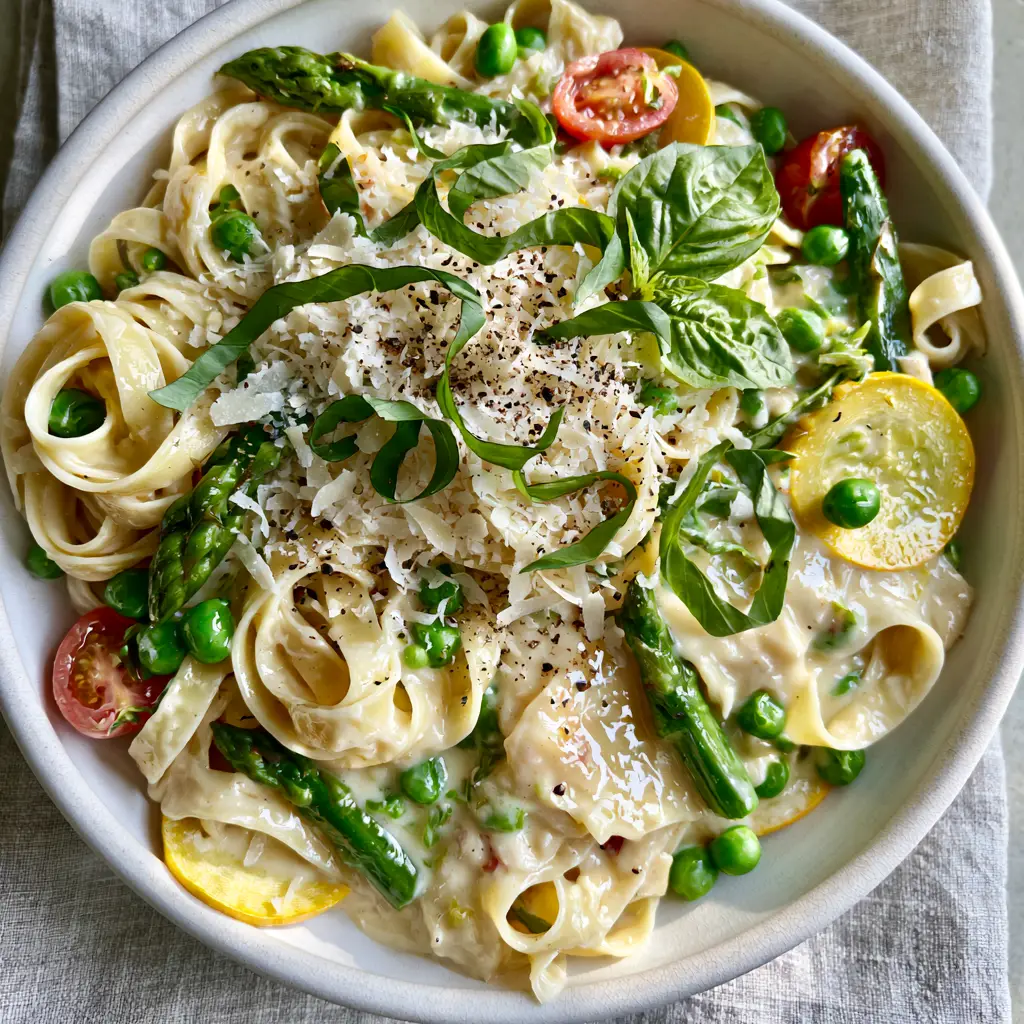
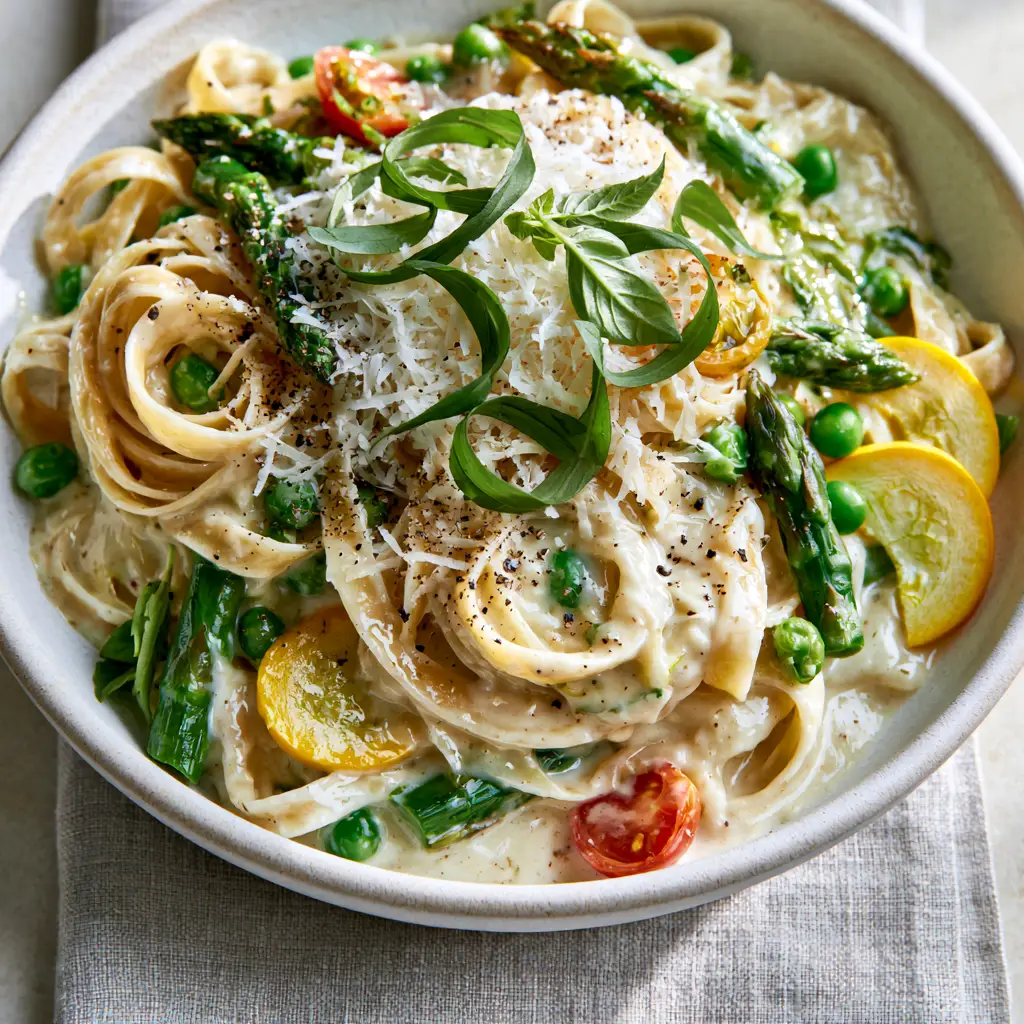
Imagine twirling al dente fettuccine ribbons coated in a glossy, pale-ivory parmesan cream that clings to every strand, catching the soft morning light. The dish is punctuated by the snap of blanched asparagus and the sweetness of peas, all balanced by the gentle acidity of softened cherry tomatoes.
Whether you are hosting a high-end lifestyle brunch or seeking a sophisticated weeknight dinner, this recipe delivers a restaurant-quality experience in your own kitchen. Every forkful offers a symphony of emerald basil, cracked black pepper, and a “snowfall” of microplaned cheese.
Why This Creamy Vegetable Fettuccine Works
- Textural Contrast: We utilize a two-step vegetable process—blanching for snap and sautéing for sweetness—to ensure nothing is mushy.
- The Emulsion Secret: By combining high-fat heavy cream with microplaned parmesan and starchy pasta water, we create a “velvet” sauce that refuses to break.
- Visual Vibrancy: The combination of yellow summer squash half-moons and bright green peas creates a stunning, high-contrast plate.
- Aromatic Depth: Freshly cracked black pepper and a chiffonade of basil provide a sharp, herbaceous finish that cuts through the richness of the cream.
Pantry Essentials for a Glossy Parmesan Emulsion
To achieve the specific visual result of a silky, pale-ivory sauce, the quality and temperature of your dairy are paramount. Using room temperature cream helps prevent the sauce from “shocking” when it hits the hot pan.
12 oz (340g) Fettuccine: Look for high-quality bronze-cut pasta; the rougher surface area helps the sauce cling much better than smooth, mass-produced noodles.
1 cup (240ml) Heavy Cream: Essential for that luxurious mouthfeel; do not substitute with milk, as the sauce will lack the necessary viscosity to coat the ribbons.
1 cup (90g) Parmesan Cheese: You must microplane this yourself from a wedge to achieve that “snowfall” effect; pre-shredded cheese contains cellulose that prevents a smooth melt.
1 bunch (approx. 225g) Green Asparagus: We use only the tender tips for a refined look and a consistent, snappy texture throughout the dish.
1 medium (200g) Yellow Summer Squash: Slicing these into paper-thin half-moons ensures they soften instantly in the pan without losing their sunny color.
1 cup (150g) Cherry Tomatoes: Halved and gently warmed until they are “softened” but still hold their shape, providing bursts of sweet acidity.
Foundational Ingredients: You will also need 2 tbsp (30g) unsalted butter for sautéing, 2 cloves of minced garlic for aroma, 1 tsp (6g) kosher salt for the pasta water, and 1/2 tsp (2g) coarsely cracked black pepper.
The Culinary Tools for Professional Plating
To replicate the high-end lifestyle photography style of this dish, you need a few specific tools. A microplane is non-negotiable for the fine parmesan dusting, and a wide, shallow stoneware bowl is the ideal canvas for twirled fettuccine.
A large pasta pot is required for boiling the ribbons, while a wide stainless steel or cast iron skillet provides enough surface area to toss the vegetables and pasta together without bruising the delicate asparagus tips. Finally, a sharp chef’s knife is essential for the basil chiffonade—bruised basil turns black and loses its emerald luster.
The Art of the Blanch and Sauté
Step 1: Preparing the Vegetable Base
Bring a large pot of heavily salted water to a rolling boil. Drop your asparagus tips and sweet peas into the water for exactly 60 seconds until they turn a vibrant, electric green.
Immediately shock them in an ice bath to stop the cooking process; this preserves the “vibrant green” look described in our visual blueprint. Drain and pat them dry so they don’t water down your silky sauce later.
Step 2: Building the Pale-Ivory Sauce
In a large skillet over medium heat, melt 2 tbsp (30g) of butter. Add your thinly sliced yellow squash and halved cherry tomatoes, sautéing for 2-3 minutes until the squash is translucent and the tomatoes are slightly softened but not burst.
Lower the heat and stir in the minced garlic, cooking for 30 seconds until fragrant. Pour in the 1 cup (240ml) of heavy cream and bring to a very gentle simmer; look for small bubbles around the edges, but do not let it reach a rolling boil.
Step 3: The Pasta and Parmesan Marriage
Boil your fettuccine until it is exactly 1 minute shy of al dente. Reserve 1/2 cup (120ml) of the starchy pasta water before draining the ribbons.
Add the hot pasta directly into the simmering cream sauce. Sprinkle in 3/4 of your microplaned parmesan and a splash of the pasta water, tossing vigorously with tongs until the sauce transforms into a glossy, pale-ivory glaze that clings to every strand.
Ensuring Your Sauce Clings to Every Ribbon
The “glossy glisten” seen in professional food photography is achieved through the science of emulsification. If your sauce looks too thin, keep tossing; the starch from the pasta combined with the fat in the cream will eventually thicken into a coating consistency.
If the sauce looks too thick or “clumpy,” add another tablespoon of pasta water. You are looking for a “silky” texture that moves fluidly but doesn’t pool at the bottom of the stoneware bowl. If you are looking for a protein-heavy side to serve alongside this, consider our Grilled Steak Kabobs for a surf-and-turf feel.
Expert Tips for Success
- Watch the Heat: If the cream gets too hot, the fat can separate, leaving you with an oily mess instead of a silky sauce.
- Microplane Magic: Always grate your cheese directly over the bowl at the last second to ensure the “heavy snowfall” appearance remains light and airy.
- Basil Technique: Stack your basil leaves, roll them like a cigar, and slice thinly. This “chiffonade” creates the delicate emerald ribbons seen in the visual prompt.
- Seasoning in Layers: Salt your pasta water like the sea, but be conservative with salt in the sauce, as the parmesan brings a significant amount of salinity.
Preserving the Freshness of Primavera
This pasta is best enjoyed immediately while the cream sauce is at its most fluid. However, if you have leftovers, store them in an airtight container in the refrigerator for up to 2 days.
When reheating, do not use the microwave as it will break the emulsion and make the sauce oily. Instead, place the pasta in a skillet over low heat with a tablespoon of water or cream, stirring constantly until the “silky” texture returns.
What to Serve with Your Creamy Fettuccine
This pasta primavera is a complete meal on its own, but it pairs beautifully with light, acidic starters. A crisp green salad or even some Mediterranean Baked Feta Eggs as a side can round out a luxurious brunch menu.
If you’re serving this for a special lunch, a refreshing Blackberry Coconut Pink Drink provides a beautiful color contrast to the green and yellow vegetables. For those who prefer a bit of variety in their grains, you might even enjoy a small side portion of Chicken Fried Rice for a fusion-style family gathering.
Common Questions About This Spring Classic
Absolutely. Sautéed chicken breast or garlic shrimp pair beautifully with the parmesan cream. Add them back into the pan during the final tossing step.
Yes, simply substitute the fettuccine with your favorite gluten-free pasta brand. Ensure you still use the pasta water, as the starches—though different—still help emulsify the sauce.
While fresh is preferred for the best snap, frozen peas work well. However, frozen asparagus can become mushy, so fresh tips are highly recommended for the visual texture.
Keep the heat at a low-to-medium simmer and never let the sauce reach a rolling boil. Additionally, using full-fat heavy cream makes the sauce much more stable than lower-fat alternatives.
This usually means the sauce hasn’t emulsified enough. Continue to toss the pasta with the cheese and a little extra pasta water over low heat until the sauce thickens and ‘clings’ to the noodles.
The Ultimate Creamy Pasta Primavera Recipe
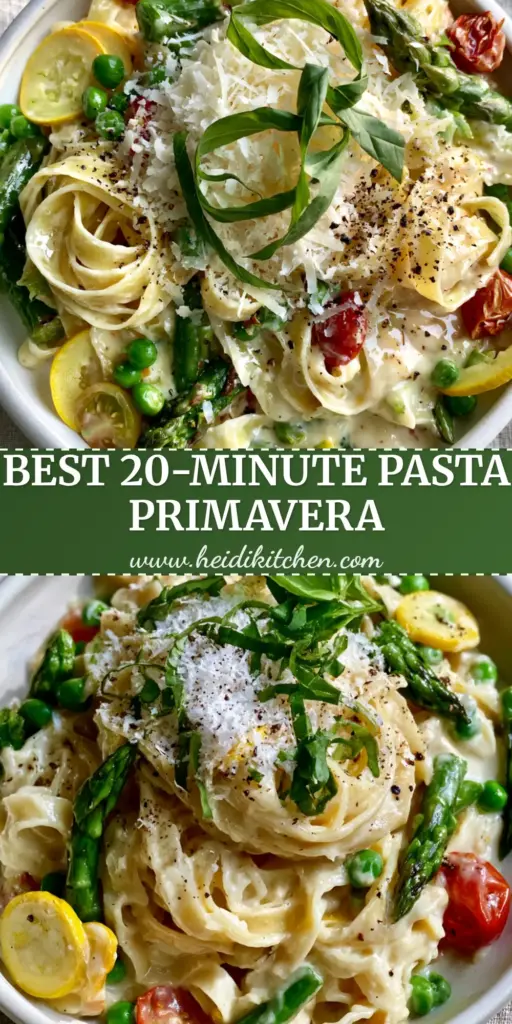
Pasta Primavera with Silky Parmesan Cream and Fresh Spring Vegetables
Ingredients
Equipment
Method
- Boil asparagus tips and peas for 60 seconds, then shock in an ice bath to maintain vibrant green color.
- Melt butter in a large skillet and sauté yellow squash and cherry tomatoes until softened. Add garlic for the last 30 seconds.
- Add heavy cream and simmer gently. Do not boil vigorously.
- Toss al dente fettuccine with the cream, microplaned parmesan, and pasta water until glossy. Garnish with basil, pepper, and more cheese.
Notes
Never use pre-shredded cheese; it won't melt into a silky sauce.
Bring the Garden to Your Table
This pasta primavera is a celebration of seasonal freshness and classic technique. By focusing on the visual cues—the glisten of the sauce, the snap of the asparagus, and the snowy finish of parmesan—you can create a dish that is as beautiful as it is delicious. For more inspired recipes and kitchen tips, follow us on Pinterest and join our community of home cooks!