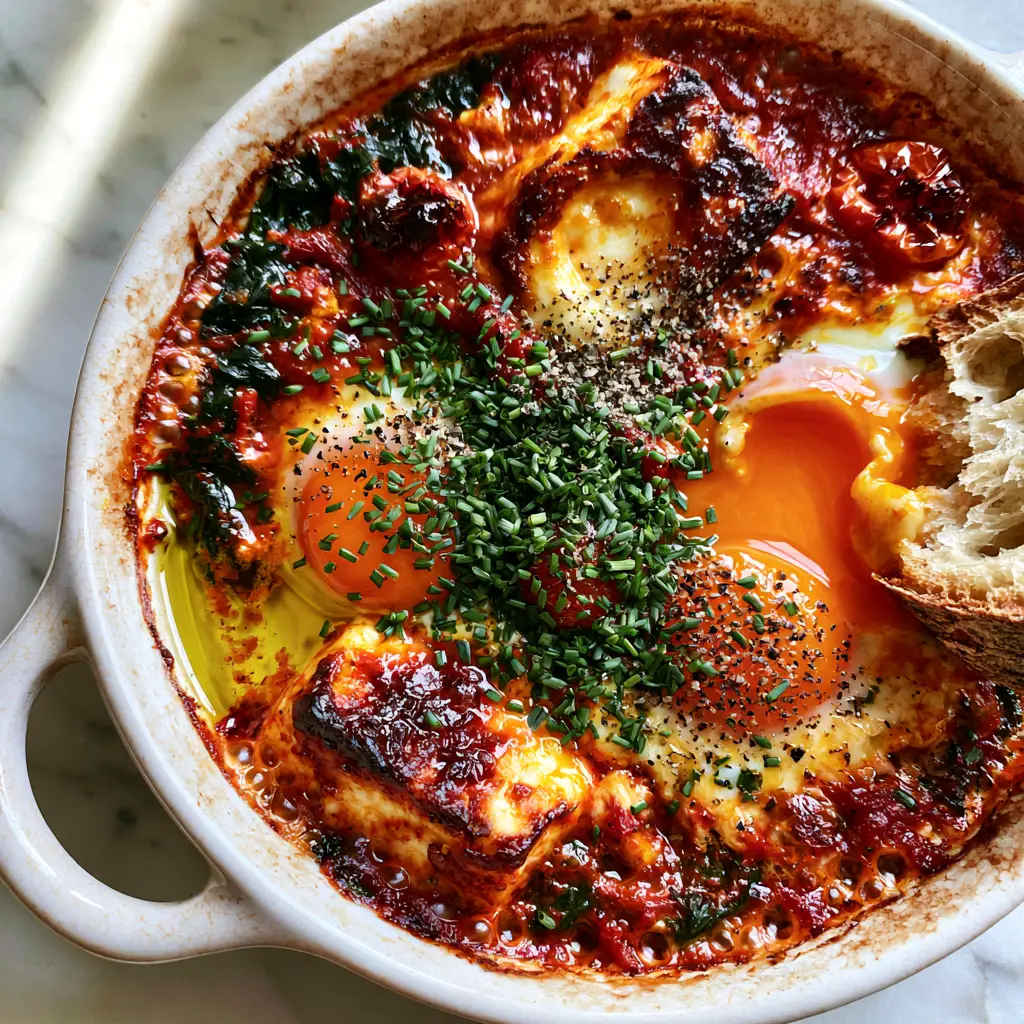
There is something inherently magical about a meal that transitions effortlessly from a rustic kitchen skillet to a center-stage brunch masterpiece. Mediterranean Baked Feta Eggs are exactly that—a vibrant, bubbling symphony of textures and colors that demand a seat at your table. This isn’t just another egg dish; it is a sensory journey through the sun-drenched flavors of the coast.
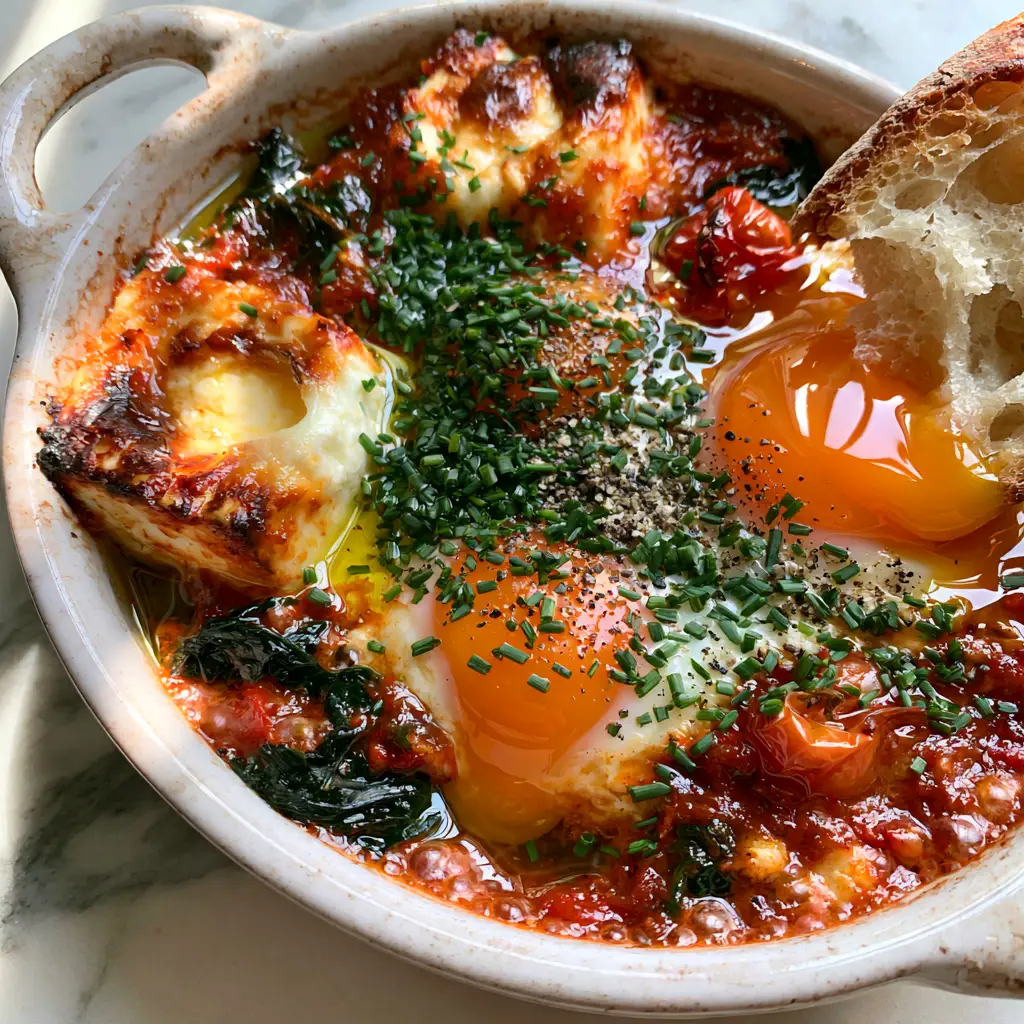
Imagine dipping a piece of crusty sourdough into a vibrant, orange yolk that cascades over a thick, spicy tomato and bell pepper sauce. The contrast of the salty, charred feta cheese against the sweet, blistered cherry tomatoes creates a profile that is both complex and comforting. Whether you are hosting a weekend gathering or simply treating yourself to a slow morning, this recipe is designed to impress.
The beauty of the Mediterranean Baked Feta Eggs lies in the “low and slow” development of the sauce base, followed by a quick blast of heat to achieve those iconic charred edges on the cheese. In this guide, we will break down the culinary science behind the perfect bake, ensuring your spinach stays bright green and your yolks stay perfectly runny every single time.
Why You Will Fall in Love With This One-Pan Wonder
- Textural Harmony: Experience the interplay between the velvety melted feta core and its crispy, caramelized exterior.
- Vibrant Nutrition: Packed with lycopene-rich tomatoes, iron-dense baby spinach, and high-quality protein from farm-fresh eggs.
- Minimal Cleanup: This entire masterpiece is constructed in a single ceramic baking dish or cast-iron skillet, making post-brunch tidying a breeze.
- Visual Showstopper: With its deep reds, forest greens, and bright orange accents, it’s a dish that looks like it walked straight out of a professional food photography studio.
The Anatomy of Flavor: Essential Ingredients
Canned Crushed Tomatoes (28 oz / 794g): This serves as the structural foundation of your sauce. Use high-quality San Marzano tomatoes if possible, as their lower acidity and natural sweetness provide a superior base for the Mediterranean Baked Feta Eggs.
Block Feta Cheese (7 oz / 200g): It is crucial to buy a whole block in brine rather than pre-crumbled varieties. The block format allows you to create those large, rustic chunks that maintain a soft, melted center while the edges catch the heat and turn golden-brown.
Fresh Bell Peppers (2 medium): Thinly sliced red or orange bell peppers add a necessary crunch and a boost of vitamin C. As they sauté, their natural sugars caramelize, deepening the complexity of the red sauce.
Baby Spinach (3 cups / 90g): This provides a earthy, mineral contrast to the acidity of the tomatoes. We fold this in at the very last second to ensure it wilts perfectly without turning to mush.
Cherry Tomatoes (1 cup / 150g): These act as little “flavor bombs.” By leaving them whole, they blister under the broiler, creating a concentrated burst of sweet juice when bitten into.
Extra Virgin Olive Oil (3 tbsp / 45ml): A foundational invisible ingredient. This is used not just for sautéing, but for drizzling over the final dish to carry the fat-soluble flavors of the black pepper and chives.
Toasted Sourdough Bread: The ultimate vessel. The tanginess of a fermented sourdough perfectly complements the rich, savory sauce of the Mediterranean Baked Feta Eggs.
Must-Have Tools for the Perfect Bake
To achieve the “authentic food blog aesthetic” seen in professional photography, the vessel matters. A rustic white ceramic baking dish is ideal because it retains heat evenly and provides a neutral background that makes the red sauce pop.
You will also need a heavy-bottomed skillet for the initial stovetop aromatics. If you prefer, you can use a seasoned cast-iron skillet for the entire process, moving it directly from the burner to the oven. A sharp chef’s knife is essential for finely mincing those fresh chives to ensure a delicate garnish.
The Step-by-Step Blueprint to Mediterranean Excellence
Building the Aromatic Foundation
Start by heating 2 tbsp (30ml) of olive oil in your skillet over medium heat. Add one finely diced yellow onion and your sliced bell peppers. Sauté for 8-10 minutes until the onions are translucent and the peppers have softened significantly.
Introduce three cloves of minced garlic and a pinch of red pepper flakes. Stir constantly for 60 seconds—you are looking for the garlic to become fragrant without browning, which can introduce bitterness to your Mediterranean Baked Feta Eggs.
Simmering the Signature Sauce
Pour in your crushed tomatoes and season with a teaspoon of sea salt and half a teaspoon of cracked black pepper. Reduce the heat to low and let the sauce simmer for 15 minutes. This “reduction phase” is where the water evaporates, leaving you with a thick, bubbly base that can support the weight of the eggs.
Once the sauce has thickened, stir in the 3 cups (90g) of baby spinach. Use your spoon to fold the leaves in gently. They will wilt within 30-45 seconds due to the residual heat of the tomato base. Transfer this mixture to your white ceramic baking dish if you aren’t using the skillet for the bake.
Nesting the Feta and Blistering Tomatoes
Preheat your oven’s broiler to high. Take your block of feta and break it into large, 1-inch chunks with your hands. Nestling these chunks into the sauce is key—ensure some are submerged while others sit on top to catch the direct heat.
Scatter your cherry tomatoes across the surface. Drizzle the remaining tablespoon of olive oil over the cheese and tomatoes. Place the dish under the broiler for 4-5 minutes. Watch closely: you want the cherry tomatoes to pop and the feta to develop those distinct charred brown edges.
The Art of the Poached Egg
Remove the dish from the oven carefully. Use the back of a large spoon to create three deep “wells” in the bubbling sauce. Crack an egg into each well. The sauce should be hot enough that the whites immediately begin to turn opaque at the edges.
Return the dish to the middle rack of the oven (not directly under the broiler this time) at 375°F (190°C). Bake for 5-8 minutes. The goal is for the whites to be fully set while the orange yolks remain vibrant and liquid. Use the “jiggle test”—when you gently shake the dish, the yolks should move like jelly.
Expert Tips for a Professional Result
- Room Temperature Eggs: Take your eggs out of the fridge 20 minutes before cooking. This helps the whites cook at the same rate as the yolks, preventing that dreaded rubbery texture.
- Control the Moisture: If your sauce looks too watery before adding the eggs, let it simmer longer. A watery sauce will cause the eggs to “drift” rather than stay in their nested wells.
- The Broiler Trick: Always char the feta *before* adding the eggs. If you try to char the cheese after the eggs are in, you will inevitably overcook the yolks.
- Freshness Counts: Only chop your chives at the very last second. This preserves their bright green color and sharp, oniony aroma.
Savoring and Serving Suggestions
The Mediterranean Baked Feta Eggs are a complete meal on their own, but they truly shine when paired with other textures. The primary companion should always be toasted sourdough, perhaps brushed with a bit of garlic oil. If you’re looking for a lighter start, these eggs follow beautifully after a serving of Greek yogurt waffles.
For a larger brunch spread, consider serving this alongside some savory steak kabobs for a boost of protein. If you find yourself with leftover spinach, you might also enjoy our creamy spinach and eggs for a different take on the green-and-egg combination. And if you’re looking for a refreshing drink to cut through the richness of the feta, a blackberry coconut pink drink provides a perfect fruity balance.
Common Questions About This Recipe
Yes! You can prepare the tomato and pepper base up to 2 days in advance. Simply reheat it in the pan before adding the feta and eggs to ensure even cooking.
It is not recommended. Low-fat feta contains more water and less fat, which prevents it from developing those beautiful charred edges and a creamy melted core.
Only fold the spinach into the hot sauce right before transferring to the baking dish. The residual heat is enough to wilt it perfectly without overcooking.
The recipe has a mild warmth from the red pepper flakes, but it is easily adjustable. Omit the flakes for a family-friendly version or double them for a spicy kick.
Yolks set quickly. Ensure you move the dish from the broiler to the middle rack when adding eggs, and use the ‘jiggle test’ to pull the dish out while the centers are still wobbly.
The Final Recipe: Mediterranean Baked Feta Eggs
Mediterranean Baked Feta Eggs: The Ultimate One-Pan Brunch Experience
Ingredients
Equipment
Method
- Sauté onions and bell peppers in olive oil until soft, then add garlic for 60 seconds.
- Add crushed tomatoes and simmer for 15 minutes until thick and bubbly. Fold in spinach until wilted.
- Nestle feta chunks and cherry tomatoes into the sauce. Broil on high for 4-5 minutes until feta has charred brown edges.
- Create three wells, crack eggs into them, and bake at 375°F (190°C) for 5-8 minutes until yolks are runny but whites are set.
Notes
Ensure your sauce is thick enough to hold the eggs in place before baking.
Closing & Call to Action
Mastering the Mediterranean Baked Feta Eggs is a rite of passage for any enthusiastic home cook. It’s a dish that teaches patience in the simmering and precision in the baking. Most importantly, it’s a dish that brings people together over a shared pan of bubbly, cheesy goodness.
If you enjoyed this visual and culinary deep dive, please leave a comment below and tell us how your feta charred! Don’t forget to pin this recipe to your favorite boards on Pinterest so you can find it every time the brunch cravings hit.