There is a specific kind of culinary magic that happens when high-quality protein meets the complex, botanical sweetness of classic root beer. This root beer pork isn’t just a meal; it is a masterclass in texture, color, and depth of flavor. If you are looking for that perfect, fall-apart tender consistency paired with a mahogany-hued glaze, you have arrived at the definitive guide.
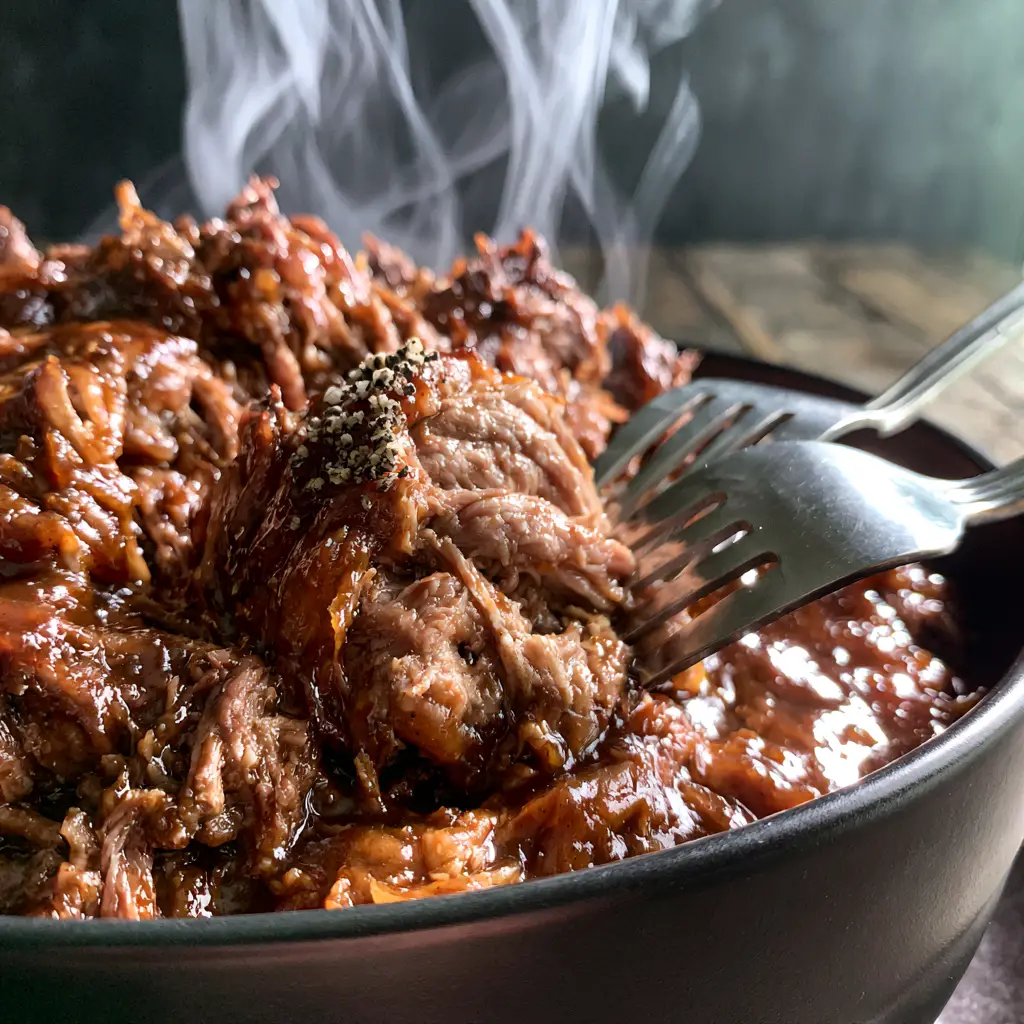
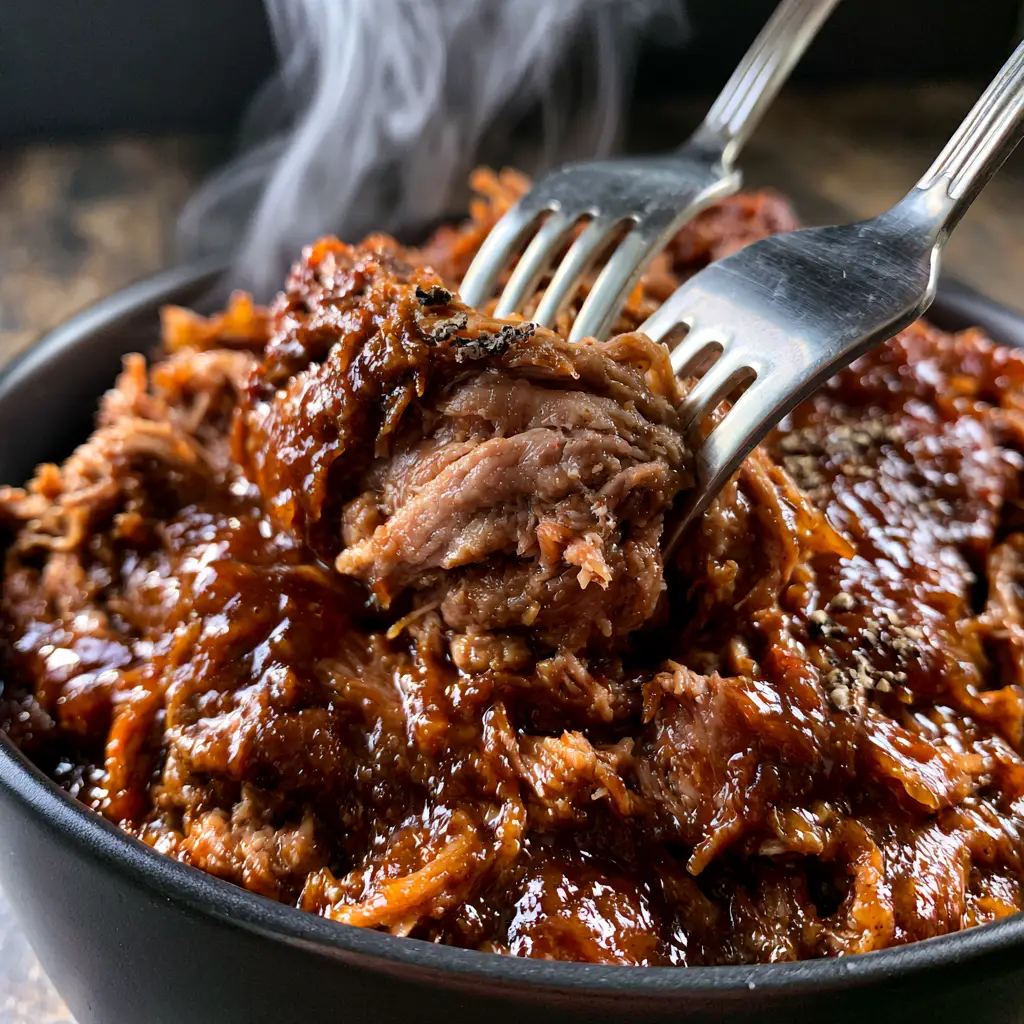
Imagine a matte black ceramic bowl piled high with glistening, shredded pork shoulder. The meat is a deep, rich mahogany color, coated in a thick, caramelized root beer glaze that looks as sticky and sweet as a gourmet confection. As you pull the meat apart with silver forks, delicate wisps of white steam rise, carrying the aroma of sassafras, vanilla, and savory roasted pork.
This recipe focuses entirely on the rich brown tones of the meat, accented only by a few cracks of coarse black pepper. By removing distracting green garnishes, we allow the ultra-succulent muscle fibers and the syrupy sauce reduction to take center stage. This is comfort food elevated to an art form, designed for those who appreciate the science of a slow braise.
Why This Shredded Root Beer Pork Defines Comfort Dining
- The Mahogany Glaze: A deep, caramelized finish achieved through a controlled reduction of cane sugar root beer and natural pork drippings.
- Ultra-Succulent Texture: We utilize the slow-rendering of connective tissues in the pork shoulder to ensure every fiber is lubricated and moist.
- Visual Sophistication: Presented in matte black stoneware, the contrast highlights the glistening highlights of the syrupy sauce.
- Flavor Complexity: The botanical notes of the root beer (vanilla, wintergreen, and anise) provide a sophisticated counterpoint to the salt and fat of the pork.
The Essential Components for a Perfect Root Beer Glaze
To achieve the visual and textural results seen in professional culinary photography, every ingredient must serve a structural and flavorful purpose. We do not just toss ingredients into a pot; we build layers of flavor that withstand the long cooking process.
Pork Shoulder (Butt) – 5 lbs (2.27 kg): This cut is essential for its high fat content and intramuscular marbling. It provides the “ultra-succulent” results that leaner cuts like tenderloin simply cannot replicate.
Cane Sugar Root Beer – 24 oz (710 ml): You must use root beer made with real sugar rather than high-fructose corn syrup or artificial sweeteners. The real sugar is what creates that thick, syrupy sauce reduction and the mahogany color during the final glaze phase.
Kosher Salt – 2 tbsp (30g): Salt is the primary catalyst for moisture retention. It seasons the meat deeply and balances the intense sweetness of the root beer reduction.
Coarse Cracked Black Pepper – 1 tbsp (15g): Beyond flavor, the visual blueprint requires visible cracks of pepper. This provides a sharp, biting contrast to the sweet glaze and adds “grit” to the visual aesthetic.
Apple Cider Vinegar – 1/4 cup (60 ml): The acidity is the “invisible” ingredient that cuts through the heavy fats. It ensures the sauce is syrupy but not cloying.
Garlic and Onion Powder – 1 tbsp (15g) each: These aromatics provide a savory baseline. They meld into the sauce without adding texture, keeping the focus on the shredded meat fibers.
Professional Equipment for the Home Kitchen
To achieve the “handheld smartphone photo” quality of this dish, you need the right tools to manage heat and texture. The goal is a controlled environment that allows the pork to break down without drying out.
A heavy-bottomed Dutch oven or a reliable slow cooker is your primary vessel. If you are using a Dutch oven, the thick walls ensure even heat distribution, which is critical for that deep mahogany color. For the final presentation, a matte black ceramic bowl or stoneware is non-negotiable, as it absorbs light and makes the glistening sauce pop in photos.
Finally, ensure you have two sturdy silver forks. The act of “actively pulling” the meat apart as described in our visual blueprint requires forks with enough weight to shred the muscle fibers without tearing them into mush. High-quality silver or stainless steel also provides a beautiful metallic highlight against the dark meat.
Step-by-Step Evolution of the Mahogany Pork Shoulder
1. The Initial Sear and Maillard Reaction
Pat your 5 lb (2.27 kg) pork shoulder completely dry with paper towels. Rub the meat generously with kosher salt and half of your coarse black pepper. Heat 2 tbsp (30 ml) of neutral oil in your pot over medium-high heat until it shimmers.
Sear the pork on all sides until a deep, golden-brown crust forms. This step is vital for the final mahogany color. You are not just cooking the meat; you are creating the flavor compounds that will eventually season the entire syrupy sauce reduction.
2. The Low and Slow Braise
Pour the 24 oz (710 ml) of cane sugar root beer over the seared pork. Add the apple cider vinegar, garlic powder, and onion powder. The liquid should come about halfway up the side of the meat.
Cover tightly and cook. If using a slow cooker, set it to low for 8-10 hours. If using a Dutch oven, place it in a 300°F (150°C) oven for about 4-5 hours. You are looking for a specific sensory cue: the meat should yield easily when pressed with a spoon, but not yet be falling apart into the liquid.
3. The Syrupy Sauce Reduction
Once the pork is tender, remove it from the liquid and set it aside on a plate. Strain the remaining liquid into a saucepan and bring it to a vigorous boil. This is where we create the “caramelized root beer glaze.”
Reduce the liquid by at least two-thirds. Watch for the bubbles—they will transition from thin and watery to large, slow-popping “lazy” bubbles. This indicates the sugars are concentrating. The sauce should be thick enough to coat the back of a spoon and possess a glistening, translucent quality.
4. The Artistic Shred and Service
Place the warm pork shoulder into your matte black stoneware bowl. Using your silver forks, pull the large chunks of meat apart. You want to reveal the juicy, moist internal muscle fibers while keeping some larger, succulent pieces intact.
Drizzle the hot, thickened root beer reduction over the shredded meat. The meat will absorb some of the glaze while the rest sits on the surface, creating that ultra-succulent, glistening appearance. Finish with the remaining cracks of coarse black pepper. Serve immediately while the white steam is still rising naturally from the bowl.
Expert Tips for a Succulent Result
- Temperature Control: Never boil the pork during the braising phase. A gentle simmer ensures the proteins remain tender rather than toughening up.
- The Root Beer Choice: Avoid “Diet” or “Zero” versions. The lack of real sugar means the sauce will never reduce into a glaze; it will stay watery and thin.
- Resting the Meat: Let the pork rest for 15 minutes before shredding. This allows the internal juices to redistribute, ensuring the fibers are moist when the forks pull them apart.
- Visual Consistency: If the sauce isn’t dark enough, a teaspoon (5ml) of Worcestershire sauce can deepen the mahogany tone without altering the primary flavor profile.
Storage, Reheating, and Preservation
Root beer pork is one of those rare dishes that actually tastes better the next day as the flavors continue to meld. Store any leftovers in an airtight container in the refrigerator for up to 4 days.
When reheating, do so gently on the stovetop with a splash of extra root beer or water. This thins out the syrupy glaze just enough to coat the meat again without burning the sugars. You can also freeze the shredded pork in the glaze for up to 3 months. Thaw overnight in the fridge before following the stovetop reheating method.
Perfect Pairings for Your Shredded Pork
Because this dish is intensely sweet and savory, it pairs beautifully with side dishes that offer acidity or crunch. If you are looking for a tender pork recipe to add to your rotation, this root beer version is the gold standard for sandwiches or bowls.
For a complete meal, consider serving this alongside creamy slaws or even over toasted hoecakes. If you’ve mastered this glaze technique, you might also enjoy exploring an apple butter glazed pork tenderloin for a different fruit-forward sweetness. If you find yourself with leftovers, they make an incredible filling for crockpot pork potstickers.
Common Questions About Root Beer Pork
Yes! Cook on low for 8-10 hours, then remove the liquid to a saucepan on the stove to create the final reduction glaze.
No, diet root beer lacks the sugar necessary to create the caramelized, syrupy mahogany glaze that defines this dish.
It does not taste like a carbonated drink. The root beer reduces into a complex glaze with notes of vanilla, sassafras, and spice that complement the savory pork.
Achieve this by searing the pork thoroughly before braising and ensuring the cooking liquid is reduced significantly into a thick syrup.
Pork shoulder, also known as pork butt, is the best cut due to its high fat content and connective tissue which results in ultra-succulent shreds.
The Ultimate Root Beer Pork Recipe
Root Beer Pork: The Ultimate Ultra-Succulent Shredded Shoulder
Ingredients
Equipment
Method
- Pat the pork shoulder dry and season with salt and half the pepper. Sear in a hot pot with oil until a deep mahogany crust forms on all sides.
- Add root beer, vinegar, and aromatics. Cover and cook on low for 8-10 hours (slow cooker) or 300°F/150°C for 4-5 hours (oven) until tender.
- Remove meat and reduce cooking liquid in a saucepan by two-thirds until a thick, syrupy glaze forms.
- Shred meat in a matte black bowl using silver forks, pour the caramelized glaze over the top, and finish with cracked black pepper.
Notes
Ensure the pork rests before shredding to retain maximum juiciness.
Join the Culinary Journey
This root beer pork represents the intersection of science and soul food. The deep mahogany glaze and the ultra-succulent texture are guaranteed to impress any guest. If you enjoyed this recipe, please leave a comment below and let us know how your glaze turned out!
Don’t forget to follow us on Pinterest for more visually stunning recipe inspiration. Share your creations by tagging us—we love to see your shredded pork masterpieces!