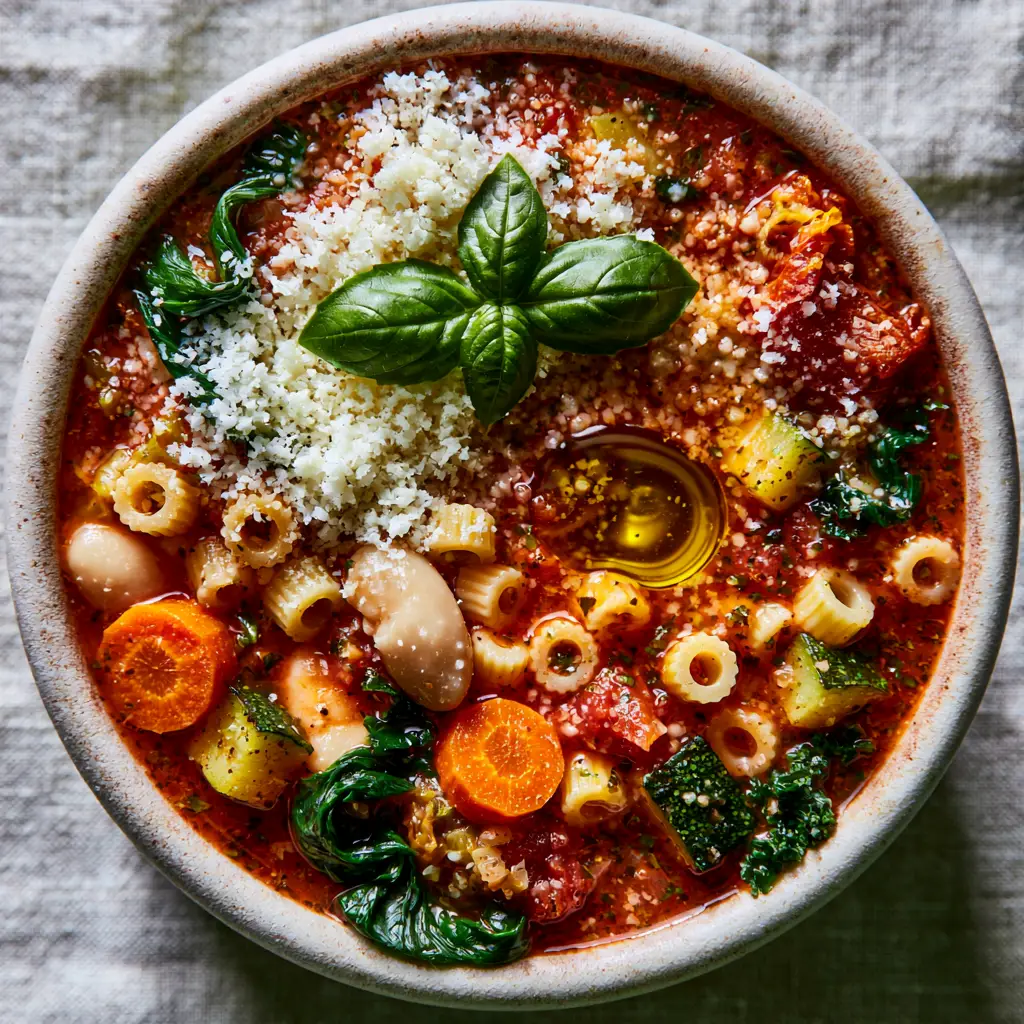
There is nothing quite as comforting as a steaming bowl of minestrone soup resting in a rustic matte-white ceramic bowl. As the natural daylight hits the surface of the deep-red broth, you can see the gentle specular highlights dancing on a glossy swirl of extra virgin olive oil.
This recipe isn’t just a vegetable soup; it is a culinary masterpiece designed to bring the warmth of a Tuscan kitchen into your home. Each spoonful offers a harmonious blend of tender cannellini beans, al dente ditalini pasta, and vibrant ribbons of wilted kale.
Whether you are looking for a soul-warming lunch or a robust dinner, this minestrone soup provides the perfect balance of texture and nutrition. The steam rising softly from the bowl carries the scent of fresh basil and fire-roasted tomatoes, promising a meal that is as visually stunning as it is delicious.
The Visual and Culinary Appeal of Our Signature Minestrone
- Rich Chromatic Depth: A base of concentrated tomato and herb-infused broth creates a stunning deep-red canvas for the vibrant vegetables.
- Structural Variety: From the plump, creamy cannellini beans to the small cubes of sautéed green zucchini, every bite offers a different textural experience.
- Gourmet Finishing Touches: A heavy dusting of fluffy, finely grated parmesan and three whole fresh basil leaves provide a professional, photo-ready finish.
- Fire-Roasted Complexity: Using fire-roasted tomato chunks adds a smoky dimension and rustic appearance that standard canned tomatoes simply cannot match.
Essential Components for the Ultimate Italian Vegetable Soup
To achieve the specific visual and flavor profile of this minestrone soup, each ingredient must be selected and prepared with intention. We focus on high-quality produce and pantry staples that build layers of complexity.
Extra Virgin Olive Oil: 3 tbsp (45ml). This is used both for sautéing the base aromatics and as a finishing “glossy swirl” to add richness and a golden sheen to the broth.
Diced Zucchini: 2 medium (300g). Small, uniform cubes ensure that the zucchini remains tender but holds its shape, providing those essential green flecks visible in the final dish.
Carrots: 2 large (150g). Sliced into vibrant orange rounds, these provide a natural sweetness and a firm bite that stands up to the simmering process.
Fire-Roasted Tomatoes: 1 can (14.5 oz / 411g). These provide the “chunks of softened tomatoes” described in our visual blueprint, offering a charred, smoky depth to the liquid base.
Ditalini Pasta: 1 cup (150g). These small “thimbles” are the classic choice for minestrone, capturing the rich tomato broth inside their hollow centers.
Cannellini Beans: 1 can (15 oz / 425g). These creamy white beans add protein and a soft, buttery texture that contrasts beautifully with the firm vegetables.
Lacinato Kale: 2 cups (60g), stemmed and sliced. Dark green ribbons of kale provide the “wilted” visual element and a punch of earthy nutrients.
Vegetable Stock: 6 cups (1.4L). A high-quality stock acts as the foundation for our herb-infused broth, allowing the tomato flavors to shine without being overpowered.
Parmesan Cheese: 1/2 cup (50g). Finely grated, this creates a “heavy dusting” of fluffy white snow on top of the hot soup, melting slightly into the surface.
Fresh Basil: 1 bunch. Whole leaves are used as a “crown” for the dish, providing an aromatic punch and a pop of bright green color.
Professional Tools for Soup Success
To recreate the rustic, hearty look of our minestrone soup, you will need a heavy-bottomed Dutch oven. This ensures even heat distribution, preventing the tomato base from scorching while the carrots soften.
A sharp Chef’s knife is non-negotiable for achieving the precise cubes of zucchini and uniform carrot slices seen in the visual prompt. For the perfect finishing touch, use a microplane to create that “fluffy” parmesan dusting that floats effortlessly on the broth.
How to Build a Deeply Layered Tomato Broth
The secret to a world-class minestrone soup lies in the “soffritto” and the caramelization of the tomato paste. We don’t just boil vegetables; we build flavor from the ground up.
Sautéing the Aromatic Foundation
Start by heating 2 tablespoons (30ml) of olive oil over medium heat. Add finely diced onions, celery, and your sliced carrots. Sauté until the onions are translucent and the carrots begin to show a slight glisten.
Listen for a gentle sizzle; this indicates the water is evaporating and the natural sugars are beginning to concentrate. Add four cloves of minced garlic during the last minute to prevent burning while releasing its essential oils.
Developing the Deep-Red Infusion
Push the vegetables to the side and add 2 tablespoons (30g) of tomato paste to the center of the pot. Cook the paste for 2-3 minutes until it turns from a bright red to a deep brick color.
This “blooming” process is vital for achieving the “rich, deep-red tomato and herb-infused broth” mentioned in our Midjourney prompt. Deglaze the pot with a splash of stock, scraping up any browned bits (fond) from the bottom.
Simmering the Hearty Elements
Stir in the fire-roasted tomatoes, cannellini beans, and the remaining vegetable stock. Bring the mixture to a gentle boil, then reduce to a simmer.
Add the ditalini pasta directly to the pot if serving immediately, or cook it separately to maintain a perfect al dente texture. The pasta should look plump and firm, never mushy or bloated.
The Final Wilt and Garnish
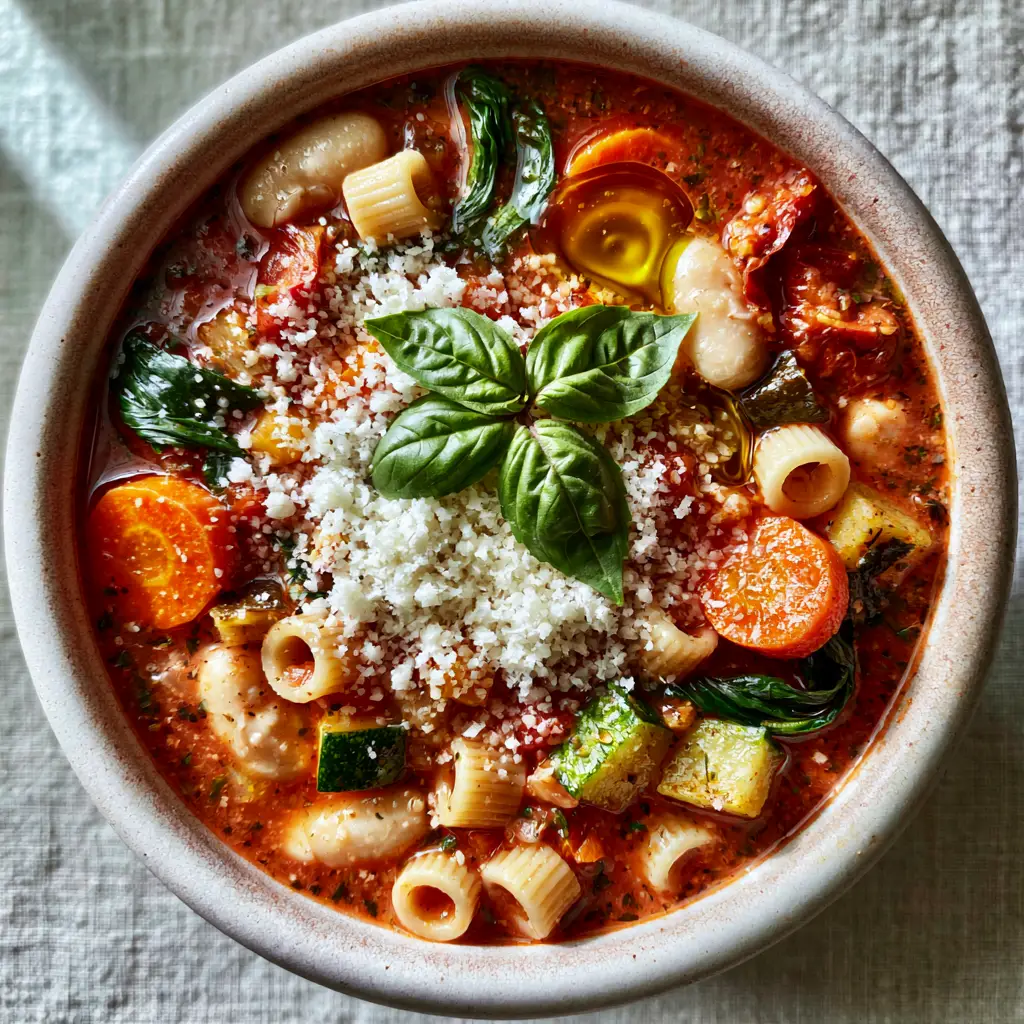
In the final five minutes of cooking, fold in the diced zucchini and the kale ribbons. The zucchini should be “sautéed” and softened but still vibrant green, while the kale should be “dark green and wilted” yet structurally intact.
Turn off the heat. This preserves the brightness of the vegetables. Taste and season with sea salt and cracked black pepper to enhance the herb-infused notes.
Expert Tips for the Perfect Minestrone Texture
- The Pasta Secret: If you plan on having leftovers, cook the ditalini separately. Pasta continues to absorb liquid, which can turn your “rich broth” into a thick stew overnight.
- Zucchini Timing: Always add the zucchini near the end. Its high water content means it softens quickly; adding it too early results in “ghost zucchini” that disappears into the broth.
- The Rind Trick: For extra umami, drop a clean parmesan rind into the broth while it simmers. This adds a savory depth that complements the fire-roasted tomatoes perfectly.
- Visual Specs: To get those specular highlights shown in the photo, ensure your olive oil drizzle is added just seconds before serving.
Maximizing Your Meal Prep: Storage and Reheating
Minestrone soup is a legendary leftovers dish because the flavors continue to marry in the refrigerator. Store the soup in an airtight container for up to 4 days.
When reheating, you may need to add a splash of water or extra stock to loosen the broth. Heat on the stovetop over medium-low until steam rises softly from the pot once again.
This soup freezes exceptionally well for up to 3 months. However, for the best visual result, freeze the broth and vegetables without the pasta, adding fresh ditalini when you reheat the meal.
What to Serve with Hearty Minestrone
To complete this Mediterranean feast, pair your soup with a side that can soak up that rich tomato broth. A side of cheesy pull-apart garlic bread is the ultimate companion for dipping.
If you prefer a lighter side, a crisp green salad or a bowl of mediterranean orzo soup can provide a refreshing contrast. For those craving more pasta, following this up with stuffed shells makes for a legendary Italian Sunday dinner.
For a winter-themed gathering, you might also enjoy our winter minestrone soup variation which features seasonal root vegetables.
Common Questions About Italian Minestrone
It is best to freeze the soup base without the pasta. Pasta tends to absorb liquid and become mushy when thawed and reheated. Simply add freshly cooked ditalini when you are ready to serve.
Yes, Great Northern beans or chickpeas are excellent substitutes. They provide a similar creamy texture that complements the rich tomato broth.
The secret is ‘blooming’ your tomato paste. Sauté the paste with your aromatics until it turns a dark brick-red color before adding your vegetable stock and fire-roasted tomatoes.
Lacinato (or Dino) kale is preferred for its dark green color and tender texture. It wilts beautifully into ribbons without becoming tough or overly fibrous.
The starch from the beans and pasta naturally thickens the broth over time. Simply stir in a half-cup of water or vegetable stock when reheating to reach your desired consistency.
The Ultimate Minestrone Soup Recipe
Minestrone Soup: A Hearty Italian Classic with Fire-Roasted Tomatoes and Kale
Ingredients
Equipment
Method
- Heat 2 tbsp olive oil in a Dutch oven. Sauté carrots and onions until softened and glistening.
- Add tomato paste and fire-roasted tomatoes. Stir in vegetable stock and cannellini beans. Bring to a simmer.
- Stir in ditalini pasta and zucchini cubes. Cook for 8 minutes. Fold in kale ribbons during the last 2 minutes until wilted.
- Ladle into bowls. Top with a heavy dusting of parmesan, a swirl of olive oil, and fresh basil leaves.
Notes
Use a parmesan rind in the broth for deeper umami flavor.

Bring the Heart of Italy to Your Table
This minestrone soup is more than just a recipe; it is a celebration of simple, fresh ingredients transformed through classic techniques. The combination of fire-roasted tomatoes, creamy beans, and that signature glossy olive oil drizzle creates a dining experience that satisfies all the senses.
We invite you to try this recipe and share your results. Did your broth achieve that deep-red hue? Did the parmesan melt into the perfect fluffy dusting? Let us know in the comments below!
For more culinary inspiration and to save this recipe for later, follow us on Pinterest and share your soup photos with the community!