There is a specific culinary magic that happens when a vegetable is transformed into a towering, cheese-laden masterpiece. This Oven Baked Eggplant Parmesan isn’t your grandmother’s soggy casserole; it is a structural triumph of texture and flavor. By focusing on a precise breading technique and high-heat roasting, we achieve a result that rivals any deep-fried version while maintaining a clean, vibrant taste profile.
Imagine biting through a jagged, ultra-crunchy panko crust into a tender, buttery eggplant center. That crunch is immediately followed by the bright acidity of a herb-speckled marinara and the luxurious pull of molten, toasted mozzarella. This recipe is designed for those who appreciate the forensic details of a perfect meal, from the specific flake of the sea salt to the aromatic lift of freshly chiffonaded basil.
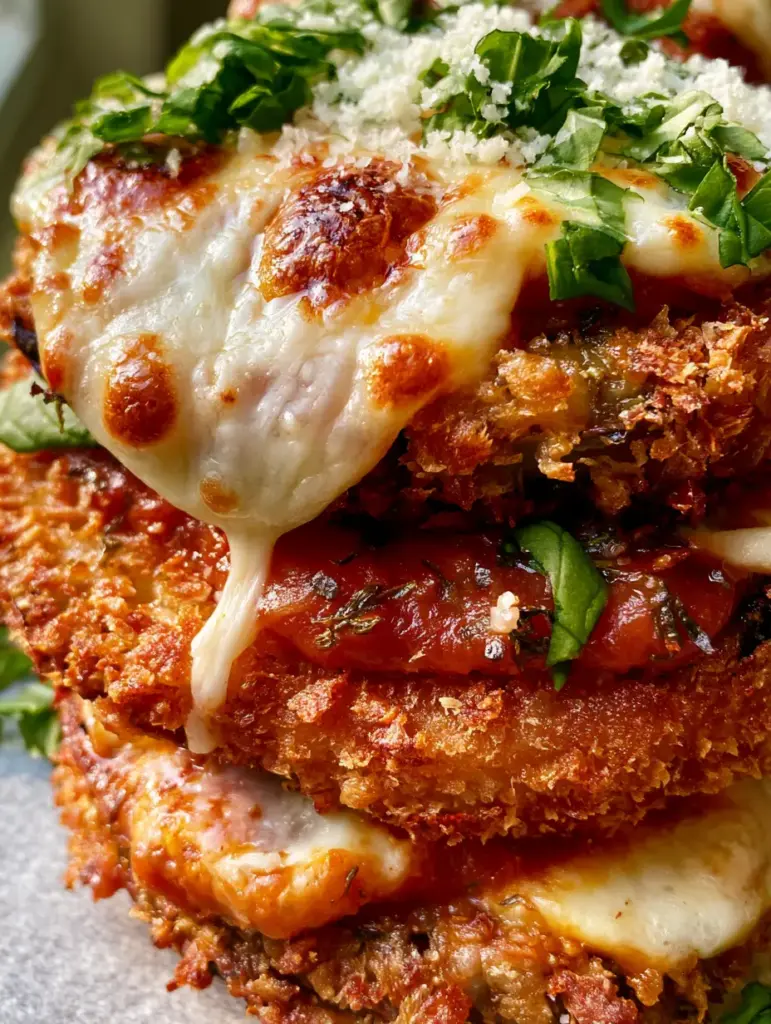
Why This Crispy Stacked Method Changes Everything
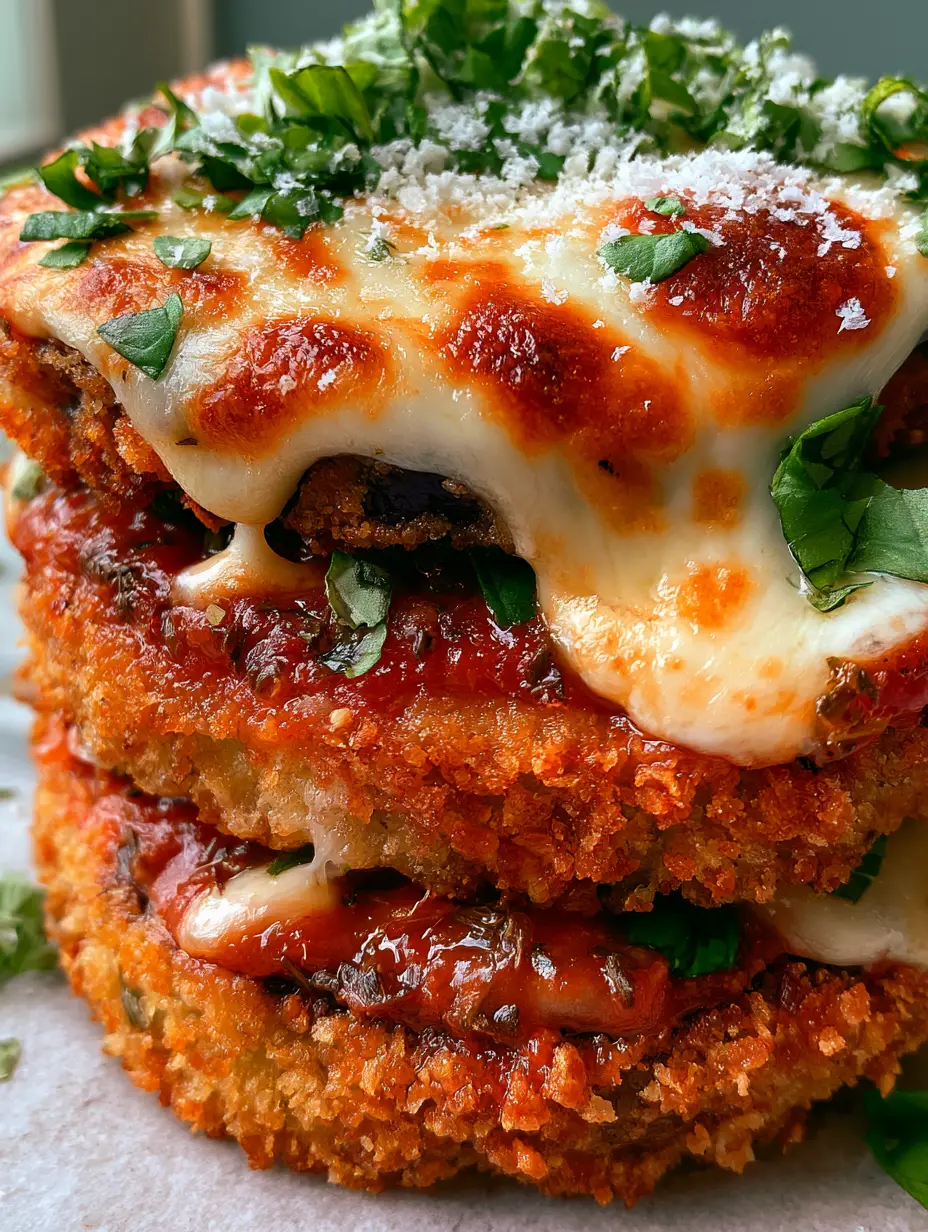
- Structural Integrity: By stacking three extra-crispy rounds instead of layering them in a deep dish, we prevent the eggplant from steaming, ensuring every bite maintains its “jagged” panko texture.
- The Golden-Brown Crust: We utilize a specific double-dredge method with seasoned panko to create a thick, golden-brown foundation that stands up to the rich tomato sauce.
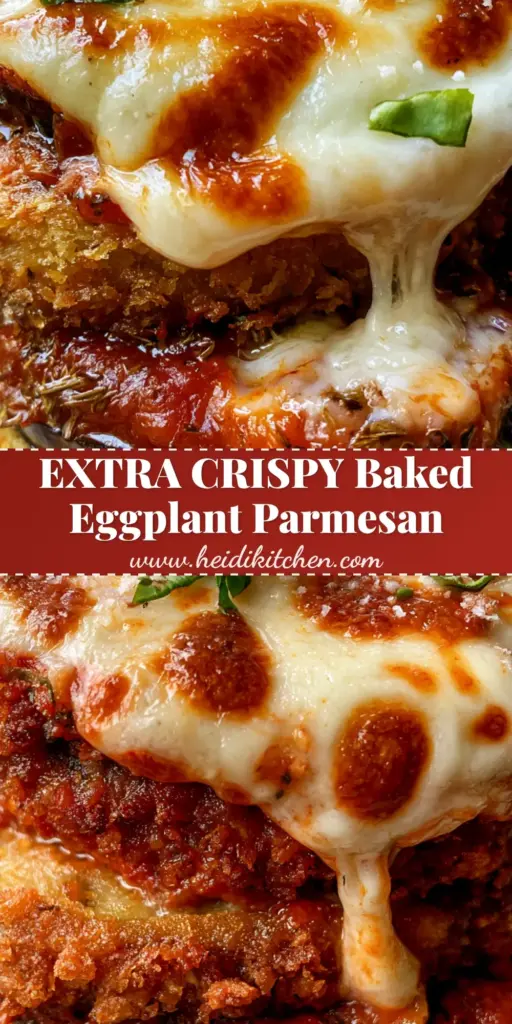
- Visual Masterpiece: The heavy layer of melted mozzarella is finished under the broiler to create those iconic toasted cheese spots that signal peak flavor development.
- Flavor Layers: From the flaky sea salt finish to the fluffy dusting of finely grated parmesan, every ingredient serves a visual and culinary purpose.
Essential Elements for the Perfect Crunch
Achieving the visual and textural goals of this recipe requires a specific set of ingredients. Each component has been selected to ensure the final dish matches the high-resolution detail of a professional kitchen.
Large Italian Eggplants: You will need 2 large (approx. 800g) eggplants. Choose ones that feel heavy for their size with smooth, shiny skin to ensure a creamy interior after baking.
Panko Breadcrumbs: Use 2 cups (120g) of Japanese-style panko. These larger, jagged crumbs are the secret to the “ultra-crunchy” foundation described in our visual blueprint.
All-Purpose Flour: 1/2 cup (60g) is necessary for the initial dredge. This creates a dry surface for the egg wash to cling to, preventing the breading from sliding off.
Large Eggs: 3 large eggs provide the protein binder. They act as the “glue” that secures the thick panko layer to the eggplant rounds.
Whole Milk Mozzarella: 8 oz (225g) of low-moisture, whole milk mozzarella is best. This variety melts beautifully and produces the “cheese stretch” and “toasted spots” we are looking for.
Marinara Sauce: 2 cups (480ml) of a thick, deep-red marinara. Ensure it has visible specks of dried herbs to match the rich, artisanal look of the dish.
Fresh Basil: 1 bunch of bright green basil. We will use a chiffonade cut to provide a fresh, aromatic contrast to the savory, toasted elements.
Finely Grated Parmesan: 1/2 cup (45g) of Parmigiano-Reggiano. A fluffy, fine grate allows the cheese to sit elegantly on top like a dusting of snow.
Flaky Sea Salt: A generous pinch of Maldon or similar salt. These large crystals provide a final pop of flavor and a professional visual finish.
Invisible Essentials: You will also need 1 tsp (5g) of dried oregano for the breading, 1/2 tsp (3g) of garlic powder, and high-heat olive oil spray to facilitate the golden-brown browning in the oven.
Tools for Professional Results
To achieve the “macro photo” quality of this Oven Baked Eggplant Parmesan, you need the right gear. A large, rimmed baking sheet is essential to prevent overcrowding, which leads to steaming rather than roasting.
Wire cooling racks set inside the baking sheets are a “pro-tip” for airflow. This allows the heat to circulate under the eggplant, ensuring the bottom is just as crunchy as the top. A sharp chef’s knife is required for the clean, uniform slices of eggplant and the delicate basil chiffonade.
The Science of Sweating: Preparing Your Eggplant
Eliminating Bitter Moisture
Eggplants are like sponges filled with water and occasionally bitter compounds. Slice your eggplant into 3/4-inch (2cm) rounds and lay them out on paper towels.
Sprinkle both sides generously with kosher salt and let them sit for 30 minutes. You will see “beads of sweat” forming on the surface; this is the excess moisture leaving the cells, which is vital for achieving a crispy crust later.
The Triple-Dredge Breading Station
Set up three shallow bowls. The first contains the flour seasoned with salt and pepper. The second contains the whisked eggs. The third holds the panko mixed with dried oregano and garlic powder.
Press the eggplant into the flour, dip in the egg, and then firmly press into the panko. You want to see a “thick, jagged” coating that covers every millimeter of the surface.
Engineering the Oven Baked Eggplant Parmesan Stack
The Initial Roasting Phase
Preheat your oven to 425°F (220°C). Arrange the breaded rounds on the wire racks and give them a light mist of olive oil spray. This mimics the frying process, helping the panko turn a deep golden-brown.
Bake for 20-25 minutes. Listen for a slight sizzle and look for the breading to become rigid and toasted. The side lighting from your oven light should reveal the extreme texture of the panko ridges.
Building the Three-Tiered Stack
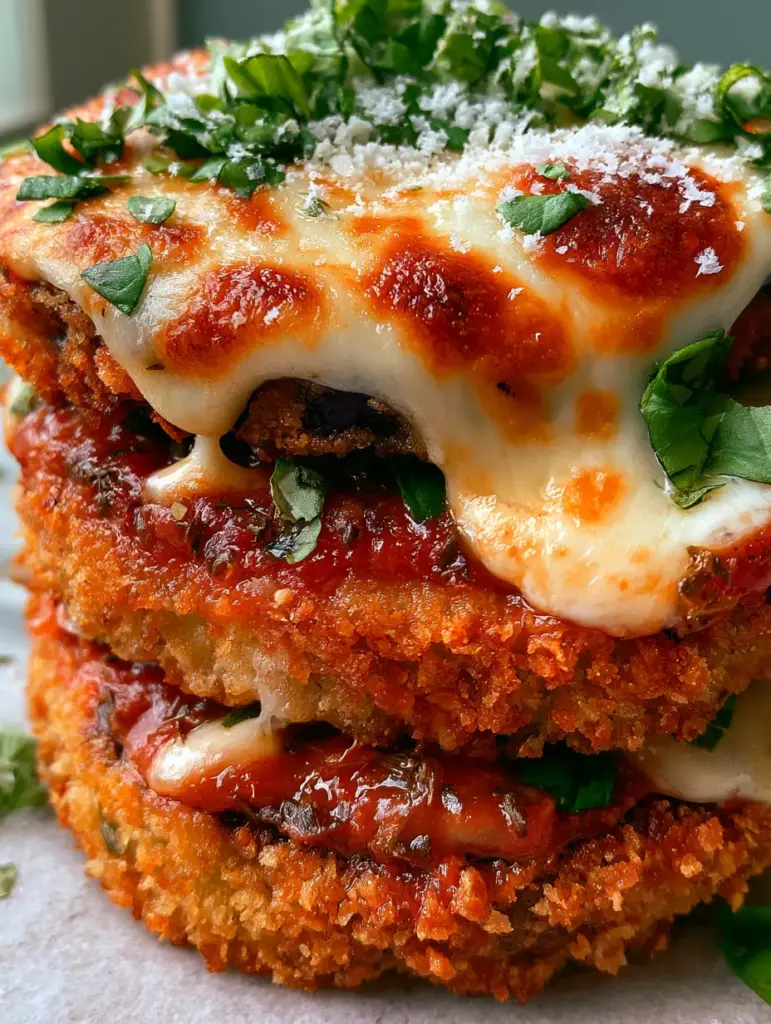
Remove the sheets from the oven. To build the stack of three, place one large round down, top with 1 tbsp (15ml) of thick marinara and a sprinkle of mozzarella. Repeat for the second layer.
For the top layer, add a slightly heavier portion of marinara and a “crown” of mozzarella cheese. This layering ensures the sauce is present in every bite without drowning the crunch.
The Final Broil for Toasted Spots
Switch your oven to the broiler setting. Place the stacks back in for 2-4 minutes. Watch closely! You are looking for the mozzarella to bubble and develop distinct golden-brown toasted spots.
Once the cheese is stretching slightly between the layers and the edges of the panko are dark gold, remove the tray from the oven. The smell of toasted cheese and herbs should be intoxicating.
Expert Tips for Culinary Success
- Thick Sauce is Key: If your marinara is too watery, simmer it on the stove for 10 minutes before using. A thick sauce stays in the stack and doesn’t soak into the breading.
- Uniform Slicing: Use a mandoline or a steady hand to ensure slices are the same thickness. This ensures they all finish cooking at the exact same time.
- Temperature Control: Don’t be afraid of the 425°F (220°C) heat. Eggplant needs high heat to break down its cellular structure into a creamy interior while the outside crisps.
- The Resting Period: Let the stacks sit for 3-5 minutes after broiling. This allows the cheese to set slightly, making the stack more stable for serving and photography.
What to Serve With This Italian Classic
This Oven Baked Eggplant Parmesan is a hearty main dish, but it pairs beautifully with other Italian-inspired sides. For a complete feast, serve it alongside a warm loaf of cheesy pull-apart garlic bread to soak up any extra marinara.
If you are looking for a lighter accompaniment, a simple roasted vegetable recipe featuring zucchini and bell peppers complements the eggplant perfectly. For those who love a variety of textures, consider serving this alongside stuffed shells for a multi-pasta dinner party. And don’t forget a refreshing glow-boosting juice to cleanse the palate after such a rich meal.
Frequently Asked Questions
You can sweat and bread the eggplant ahead of time, but for the best crunch, bake and assemble them just before serving. Reheating can soften the panko foundation.
While you can, panko is highly recommended for the ‘jagged’ and ‘ultra-crunchy’ texture. Regular breadcrumbs are finer and will result in a much softer, less textured crust.
Use the broiler for the final 2-4 minutes of cooking. Position the oven rack in the top third of the oven and watch closely until the mozzarella bubbles and browns.
The key is sweating the eggplant with salt for 30 minutes to remove moisture, and baking the rounds on a wire rack to allow hot air to circulate all around the panko crust.
For this stacked recipe, keep the skin on. It provides structural integrity to the rounds and contains extra nutrients, plus it looks beautiful against the golden panko.
The Final Flourish: Serving Your Masterpiece
Before serving, apply the final forensic details. Scatter the bright green fresh basil chiffonade over the top. The residual heat from the cheese will release the basil’s oils, creating a fresh aromatic cloud.
Dust the entire stack with your finely grated, fluffy parmesan and finish with a pinch of flaky sea salt. The salt crystals will catch the light and provide a final crunch that balances the richness of the mozzarella.
Oven Baked Eggplant Parmesan: The Ultimate Crispy Stacked Italian Classic
Ingredients
Equipment
Method
- Slice eggplant into 3/4-inch rounds. Arrange on paper towels and salt generously. Let sit for 30 minutes, then pat dry to remove all surface moisture.
- Place flour in one bowl, whisked eggs in a second, and panko mixed with oregano/garlic powder in a third bowl.
- Dredge each round in flour, dip in egg, then press firmly into panko. Place on wire racks over baking sheets. Bake at 425°F (220°C) for 20-25 minutes until golden and jagged.
- Create stacks of three eggplant rounds, layering a tablespoon of marinara and mozzarella between each layer.
- Top stacks with more sauce and cheese. Broil for 2-4 minutes until cheese shows toasted golden-brown spots.
- Garnish with fresh basil chiffonade, fluffy grated parmesan, and a pinch of flaky sea salt while hot.
Notes
Ensure the marinara is thick so it doesn't make the panko soggy.
Closing & Call to Action
This Oven Baked Eggplant Parmesan represents the pinnacle of home-cooked Italian comfort. By following these specific technical steps, you’ve created a dish that is as visually stunning as it is delicious. The combination of the ultra-crunchy panko and the tender eggplant center is a texture you won’t soon forget.
If you enjoyed this deep dive into crispy eggplant perfection, please leave a comment below and let us know how your stacks turned out! Don’t forget to share your creations and follow us on Pinterest for more culinary inspiration. For a sweet finish to this meal, check out our homemade banana pudding for the ultimate dessert.