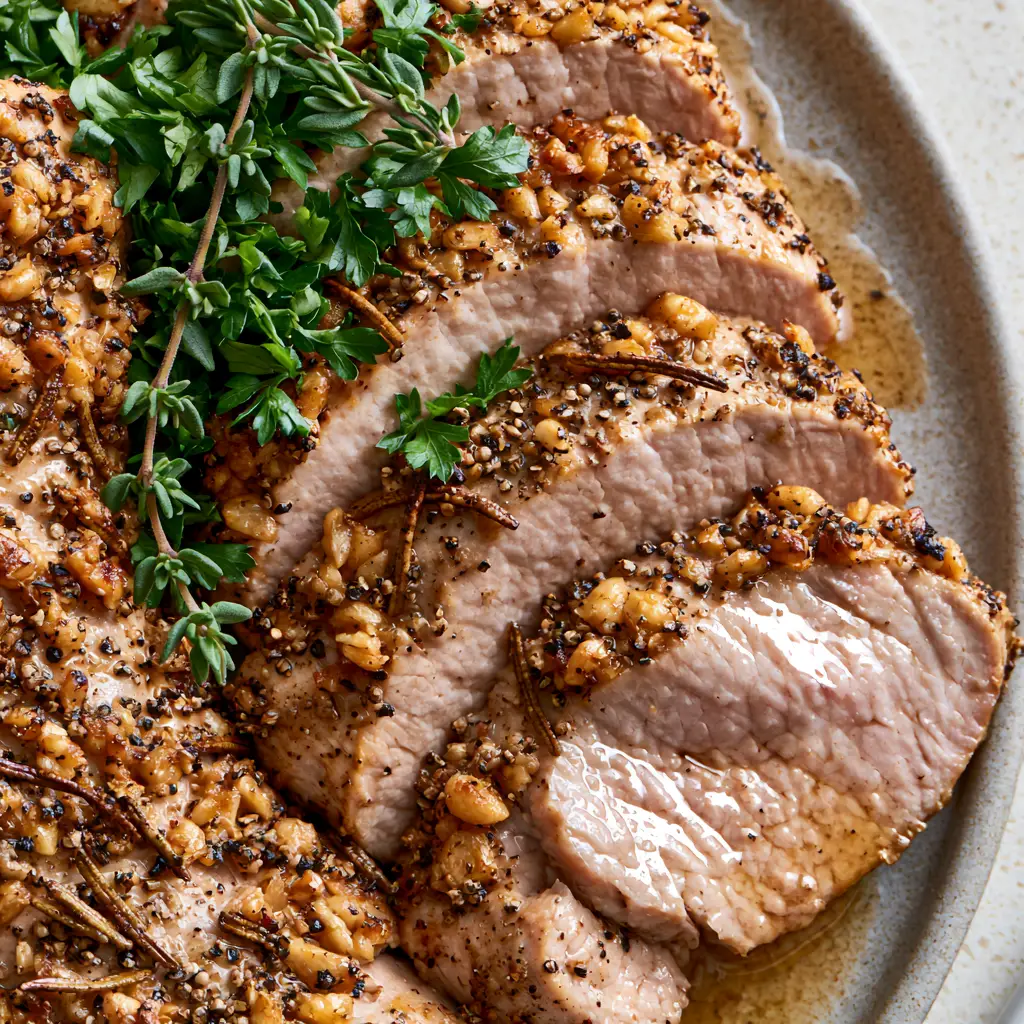
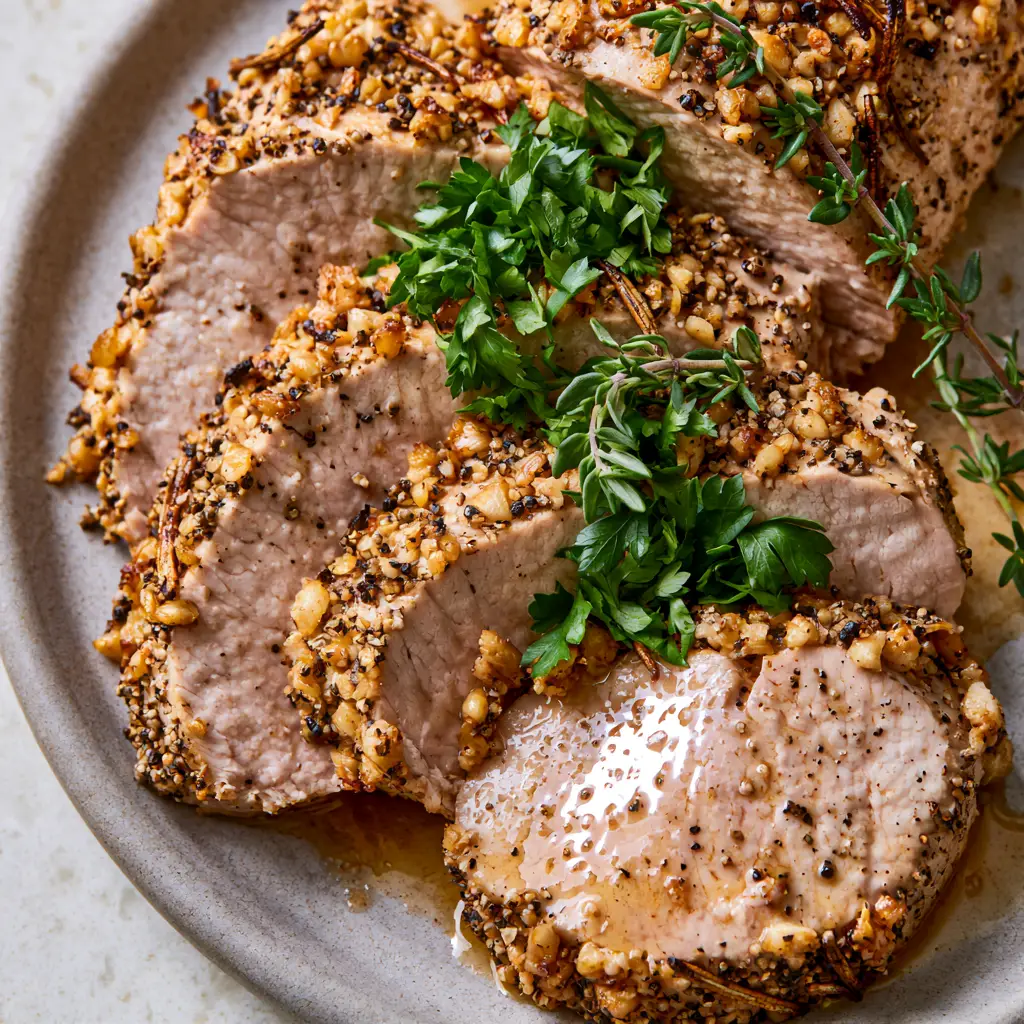
There is nothing quite as impressive yet deceptively simple as a perfectly roasted herb pork tenderloin. Imagine succulent, thick slices of pork fanned out across a matte stone plate, each piece boasting a moist, pale pink center and a heavy, textured crust. This isn’t just a meal; it is a sensory experience defined by the aroma of toasted rosemary and the sight of glistening meat juices pooling slightly on the platter.
Achieving this level of culinary excellence requires more than just heat; it requires a deep understanding of searing techniques and herb infusion. By combining minced toasted garlic, cracked black pepper, and a trio of fresh herbs, we create a flavor profile that is both rustic and refined. Whether you are hosting a dinner party or elevating a weeknight meal, this recipe delivers professional results using accessible techniques.
Why This Herb-Crusted Pork is a Weeknight Game Changer
- The Perfect Texture: A high-heat sear creates a golden-brown herb crust that contrasts beautifully with the incredibly moist and tender interior.
- Visually Stunning Presentation: The vibrant green of freshly chopped parsley and whole thyme sprigs against the pale pink pork makes this a centerpiece-worthy dish.
- Aromatic Depth: Using fresh rosemary needles and toasted garlic provides an earthy, pungent fragrance that fills your kitchen and whets the appetite.
- Precision Cooking: We focus on the exact internal temperature to ensure the meat remains glistening and juicy, never dry or overcooked.
This dish is as reliable as our tender pork recipe, providing a foolproof method for anyone looking to master lean proteins. The combination of salt, fat, and heat here works in perfect harmony to highlight the natural sweetness of the pork.
Essential Ingredients for a Restaurant-Quality Crust
Pork Tenderloin: You will need two pork tenderloins, approximately 1 lb (454g) each, trimmed of silver skin to ensure every bite is melt-in-your-mouth tender. This lean cut is the star of the show and provides the succulent “pale pink” center we are aiming for.
Minced Garlic: Use 4-6 large cloves (30g) of fresh garlic, finely minced. As these bits hit the hot pan, they transform into “toasted garlic” nuggets that provide a sweet, nutty crunch to the crust.
Fresh Rosemary: 2 tbsp (4g) of fresh rosemary needles, finely chopped. Rosemary is a hardy herb that stands up well to high heat, becoming crispy and fragrant during the roasting process.
Fresh Thyme: 1 tbsp (2g) of fresh thyme leaves for the rub, plus whole sprigs for garnish. Thyme adds a subtle lemony, earthy note that bridges the gap between the heavy garlic and the meat.
Cracked Black Pepper: 1 tbsp (6g) of coarsely cracked black pepper. Unlike fine pepper, cracked peppercorns provide a bold “bite” and a visible texture that matches our visual blueprint.
Kosher Salt & Sea Salt Flakes: Use kosher salt for the initial rub to deeply season the meat, and finish with a sprinkle of sea salt flakes to enhance the “glistening” moisture on the plate.
Avocado Oil: 2 tbsp (30ml) of a high-smoke point oil. This “invisible” ingredient is essential for achieving that golden-brown sear without burning the delicate herbs.
Fresh Parsley: 2 tbsp (8g) of chopped fresh parsley. This vibrant green garnish is added at the very end to provide a pop of color and a fresh, grassy finish.
The Tools You Need for Culinary Success
To achieve the “top-down close-up” quality seen in professional food photography, you need the right gear. A heavy-bottomed cast-iron skillet is preferred for its superior heat retention, which is critical for that initial golden sear.
An instant-read meat thermometer is non-negotiable for an herb pork tenderloin. Because tenderloin is so lean, the window between “perfectly pink” and “tough and dry” is narrow. You will also need a sharp chef’s knife to create those clean, thick slices without tearing the meat.
Mastering the Sear: Step-by-Step Instructions
Preparing the Herb and Garlic Rub
In a small bowl, combine your minced garlic, chopped rosemary, thyme leaves, cracked black pepper, and kosher salt. Stir in 1 tbsp (15ml) of oil to create a thick paste.
Pat the pork tenderloins completely dry with paper towels; moisture is the enemy of a good sear. Rub the herb paste over every inch of the meat, pressing firmly so the “heavy, textured crust” adheres to the surface.
The Art of the High-Heat Sear
Heat your remaining oil in a large skillet over medium-high heat until it begins to shimmer and a light wisp of smoke appears. Carefully place the pork in the pan—you should hear a loud, aggressive sizzle immediately.
Sear the pork for 2-3 minutes per side. Look for the “Visual Cue” of the garlic turning golden-brown and the rosemary needles beginning to toast. Do not move the meat prematurely; let the crust develop naturally.
Roasting to Pale Pink Perfection
Transfer the skillet to a preheated oven at 400°F (200°C). Roast for 10-15 minutes, or until an internal thermometer reaches 140°F (60°C). This is the secret to a “moist, glistening center.”
Remember that the temperature will rise during the resting phase. If you wait until 145°F to pull it from the oven, you risk losing that beautiful pale pink hue. If you enjoy rich flavors, you might also like our pork medallions in onion gravy.
The Critical Resting Period
Transfer the roasted pork to a cutting board and tent loosely with foil. Let it rest for a full 10 minutes. This allows the fibers to relax and the “visible juices” to redistribute throughout the meat.
Slicing too early will cause all that moisture to run out onto the board, leaving the meat dry. Once rested, use a long, sharp knife to cut thick, succulent slices against the grain.
Expert Tips for the Ultimate Flavor Profile
- Room Temperature Meat: Take the pork out of the fridge 20 minutes before cooking. This ensures even heat penetration and a more consistent pink center.
- Don’t Overcrowd the Pan: If your skillet is small, sear the tenderloins one at a time. Overcrowding drops the pan temperature and leads to steaming instead of searing.
- Fresh vs. Dried: For this specific herb pork tenderloin, fresh herbs are mandatory. Dried herbs can become bitter and grainy when subjected to the high heat of a sear.
- The “Glisten” Factor: If the meat looks a little matte after slicing, spoon the “pooling juices” from the pan back over the slices for that magazine-quality finish.
Serving Suggestions and Pairings
This herb-forward dish pairs beautifully with roasted root vegetables or a crisp green salad. If you are looking for a more adventurous side, consider serving it alongside our hoecakes recipe for a southern-inspired twist.
For those who love a sweet and savory contrast, these slices are incredible with a dollop of apple sauce or even a drizzle of the glaze from our apple butter glazed pork tenderloin. If you’re planning a full spread, don’t forget a refreshing drink like our blackberry coconut pink drink to balance the savory garlic notes.
How to Store and Reheat Leftovers
Store any leftover pork in an airtight container in the refrigerator for up to 3 days. To maintain the “pale pink” center when reheating, do not use the microwave. Instead, wrap the slices in foil with a splash of broth and warm them in a 300°F (150°C) oven until just heated through.
Freezing is possible for up to 2 months, though the texture of the “golden-brown herb crust” may soften upon thawing. Always thaw overnight in the refrigerator before reheating.
Frequently Asked Questions
While possible, it is not recommended for this recipe. Fresh rosemary and thyme provide the ‘toasted’ texture and vibrant color seen in the photos. Dried herbs can burn and become bitter during the high-heat searing process.
Absolutely. Searing is what creates the ‘heavy, textured crust’ and deep golden-brown color. Roasting alone will not provide the same flavor depth or visual appeal.
The key is using a high-smoke point oil like avocado oil and keeping the meat moving. Sear the pork just until the garlic turns golden brown, then finish the cooking in the oven’s ambient heat.
Yes! The USDA updated guidelines years ago to state that pork is safe to consume at 145°F (63°C), which results in a pale pink, moist center. This temperature ensures the meat is juicy rather than dry and tough.
Pork tenderloins vary in thickness. The only way to guarantee juiciness is by using an instant-read thermometer. Pull the meat at 140°F and let it rest; carry-over cooking will bring it to the perfect 145°F.
The Ultimate Herb Pork Tenderloin Recipe
Herb Pork Tenderloin with a Golden Garlic and Rosemary Crust
Ingredients
Equipment
Method
- In a small bowl, combine minced garlic, rosemary, thyme, pepper, kosher salt, and 1 tbsp of oil into a paste.
- Pat pork dry with paper towels. Rub the herb paste thoroughly over all sides of the tenderloins.
- Heat skillet with remaining oil over medium-high heat. Sear pork until a deep golden-brown crust forms on all sides, about 8 minutes total.
- Transfer skillet to a 400°F (200°C) oven and roast until the internal temperature hits 140°F (60°C).
- Remove pork to a board and rest for 10 minutes. Temperature will rise to 145°F.
- Slice into thick rounds, sprinkle with sea salt flakes, fresh parsley, and extra thyme sprigs.
Notes
Ensure the pan is shimmering hot before adding the pork to get the textured crust.
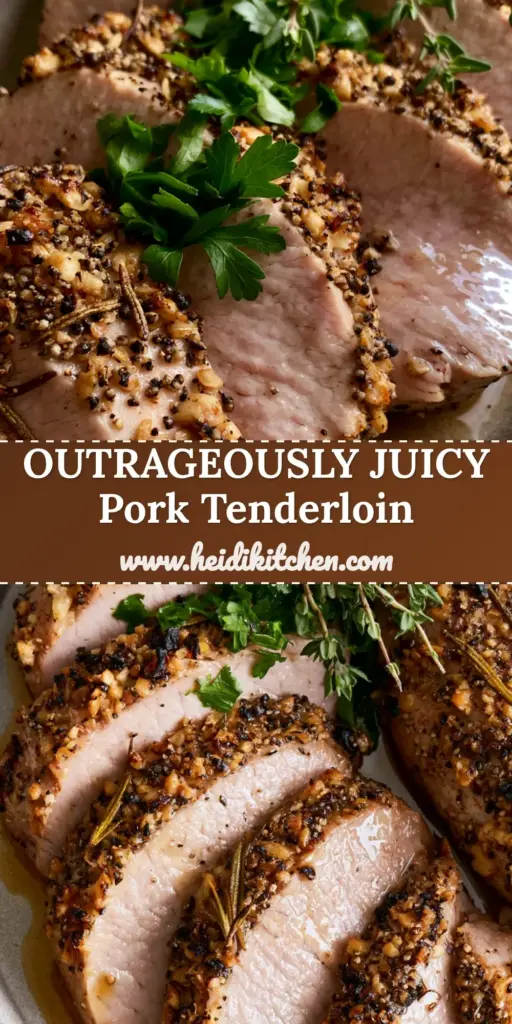
Bring This Culinary Masterpiece to Your Kitchen
Creating a restaurant-quality herb pork tenderloin is about respecting the ingredients and mastering the heat. By following these steps, you will produce a dish that is as visually stunning as it is delicious. We invite you to share your results and tag us in your creations!
For more inspiration and to save this recipe for later, be sure to follow us on Pinterest. Happy cooking!