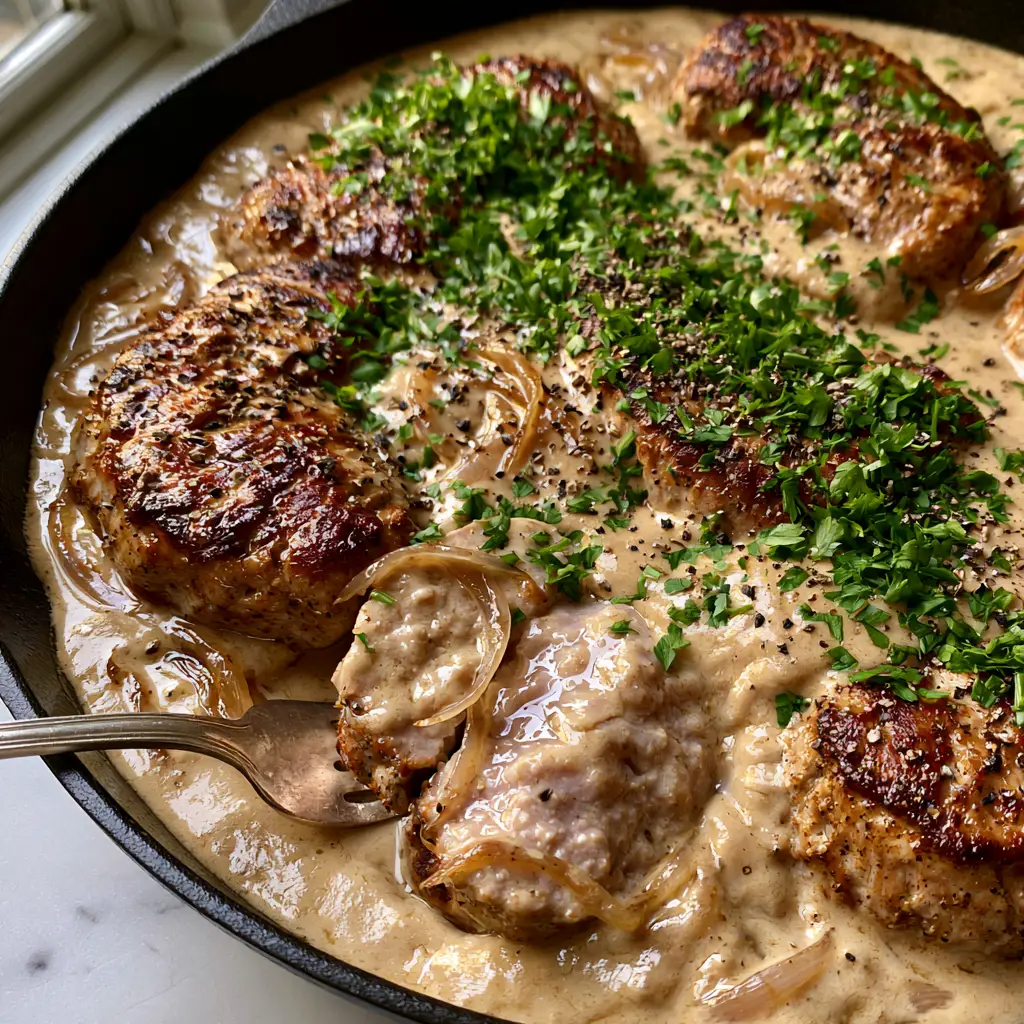
There is something undeniably soulful about a dish that combines a hard-seared crust with a velvety, cream-based sauce. These pork medallions in onion gravy represent the pinnacle of weeknight luxury, delivering restaurant-quality results in a rugged, matte black cast iron skillet.
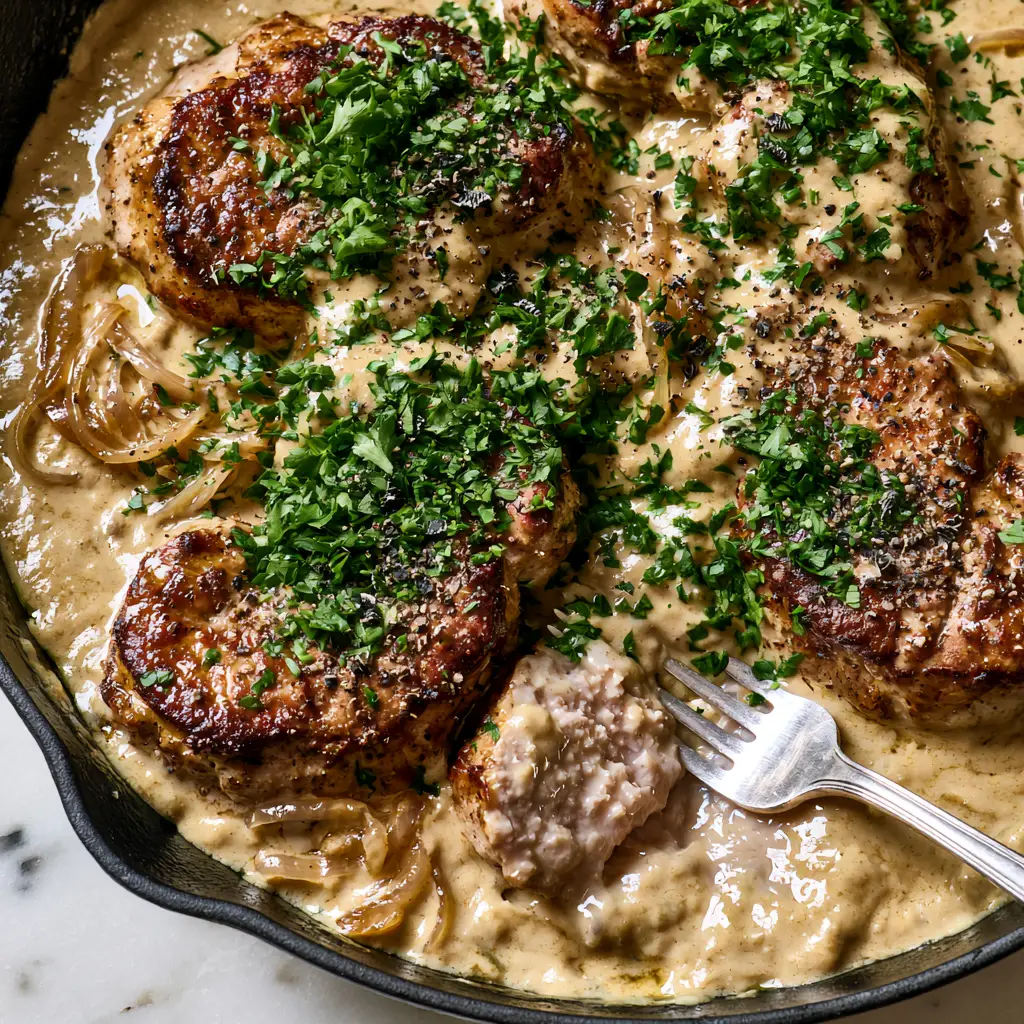
When you slice into one of these thick-cut tenderloin rounds, you are greeted by a glistening, moist, pale-pink interior that contrasts beautifully with the deep golden-brown exterior. The sauce—a glossy, light-tan masterpiece—is studded with translucent slivers of caramelized onions that melt into every bite.
This recipe isn’t just about feeding a family; it is about mastering the culinary bridge between high-heat searing and delicate sauce emulsification. By following this guide, you will achieve that perfect “handheld smartphone photo” aesthetic that looks as good as it tastes.
Why These Savory Pork Medallions in Onion Gravy Are a Game Changer
- Perfectly Pink Precision: We target a specific internal temperature to ensure the pork remains moist and pale-pink, avoiding the “dry pork” trap.
- Deep Flavor Extraction: By using a cast iron skillet, we maximize the Maillard reaction, creating a rich fond that forms the base of our onion gravy.
- Textural Contrast: The combination of a crunchy seared crust, soft caramelized onion slivers, and a silky cream sauce provides a complex mouthfeel.
- Visual Sophistication: Topped with vibrant green parsley and coarse cracked black pepper, this dish is a masterpiece of natural food styling.
If you have previously enjoyed a tender pork recipe on this blog, you know how much we value the science of meat proteins. This dish takes those principles and elevates them with a classic French-inspired pan sauce.
Essential Components for This Gourmet Pork Medallion Masterpiece
Pork Tenderloin: 1.5 lbs (680g). Look for a fresh, silver-skin-removed tenderloin that we will slice into thick, 1.5-inch (4cm) medallions for maximum juiciness.
Yellow Onions: 2 large (approx. 500g). These provide the translucent, sweet slivers that define the sauce’s body and sweetness once caramelized.
Heavy Cream: 1/2 cup (120ml). This foundational liquid creates the velvety, light-tan finish and gives the gravy its signature “glossy” appearance.
Beef Stock: 1 cup (240ml). A high-quality stock provides the deep umami base that pairs perfectly with the caramelized sugars of the onions.
All-Purpose Flour: 2 tbsp (16g). Essential for dredging the pork to help create that golden-brown crust and for thickening the pan sauce into a true gravy.
Unsalted Butter: 3 tbsp (45g). We use butter for its milk solids, which brown beautifully and add a nutty aroma to the searing process.
Fresh Parsley: 1/4 cup (15g), finely chopped. This provides the “vibrant green” visual pop and a fresh, herbaceous finish to cut through the rich sauce.
Cracked Black Pepper: 1 tsp (2g), coarsely ground. This adds both a mild heat and a rustic, professional visual aesthetic to the final skillet presentation.
High-Heat Oil: 1 tbsp (15ml) avocado or grapeseed oil. This prevents the butter from burning during the high-temperature sear required for the medallions.
Kosher Salt: To taste. Essential for drawing out the moisture from the onions during caramelization and seasoning the meat deeply.
The Toolset: Achieving the Cast Iron Aesthetic
To replicate the visual result of a deeply seared crust and a simmering sauce, a 12-inch (30cm) matte black cast iron skillet is non-negotiable. The thermal mass of cast iron ensures that when the cold pork hits the pan, the temperature doesn’t drop, allowing for an instant sear.
You will also need a sharp chef’s knife for creating those thin, translucent onion slivers and a digital meat thermometer. The thermometer is your only guarantee of achieving that “moist, pale-pink interior” without overshooting into grey, tough territory.
Step-by-Step: Mastering Pork Medallions in Onion Gravy
Preparing the Medallions for the Perfect Sear
Start by patting the pork tenderloin completely dry with paper towels. Any surface moisture will create steam, which is the enemy of a golden-brown crust.
Slice the tenderloin into 1.5-inch (4cm) rounds. Season each side generously with kosher salt and half of the cracked black pepper, then lightly dredge the edges in flour, tapping off any excess.
Achieving the Golden-Brown Crust
Place your cast iron skillet over medium-high heat and add the oil and 1 tablespoon (15g) of butter. Once the butter foam subsides and begins to brown, carefully place the medallions in the skillet.
Sear for 3-4 minutes per side without moving them. You are looking for a deep, mahogany-colored crust—the “visual cue” that the Maillard reaction has occurred.
Remove the pork from the pan when the internal temperature hits 135°F (57°C). Place them on a warm plate to rest; the carryover cooking will bring them to a perfect 145°F (63°C), keeping the interior moist and pale-pink.
Caramelizing the Translucent Onion Slivers
In the same skillet, add the remaining butter. Toss in the onion slivers and a pinch of salt. Lower the heat to medium.
Scrape the bottom of the pan to incorporate the “fond”—those flavorful brown bits left by the pork. Cook the onions until they are softened and translucent with golden edges, about 8-10 minutes.
If you enjoy these aromatics, you might also like our herb-pork-tenderloin which uses a similar flavor-building technique.
Building the Velvety Light-Tan Cream Sauce
Sprinkle the remaining tablespoon of flour over the onions and cook for 1 minute to remove the raw flour taste. Slowly whisk in the beef stock, followed by the heavy cream.
Simmer the sauce until it thickens into a velvety, glossy consistency. The sauce should be light-tan in color, reflecting the marriage of the cream and the caramelized onion juices.
The Final Assemblage and Presentation
Nestle the rested pork medallions back into the skillet, partially submerging them in the sauce. Spoon some of the gravy and onion slivers over the top of the meat.
Finish with a generous sprinkle of the finely chopped fresh parsley and the remaining coarse cracked black pepper. The contrast of the green herbs against the tan sauce in the black skillet is a hallmark of this dish.
Expert Tips for Culinary Success
- The Rest is Vital: Never skip the resting period. Cutting into the pork too soon will cause the glistening juices to run out, leaving the meat dry.
- Control the Heat: If your onions are browning too fast, add a tablespoon of water to the pan. This helps release the sugars without burning the delicate slivers.
- Heavy Cream Matters: Do not substitute milk for heavy cream. The fat content is required to prevent curdling when hitting the acidic pan environment and to achieve that “glossy” finish.
- Deglazing Secret: For extra depth, you can deglaze the pan with a splash of dry white wine or sherry before adding the beef stock.
What to Serve With Your Skillet Masterpiece
To soak up every drop of that velvety onion gravy, serve this dish over a bed of garlic mashed potatoes or buttered egg noodles. For a lower-carb option, roasted cauliflower or a crisp green salad works beautifully.
If you’re looking for more pork inspiration, consider our apple butter glazed pork tenderloin for a sweeter profile, or try our Thai-style fried pork for a completely different textural experience.
Storage, Reheating, and Freezing
Store any leftover pork medallions in onion gravy in an airtight container in the refrigerator for up to 3 days. To reheat, place the medallions and sauce in a pan over low heat, adding a splash of stock or cream to loosen the gravy.
Freezing is not recommended for this specific recipe, as the cream-based sauce can separate and lose its velvety texture upon thawing. However, the pork itself remains tender if frozen separately.
Frequently Asked Questions
While you can, pork loin is much larger and tougher. Tenderloin is the premium choice for medallions because of its fine grain and ability to remain tender during high-heat searing.
The key is a hot cast iron skillet and patting the pork completely dry. High heat sears the exterior quickly, while the digital thermometer ensures you remove it before the middle dries out.
Yes, according to the USDA, pork is safe to eat when it reaches an internal temperature of 145°F (63°C) followed by a three-minute rest. This results in a moist, pale-pink interior.
Slice them pole-to-pole into thin slivers rather than rings. This helps them hold their shape during the caramelization process while still becoming soft and translucent.
Grey gravy usually happens if you haven’t seared the pork enough or if the onions haven’t caramelized. The tan color comes from the ‘fond’ (brown bits) and the slow caramelization of onion sugars.
The Perfect Pork Medallions in Onion Gravy Recipe
Pork Medallions in Onion Gravy: The Ultimate Cast Iron Comfort Meal
Ingredients
Equipment
Method
- Pat the pork dry and slice into medallions. Season with salt, pepper, and dredge in 1 tbsp flour.
- Heat oil and 1 tbsp butter in cast iron. Sear medallions for 3-4 minutes per side until a golden-brown crust forms and internal temp hits 135°F. Remove and rest.
- Add remaining butter and onion slivers to the skillet. Cook over medium heat until translucent and golden, about 10 minutes.
- Stir in remaining flour, then whisk in stock and heavy cream. Simmer until the sauce is velvety and light-tan.
- Return pork to the skillet. Garnish with parsley and extra cracked black pepper before serving.
Notes
Use a matte black cast iron skillet for the best sear results.

Closing Thoughts on This Skillet Classic
Mastering pork medallions in onion gravy is a rite of passage for any home cook looking to improve their pan-sauce technique. The combination of the heavy cast iron sear and the delicate cream-based finish creates a meal that is both rustic and refined.
Did you try this recipe? We’d love to hear how your sear turned out! Leave a comment below, and don’t forget to share your skillet photos on Pinterest so we can see your culinary creations.