There is something undeniably primal and comforting about the sight of chunky beef meat pies. Imagine a slow-cooked filling where the beef doesn’t just crumble—it stands in proud, tender chunks, bathed in a sauce so dark and glossy it looks like liquid mahogany. When you break through the lid of a shattered golden-brown puff pastry crust, that thick gravy begins its slow, seductive ooze out of an individual ceramic ramekin.
This isn’t your average supermarket pot pie. This recipe is a masterclass in texture and visual contrast, specifically designed to replicate the rustic elegance of a high-end gastropub. From the scattering of fresh thyme sprigs to the crunch of flaky sea salt on the buttery crust, every element of these chunky beef meat pies is engineered for maximum sensory impact.
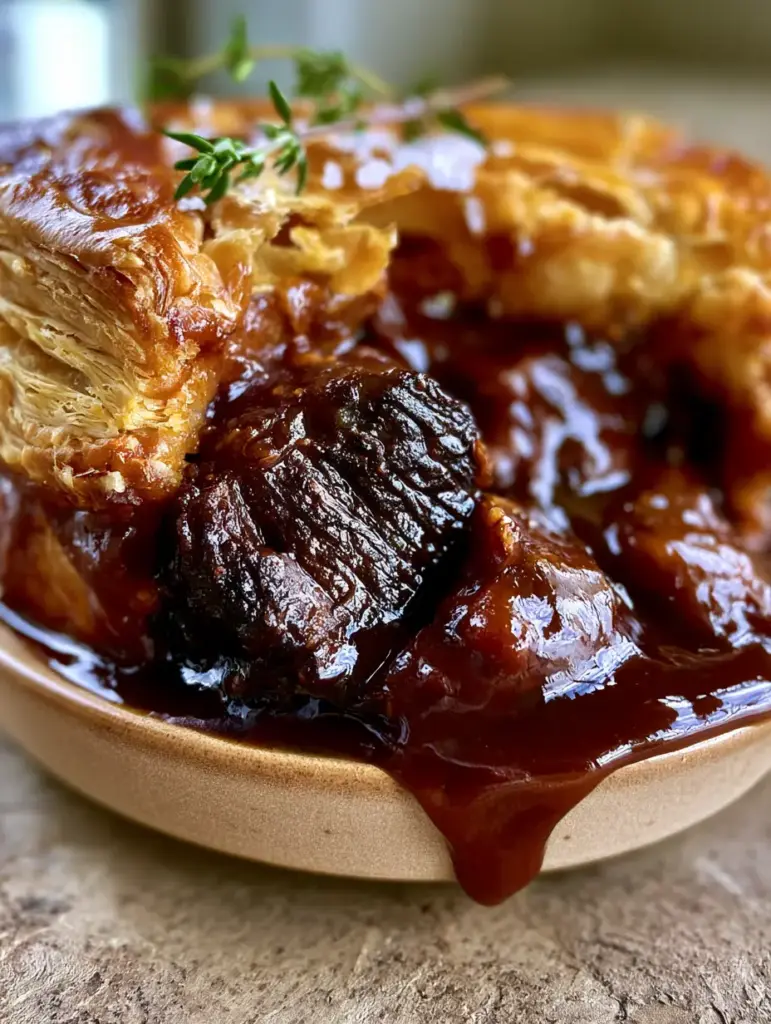
The Anatomy of a Perfect Savory Meat Pie
- The Mahogany Gravy: A deep, dark, and glossy reduction achieved through a combination of high-heat searing and a red wine deglaze.
- Shattered Pastry Texture: Achieving that “shattered” look requires a high-fat puff pastry and a specific egg-wash technique to ensure maximum flake.
- Tender Beef Chunks: We use beef chuck, hand-cut into generous 1-inch (2.5cm) cubes to ensure they remain distinct and succulent after hours of slow cooking.
- Individual Presentation: Serving in ceramic ramekins ensures a higher crust-to-filling ratio and a beautiful, personalized presentation.
- Sensory Toppings: A finishing touch of fresh thyme and sea salt provides the herbal aroma and “pop” of flavor that cuts through the rich beef.
Essential Ingredients for Deep, Dark Braised Beef Filling
Beef Chuck Roast (1 kg / 2.2 lbs): This is the gold standard for chunky beef meat pies. Its high connective tissue content breaks down into gelatin, providing that signature “melt-in-the-mouth” feel while keeping the chunks intact.
Store-Bought or Homemade Puff Pastry (500g / 1.1 lbs): Look for an all-butter variety to achieve the visible buttery flakes and golden-brown hue seen in our visual blueprint. The fat content is key to the “shattering” effect.
Dry Red Wine (240ml / 1 cup): A Cabernet Sauvignon or Shiraz is ideal here. The tannins and acidity are foundational for building that thick, glossy mahogany gravy that defines the interior of the pie.
Beef Bone Broth (500ml / 2 cups): Using a high-quality bone broth adds natural gelatin, which is the secret “invisible ingredient” that makes the gravy ooze rather than run.
Tomato Paste (30g / 2 tbsp): This provides the base for the “mahogany” color. Once caramelized against the bottom of the pot, it deepens the hue of the entire dish.
Fresh Thyme Sprigs: These are used both in the braise and as a fresh garnish. The earthy, floral notes are essential for balancing the heavy umami of the beef.
Flaky Sea Salt (Maldon style): These large crystals don’t just season; they provide a physical crunch on top of the pastry that contrasts with the tender beef beneath.
All-Purpose Flour (30g / 1/4 cup): This is used to dredge the beef and thicken the gravy into that iconic “thick and glossy” consistency.
Tools for Achieving Gastropub-Style Results
To recreate the exact visual from our savory meat pie recipes, you will need a heavy-bottomed Dutch oven. The thick walls allow for even heat distribution, which is critical for the “dark-seared” crust on the beef chunks without burning them.
Individual ceramic ramekins (approx. 10-12oz or 300-350ml) are required for the “ceramic dish” aesthetic. These hold heat exceptionally well, keeping the gravy in its “oozing” state for several minutes after serving. You will also need a sharp chef’s knife for clean beef cuts and a pastry brush for the all-important egg wash.
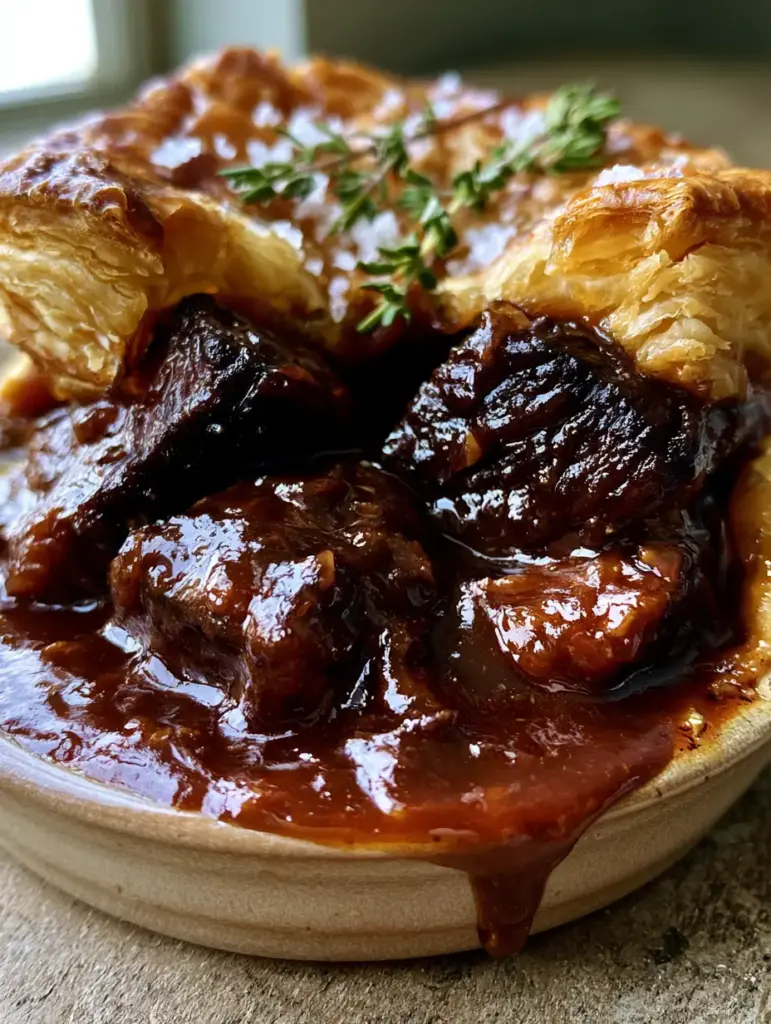
Developing the Mahogany Base: The Searing Phase
The first secret to authentic chunky beef meat pies is the sear. Most home cooks overcrowd the pan, which causes the beef to steam rather than brown. To get “large chunks of tender, slow-cooked dark-seared beef,” you must work in batches.
Heat 2 tablespoons (30ml) of neutral oil in your Dutch oven until it is shimmering and just starting to smoke. Pat your beef chunks bone-dry with paper towels—moisture is the enemy of a dark sear. Place the beef in the pan, leaving at least an inch of space between each piece.
Do not move them for at least 3 minutes. You are looking for a deep, crusty, chocolate-brown exterior. This “fond” left on the bottom of the pan is the literal foundation of your mahogany gravy. If you’re looking for a lighter meal later in the week, check out our lunch or dinner ideas for some inspiration.
Building the Glossy Gravy
Once the beef is removed, add your diced onions and garlic to the rendered fat. As they soften, add the tomato paste and cook it until it turns from bright red to a rusty brown. This is the “culinary forensics” behind the color seen in the Midjourney prompt.
Deglaze with the red wine, using a wooden spoon to scrape up every bit of that dark crust. Pour in the beef broth and return the beef to the pot. This slow-cooking process will take about 2.5 to 3 hours at a low simmer until the beef is tender but hasn’t lost its “chunky” shape.
The Physics of a Shattered Puff Pastry Crust
The “shattered, golden-brown puff pastry” described in the visual blueprint is all about temperature control. Puff pastry consists of hundreds of layers of dough and butter. When it hits a hot oven, the water in the butter turns to steam, lifting the layers.
Before topping your ramekins, ensure the beef filling has cooled slightly. If the filling is boiling hot, it will melt the butter in the pastry before it even hits the oven, resulting in a flat, greasy lid rather than a shattered one. For a different take on savory crusts, you might enjoy our keema samosa recipe.
The Final Assembly and Sensory Cues
Roll out your chilled pastry and cut circles slightly larger than your ramekins. Brush the rims of the ramekins with egg wash to act as “glue.” Drape the pastry over, pressing gently to seal. Score the top lightly with a knife—this allows steam to escape and creates those “visible buttery flakes.”
Bake at 400°F (200°C) until the top is a deep, uniform golden brown. You will know it’s ready when the kitchen smells intensely of toasted butter and the gravy is just beginning to bubble up and ooze from the steam vents.
Expert Tips for the Ultimate Chunky Beef Meat Pies
- Chill the Filling: For the best pastry lift, let the chunky beef filling cool to room temperature before adding the puff pastry lid.
- Don’t Over-Stir: Once the beef is tender, handle it gently. You want “large chunks,” not shredded beef.
- Double Egg Wash: For that “glossy” mahogany-adjacent shine on the crust, brush with egg wash, chill for 10 minutes, and brush again before baking.
- The Flour Trick: If your gravy isn’t thick enough at the end of braising, simmer it uncovered for 15 minutes to reduce and concentrate the flavors.
Storage and Make-Ahead Instructions
These chunky beef meat pies are excellent for meal prep. You can prepare the beef filling up to 3 days in advance and store it in the refrigerator. In fact, the flavor often improves after a night in the fridge.
To freeze, assemble the pies with the raw pastry lids but do not egg wash. Wrap tightly in plastic wrap and foil. They can be baked from frozen; just add an extra 10-15 minutes to the baking time. If you enjoy hearty beef dishes, you should also try our beef with pasta in creamy garlic sauce.
What to Serve With Savory Beef Pies
Since these pies are rich and decadent, they pair best with bright, acidic, or fresh sides. A simple green salad with a lemon vinaigrette works wonders. Alternatively, roasted root vegetables or a side of creamy pasta with asparagus can turn this into a multi-course feast.
If you are hosting an Italian-themed dinner, you might even consider serving a small portion of Italian meat pie as an appetizer before the main beef event. The contrast in spices—from the warming thyme of the beef pie to the herbal notes of the Italian version—is delightful.
Frequently Asked Questions
Absolutely. Assemble the pies with the pastry lid but without the egg wash, then freeze. You can bake them directly from frozen; just add about 10-15 minutes to the baking time.
Yes, but for the ‘shattered’ golden-brown effect seen in the photos, ensure you use an all-butter puff pastry and keep it very cold until it goes into the hot oven.
The mahogany color comes from properly searing the beef chunks until very dark and caramelizing the tomato paste. The glossiness is achieved by using a high-quality bone broth rich in gelatin.
Beef chuck roast is the best choice because it has enough fat and connective tissue to stay succulent and tender during the long braising process without falling apart completely.
Soggy pastry usually happens if the filling is too hot when the pastry is added. Let the beef filling cool slightly before topping with the dough to keep the layers crisp.
The Ultimate Chunky Beef Meat Pies Recipe
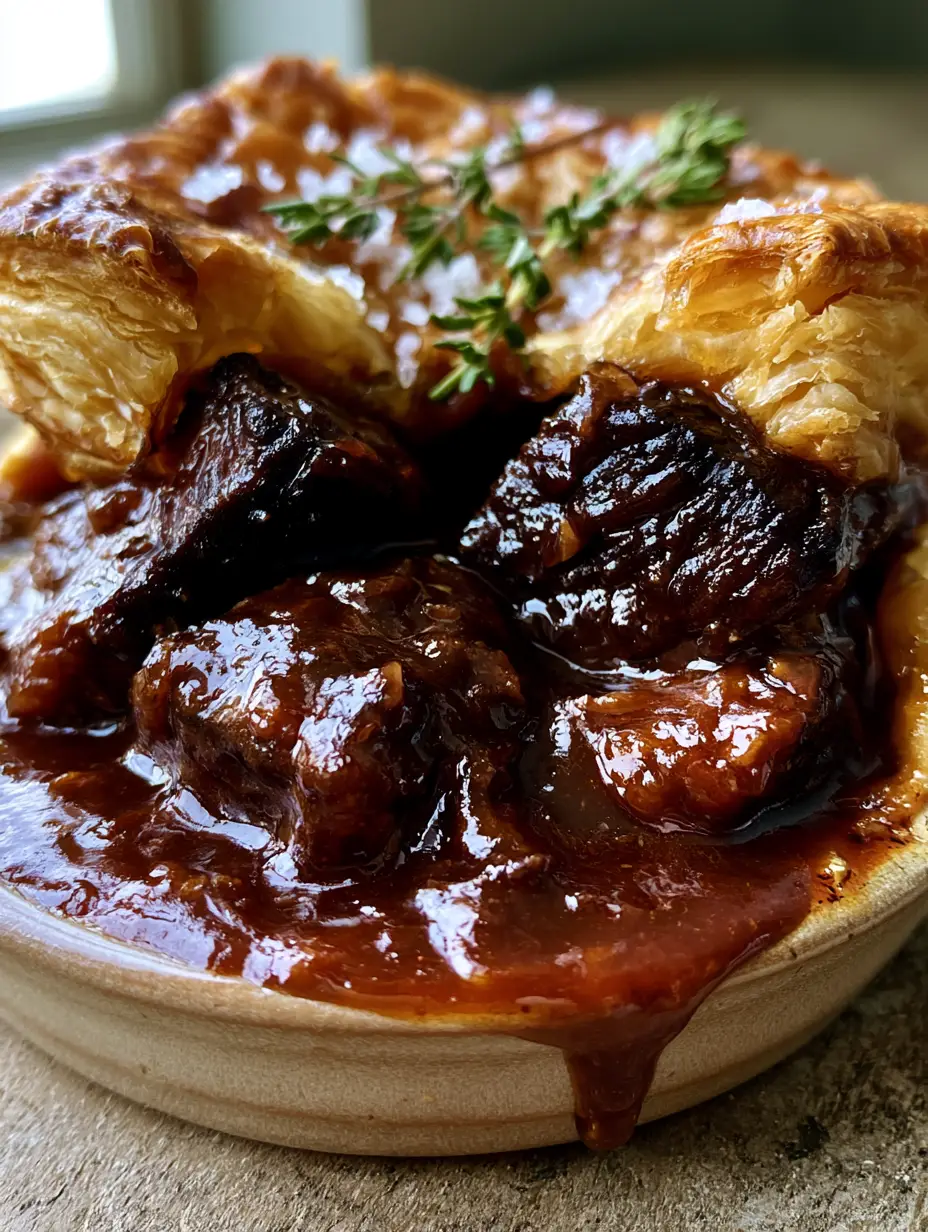
Chunky Beef Meat Pies with Shattered Puff Pastry and Mahogany Gravy
Ingredients
Equipment
Method
- Dredge beef chunks in flour. Heat oil in a Dutch oven over high heat. Sear beef in batches until a deep dark-brown crust forms on all sides. Remove and set aside.
- Sauté onions and garlic in the same pot. Stir in tomato paste and cook for 2 minutes. Deglaze with red wine, scraping the bottom of the pot to release the fond.
- Add beef broth and thyme. Return beef to the pot. Cover and simmer on low for 2.5-3 hours until beef is tender and gravy is thick, glossy, and mahogany in color.
- Spoon the slightly cooled beef filling into four individual ceramic ramekins.
- Cut puff pastry into circles 1-inch wider than the ramekins. Brush rims with egg wash, place pastry on top, and seal. Brush the top with more egg wash.
- Preheat oven to 400°F (200°C). Bake for 20-25 minutes until the pastry is shattered, golden-brown, and buttery. Garnish with fresh thyme and flaky sea salt.
Notes
Use a high-quality all-butter puff pastry for the best shattered texture.
Closing & Call to Action
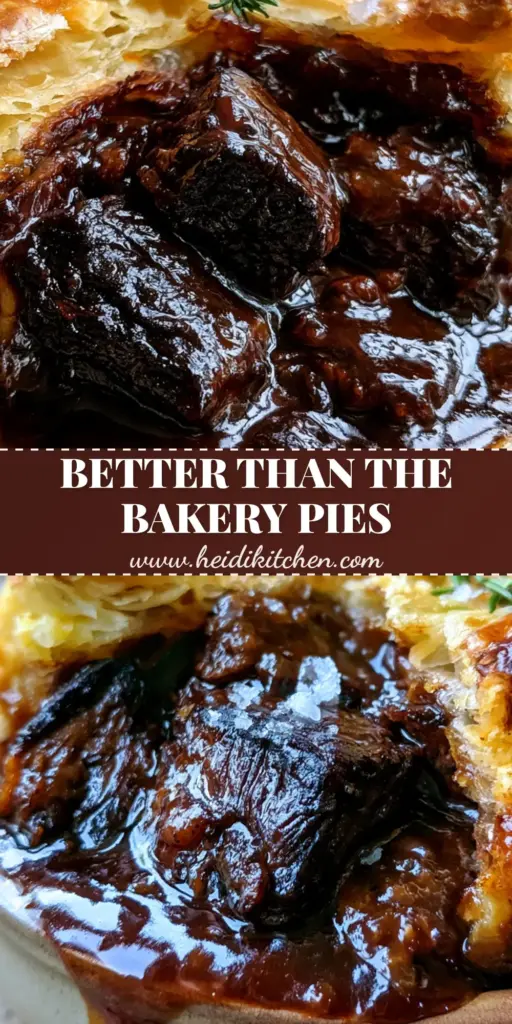
Mastering the chunky beef meat pies is a rite of passage for any serious home cook. It combines the patience of slow-braising with the precision of pastry work. The result—a shattered crust giving way to a glossy, mahogany-rich interior—is a culinary achievement that tastes even better than it looks.
Did you achieve that perfect “ooze”? Tag us in your photos! If you loved this recipe, please leave a comment below and share this post with your fellow foodies on Pinterest. For more comforting recipes, don’t forget to sign up for our weekly newsletter.