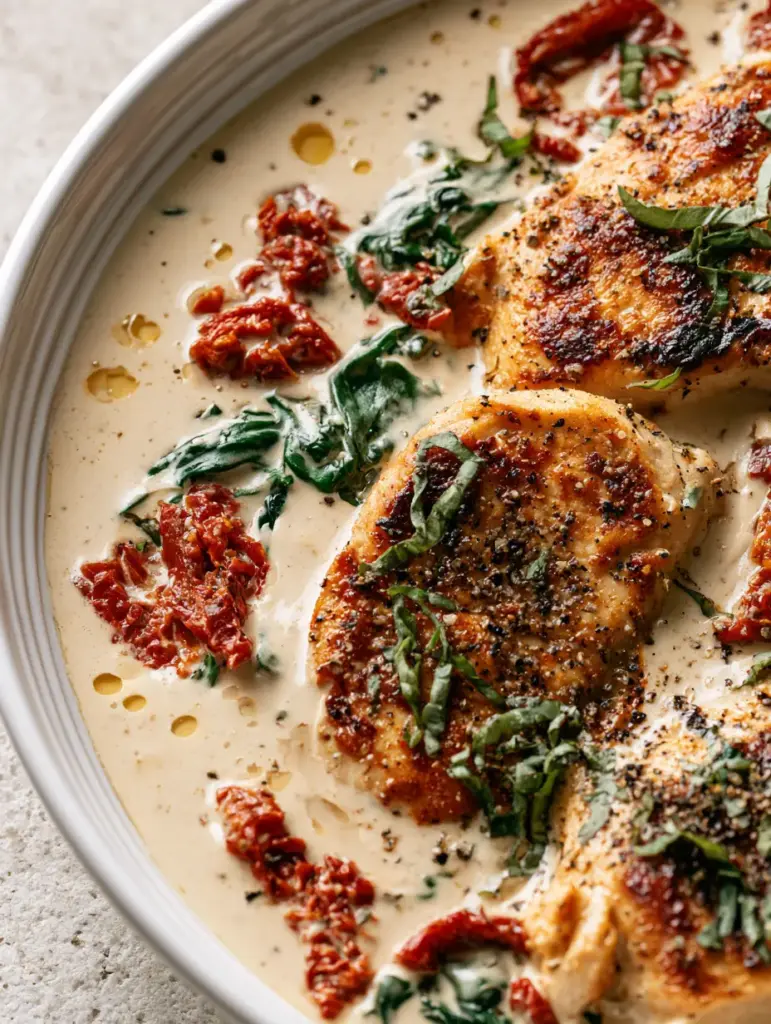
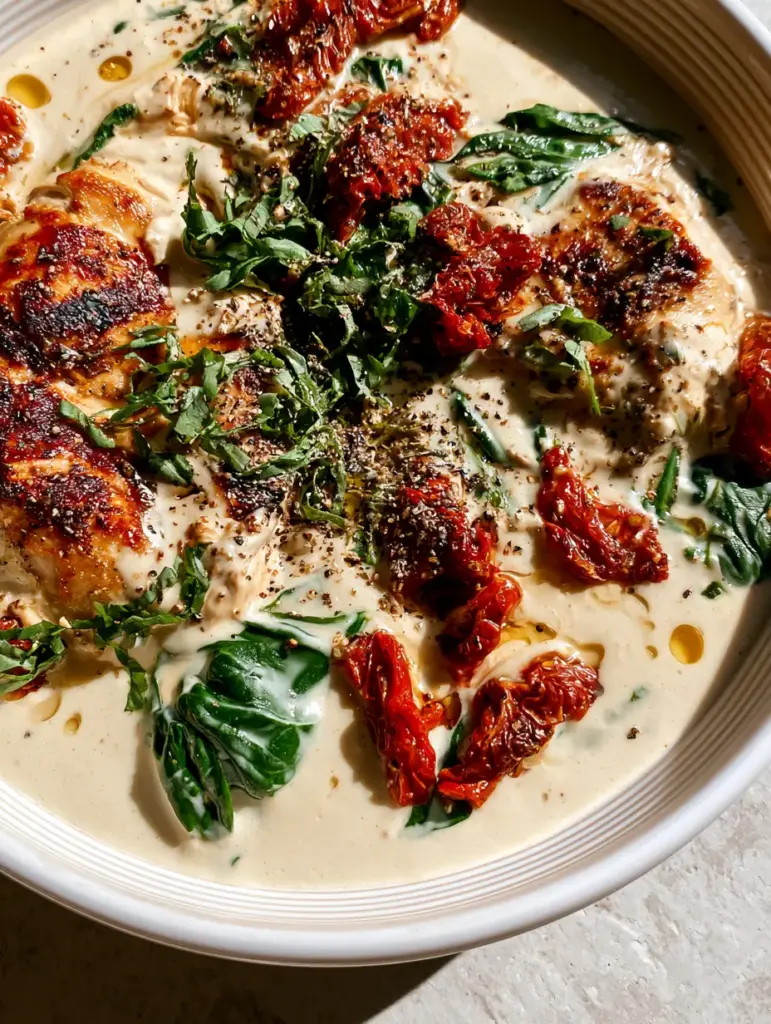
When searching for Paleo dairy-free recipes that actually deliver on the promise of indulgence, few dishes can rival the sheer visual and culinary impact of a well-executed Tuscan chicken. Imagine a skillet filled with a thick, velvety ivory-colored sauce, shimmering with small golden oil bubbles that catch the light just right. This isn’t a dream; it is the science of cashew-based emulsions meeting high-heat protein searing.
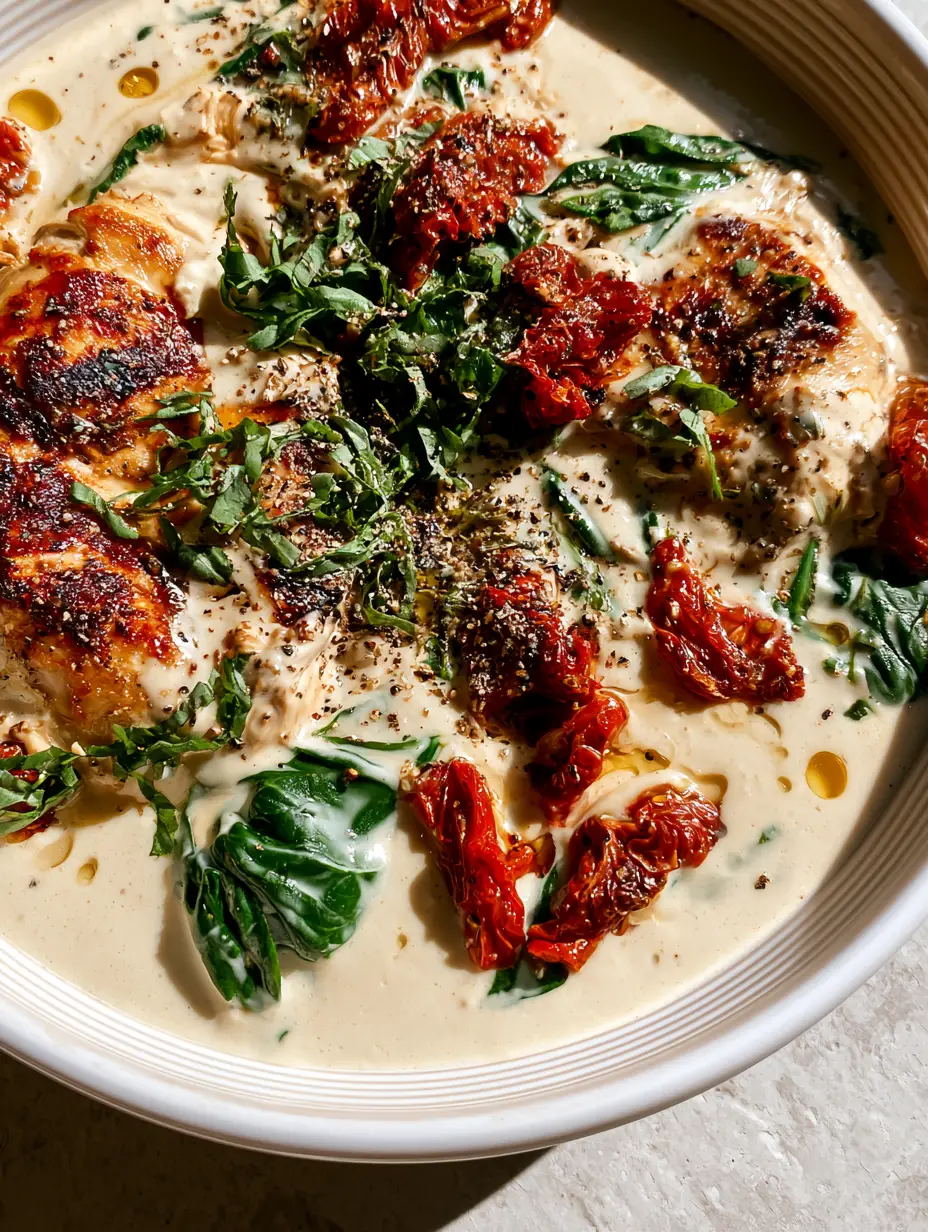
The beauty of this recipe lies in its textures. We are trading heavy cream for a nutrient-dense, plant-based alternative that mimics that classic mouthfeel perfectly. Every bite features pan-seared chicken breast with deep golden-brown char marks, nestled among bright red blistered sun-dried tomatoes and vibrant wilted dark green spinach leaves.
Whether you are a long-time follower of the Paleo lifestyle or simply looking to reduce your dairy intake without sacrificing flavor, this dish is a masterpiece of modern healthy cooking. It brings the soul of authentic Italian flavors into a grain-free, dairy-free kitchen using smart, whole-food substitutions that satisfy even the most discerning palate.
Why This Creamy Tuscan Skillet Defines Gourmet Paleo Cooking
- Forensic Visual Appeal: A stunning ivory cashew cream sauce provides a high-contrast backdrop for the vibrant green chiffonade basil and deep red sun-dried tomatoes.
- Superior Searing Technique: We utilize a high-smoke-point oil to achieve those specific golden-brown char marks that lock in juice and provide a smoky depth.
- Perfectly Emulsified Sauce: Small golden oil droplets on the surface indicate a rich, stable sauce that won’t break or become grainy when reheated.
- Symphony of Fresh Herbs: The heavy garnish of freshly cracked black pepper and fresh basil ensures a bright, aromatic finish that cuts through the richness of the cream.
The Essential Pantry Staples for Dairy-Free Decadence
Boneless Skinless Chicken Breasts: We use 1.5 lbs (680g) of high-quality breast meat. These are sliced into thick cutlets to ensure they develop a deep crust without drying out the center.
Raw Cashews: 1 cup (150g) of raw cashews acts as the foundation for our ivory sauce. When soaked and blended, they transform into a velvety liquid that is indistinguishable from heavy cream in weeknight dinner rotation staples.
Sun-Dried Tomatoes: We need 1/2 cup (75g) of oil-packed sun-dried tomatoes. These will be blistered in the pan to release their concentrated sweetness and create those iconic bright red pops of color.
Fresh Baby Spinach: 3 cups (90g) of fresh spinach provides the vibrant dark green contrast. It is folded in at the very last second to maintain its structural integrity while wilting into the heat of the sauce.
Avocado Oil: 2 tbsp (30ml) of this high-heat oil is required. It is the secret to achieving the golden-brown char marks without the oil smoking or turning bitter in the skillet.
Chicken Bone Broth: 1/2 cup (120ml) of mineral-rich broth helps thin the cashew cream to the perfect consistency, adding a layer of savory depth that water simply cannot provide.
Aromatic Garlic: 3 cloves (15g) of fresh garlic, minced finely. This foundational element builds the “Tuscan” profile, infusing the ivory sauce with a sweet, pungent warmth.
Fresh Basil: A large handful, roughly 1/4 cup (10g), cut into a fine chiffonade. This garnish provides the final visual flair and a refreshing herbal finish that balances the cracked black pepper.
Critical Kitchen Tools for Professional Results
To achieve the macro-visual quality seen in our photos, you will need a 12-inch (30cm) shallow white ceramic pan or a well-seasoned cast-iron skillet. The shallow sides allow moisture to evaporate quickly, which is essential for blistering the tomatoes and preventing the chicken from steaming rather than searing.
A high-speed blender is also non-negotiable for the cashew cream. To reach that “velvety ivory” consistency without any grit, the cashews must be pulverized into a completely smooth liquid. Finally, a sharp chef’s knife is required for the delicate chiffonade of the basil, ensuring the edges don’t bruise or turn black.
Mastering the Art of the Perfect Golden-Brown Sear
Phase 1: Preparing the Ivory Cashew Base
Start by soaking your raw cashews in boiling water for at least 30 minutes. This softens the nuts’ cellular structure, allowing them to blend into a perfectly smooth ivory cream. Drain the water and place the cashews in your blender with the chicken broth and a pinch of sea salt.
Blend on high for 60 seconds until the mixture is thick, white, and completely free of particles. Set this aside; it will thicken further as it hits the heat of the skillet later in the process.
Phase 2: Achieving the Signature Char Marks
Pat your chicken breasts extremely dry with paper towels. Season generously with salt and pepper. Heat 1 tbsp (15ml) of avocado oil in your shallow ceramic pan over medium-high heat until the oil shimmers.
Place the chicken in the pan and do not move it for 4 to 5 minutes. You are looking for a deep golden-brown crust to form. Flip once and cook for another 3 minutes until charred marks are visible on both sides. Remove the chicken to a plate, leaving the drippings behind.
Phase 3: Blistering Tomatoes and Wilting Greens
Lower the heat to medium and add the remaining oil if the pan looks dry. Toss in the sun-dried tomatoes and minced garlic. Sauté for 2 minutes; you want to see the tomatoes slightly “blister” and the garlic turn a pale straw color.
Pour in the ivory cashew cream. Use a wooden spoon to scrape the bottom of the pan, incorporating those flavorful browned bits (fond) from the chicken. This will create small golden oil droplets on the surface of the sauce, as described in our visual blueprint.
Phase 4: The Final Assembly and Garnish
Return the chicken to the skillet, partially submerging the pieces into the thick sauce. Add the fresh spinach leaves, folding them gently into the cream until they turn a vibrant dark green and wilt slightly from the residual heat.
Turn off the heat. Finish the dish with a heavy dusting of freshly cracked black pepper and the chiffonade of fresh basil. The soft light in your kitchen should reflect off the silky ivory sauce, highlighting the rich textures of this Paleo dairy-free recipes masterpiece.
Expert Tips for Paleo Skillet Success
- The “Dry” Secret: Always pat your meat dry. Moisture is the enemy of the Maillard reaction. If the chicken is wet, it will steam instead of developing those deep brown char marks.
- Controlled Emulsion: If the sauce becomes too thick, whisk in a tablespoon of bone broth at a time. The goal is a velvety ivory coat that clings to the chicken without being gloppy.
- Basil Timing: Never cook the chiffonade basil. Add it at the very end as a garnish to keep the color bright green and the flavor sharp.
- Nut-Free Alternative: If you have a nut allergy but want to stay Paleo, you can substitute the cashew cream with full-fat canned coconut milk, though the flavor profile will shift slightly toward tropical.
Storage, Reheating & Freezing
This creamy Tuscan chicken stores beautifully in an airtight container for up to 3 days in the refrigerator. When reheating, do so gently over low heat on the stovetop. Cashew cream can thicken significantly when cold, so you may need to add a splash of water or broth to loosen the sauce back to its original ivory velvet state.
Freezing is possible, though the texture of the spinach may change slightly upon thawing. If freezing, ensure the dish is completely cooled before placing it in a freezer-safe bag for up to 2 months. Thaw overnight in the fridge before reheating.
Creative Pairings for a Complete Paleo Feast
To keep the meal entirely Paleo, serve this over a bed of roasted spaghetti squash or cauliflower rice. The ivory sauce acts as a perfect gravy for neutral vegetable bases. For those who aren’t strictly grain-free, this dish is a natural companion to a tomato spinach pasta or even served alongside garlic-roasted broccoli.
If you’re looking for a lighter lunch option, you can slice the leftover chilled chicken and serve it over a crisp arugula salad, using the remaining cashew cream as a thick, savory dressing. It also pairs wonderfully with other lean proteins if you decide to double the sauce recipe for a multi-protein meal prep.
Frequently Asked Questions
You can, but ensure you squeeze all the excess moisture out of the thawed spinach first. Fresh baby spinach is preferred for the vibrant dark green color and better texture.
The key is using raw, unroasted cashews and soaking them in boiling water for at least 30 minutes before blending. This removes any grit and creates that signature ivory color.
Yes, all ingredients including the avocado oil, raw cashews, and chicken bone broth are 100% Paleo-friendly and dairy-free.
Achieving those marks requires high-heat searing in avocado oil and resisting the urge to move the chicken once it hits the pan, allowing the Maillard reaction to occur.
A few golden oil droplets are normal, but if it separates entirely, it means the heat was too high. Whisk in a tablespoon of warm broth to re-emulsify the cashew cream.
The Best Creamy Paleo Tuscan Chicken Recipe
Paleo Dairy-Free Recipes: The Ultimate Creamy Skillet Tuscan Chicken
Ingredients
Equipment
Method
- Drain soaked cashews and blend with chicken broth until a smooth ivory liquid forms.
- Heat avocado oil in a skillet. Sear chicken for 4-5 minutes per side until deep golden-brown char marks appear.
- Sauté garlic and sun-dried tomatoes in the pan drippings until blistered and fragrant.
- Pour in cashew cream and stir to incorporate pan bits, allowing golden oil droplets to rise to the surface.
- Fold in fresh spinach and simmer for 1-2 minutes until vibrant dark green and wilted.
Notes
Soak cashews for at least 30 minutes in boiling water for the smoothest texture.
Closing & Call to Action
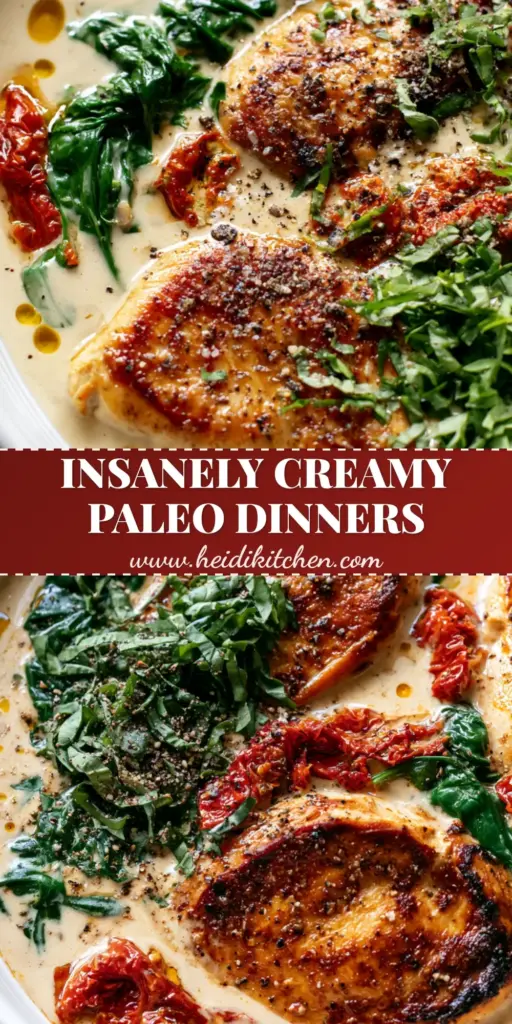
Mastering Paleo dairy-free recipes doesn’t mean you have to compromise on the luxury of a creamy, pan-seared meal. This Tuscan chicken skillet brings professional culinary techniques into your home kitchen, resulting in a dish that looks as incredible as it tastes. The combination of charred protein and velvety cashew cream is a testament to the power of whole-food ingredients.
Did you achieve those perfect golden oil droplets? Let us know in the comments below! If you loved this visual guide, please share this recipe on Pinterest and follow us for more dairy-free inspiration.